
Clive Maxfield
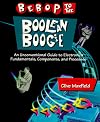
Author of Bebop to the Boolean Boogie: An Unconventional Guide to Electronics
About the Author
Image credit: Clive Maxfield
Works by Clive Maxfield
The Definitive Guide to How Computers Do Math : Featuring the Virtual DIY Calculator (2005) 41 copies, 1 review
Tagged
Common Knowledge
- Birthdate
- 1957
- Gender
- male
- Education
- Sheffield Hallam University
- Nationality
- UK
- Associated Place (for map)
- UK
Members
Reviews

I don't know that this is an evolution of the teaching of digital electronics. I found the "jazzy parts" to mostly be dry, cringeworthy, British-engineer humor. That said, I did appreciate that this book did not just focus on the basics. It also included information on topics as diverse as photolithography, circuit boards, and ASICs.
The Definitive Guide to How Computers Do Math : Featuring the Virtual DIY Calculator by Clive Maxfield

More of a software approach than a hardware approach, which isn't bad, but not what I was hoping to read about.
.
.
Foreword
Contents
Section 1: Fundamental Concepts
1. Analog Versus Digital
2. Atoms, Molecules, And Crystals
3. Conductors And Insulators; Voltage, Current, Resistance, Capacitance And Inductance
4. Semiconductors: Diodes And Transistors
5. Primitive Logic Functions
6. Using Transistors To Build Primitive Logic Functions
7. Alternative Numbering Systems
8. Binary Arithmetic
9. Boolean Algebra
10. Karnaugh Maps
11. Using Primitive Logic Functions To Build More Complex Functions
12. State Diagrams, State show more Tables And State Machines
13. Analog-To-Digital And Digital-To-Analog
Section 2: Components And Processes
14. Integrated Circuits (ICs)
15. Memory Ics
16. Programmable Ics
17. Application-Specific Integrated Circuits (ASICs)
18. Circuit Boards (pwbs And Dwbs)
19. Hybrids
20. Multichip Modules (mcms)
21. Alternative And Future Technologies
Appendix A: Assertion-Level Logic
Appendix B: Positive Logic Versus Negative Logic
Appendix C: Reed-Müller Logic
Appendix D: Gray Codes
Appendix E: A Reed-Müller Extraction Utility
Appendix F: Linear Feedback Shift Registers (LFSRs)
Appendix G: Pass-Transistor Logic
Appendix H: No-Holds-Barred Seafood Gumbo
Abbreviations And Acronyms
Glossary
Dramatis Personae
Index show less
.
Foreword
Contents
Section 1: Fundamental Concepts
1. Analog Versus Digital
2. Atoms, Molecules, And Crystals
3. Conductors And Insulators; Voltage, Current, Resistance, Capacitance And Inductance
4. Semiconductors: Diodes And Transistors
5. Primitive Logic Functions
6. Using Transistors To Build Primitive Logic Functions
7. Alternative Numbering Systems
8. Binary Arithmetic
9. Boolean Algebra
10. Karnaugh Maps
11. Using Primitive Logic Functions To Build More Complex Functions
12. State Diagrams, State show more Tables And State Machines
13. Analog-To-Digital And Digital-To-Analog
Section 2: Components And Processes
14. Integrated Circuits (ICs)
15. Memory Ics
16. Programmable Ics
17. Application-Specific Integrated Circuits (ASICs)
18. Circuit Boards (pwbs And Dwbs)
19. Hybrids
20. Multichip Modules (mcms)
21. Alternative And Future Technologies
Appendix A: Assertion-Level Logic
Appendix B: Positive Logic Versus Negative Logic
Appendix C: Reed-Müller Logic
Appendix D: Gray Codes
Appendix E: A Reed-Müller Extraction Utility
Appendix F: Linear Feedback Shift Registers (LFSRs)
Appendix G: Pass-Transistor Logic
Appendix H: No-Holds-Barred Seafood Gumbo
Abbreviations And Acronyms
Glossary
Dramatis Personae
Index show less
Lists
Awards

You May Also Like


Statistics
- Works
- 9
- Members
- 229
- Popularity
- #98,339
- Rating
- 3.4
- Reviews
- 3
- ISBNs
- 33