
Laura Alcoba
Author of The Rabbit House
About the Author
Works by Laura Alcoba
Associated Works
Tagged
Common Knowledge
- Birthdate
- 1968
- Gender
- female
- Education
- École normale supérieure de Fontenay-Saint-Cloud
- Occupations
- lecturer (Literature)
translator
writer
editor - Nationality
- France (naturalised)
- Birthplace
- Argentina
- Places of residence
- Paris, France
- Associated Place (for map)
- Paris, France
Members
Reviews
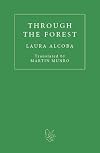
Through a Storm, but with a Light at the End
Review of the Fum d'Estampa paperback edition (January 31, 2024) translated by Martin Munro|93892] from the French language original "Par la forêt" (January 13, 2022).
As a quick read of the synopsis will tell you, the central incident of this book will sound like a subject from which you will recoil. Based on interviews with the family and friends, Laura Alcoba spent several years crafting this "non-fiction" novel centred on a maternal filicide by an Argentinean-French woman (named Griselda in the book, but all names have been changed to protect the current family's privacy) in 1984.
The interview process and its resultant book creation served as a exorcism for the family where the father Claudio, mother Griselda and surviving daughter Flavia (now 40, but 6 years old at the time) deal with and process the event. Author Alcoba shares an Argentinean background with the family and her father was actually a friend of theirs. The background to their various emigrations to France involve the repressive junta regime in Argentina in the 1970s. Griselda survived that political trauma as well as early years of abuse leading to several suicide attempts. Her breakdown at the time of the incident resulted in initial prison incarceration but with eventual mental health hospitalization from which she was released. The family never gave up on her and would visit where she was "resting."
Along the way, there are inciteful passages about family interactions.
See cover at https://images-na.ssl-images-amazon.com/images/S/compressed.photo.goodreads.com/...
The cover of the original French language edition. Image sourced from Goodreads.
This unique book charts a family's journey through darkness but one which leads to a path of reconciliation, love and forgiveness in the end. Laura Alcoba has produced an extraordinary document in this story which reaches back to the early years of trauma, through the incident and the coincidences and events which brought a group of people together despite the sad incident at its heart.
Trivia and Links
The story of Euripides' Medea is recounted at length in an interlude passage, even though that maternal filicide revenge plot is not an exact parallel.
I didn't want to search for the real-life incident on which the book is centred, but I couldn't resist looking up the Le Bucheron restaurant at 14 Rue de Rivoli, Paris, France where many of its interviews took place. I couldn't find a photo of the "secret" entrance which locals use though.
See photo at https://dynamic-media-cdn.tripadvisor.com/media/photo-o/0d/98/e1/25/a-porta-do-l...
Le Bucheron restaurant in Paris France. Image sourced from Trip Advisor. show less
Review of the Fum d'Estampa paperback edition (January 31, 2024) translated by Martin Munro|93892] from the French language original "Par la forêt" (January 13, 2022).
It will soon be three years since that first meeting. It will soon be three years that I have been looking for the way to write this book. To get closer to what happened to them without hurting them, without adding pain to pain. But also certain that I must complete what I haveshow more
undertaken. That I must go to the end of this attempt to understand their story.
As a quick read of the synopsis will tell you, the central incident of this book will sound like a subject from which you will recoil. Based on interviews with the family and friends, Laura Alcoba spent several years crafting this "non-fiction" novel centred on a maternal filicide by an Argentinean-French woman (named Griselda in the book, but all names have been changed to protect the current family's privacy) in 1984.
The interview process and its resultant book creation served as a exorcism for the family where the father Claudio, mother Griselda and surviving daughter Flavia (now 40, but 6 years old at the time) deal with and process the event. Author Alcoba shares an Argentinean background with the family and her father was actually a friend of theirs. The background to their various emigrations to France involve the repressive junta regime in Argentina in the 1970s. Griselda survived that political trauma as well as early years of abuse leading to several suicide attempts. Her breakdown at the time of the incident resulted in initial prison incarceration but with eventual mental health hospitalization from which she was released. The family never gave up on her and would visit where she was "resting."
Along the way, there are inciteful passages about family interactions.
It's weird: the lies people tell children.
Often children pretend to believe the stories they are told to reassure the adults. To give themselves a little peace and quiet too. It is that, if children show adults that they are not fooled by their spiel, grown-ups hasten to patch up their lies and plug the cracks, finally to create even bigger fibs. This prospect discourages children in advance. Because if the adults overdo it, if they push things a little too far, the children feel obliged to protest (you shouldn't take them for idiots anyway) and the matter becomes even more painful. It is usually to spare themselves all of this that children pretend to believe the lies of adults. This story of the big house where her mother was resting up, Flavia knew very well that it was not true. But when her father would say to her: "We'll go to see your mother where she's resting," she would reply: "Yes, let's go and see Mama there."
See cover at https://images-na.ssl-images-amazon.com/images/S/compressed.photo.goodreads.com/...
The cover of the original French language edition. Image sourced from Goodreads.
This unique book charts a family's journey through darkness but one which leads to a path of reconciliation, love and forgiveness in the end. Laura Alcoba has produced an extraordinary document in this story which reaches back to the early years of trauma, through the incident and the coincidences and events which brought a group of people together despite the sad incident at its heart.
Trivia and Links
The story of Euripides' Medea is recounted at length in an interlude passage, even though that maternal filicide revenge plot is not an exact parallel.
I didn't want to search for the real-life incident on which the book is centred, but I couldn't resist looking up the Le Bucheron restaurant at 14 Rue de Rivoli, Paris, France where many of its interviews took place. I couldn't find a photo of the "secret" entrance which locals use though.
See photo at https://dynamic-media-cdn.tripadvisor.com/media/photo-o/0d/98/e1/25/a-porta-do-l...
Le Bucheron restaurant in Paris France. Image sourced from Trip Advisor. show less
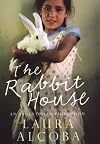
This was a beautiful, haunting story. I wish I could read French so I could read Alcoba's follow-up. I also wish I knew more about Argentinian history, because there were parts that were not perfectly familiar to me, but the larger political picture is really not what matters most here, I think: it's the horror of growing up a child in the midst of what amounts to civil war, and Alcoba's prose captured that perfectly (however much we wish no one had to).
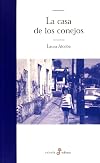
La casa de los conejos es una novela que evoca los años de la dictadura, de la vida de montoneros viviendo en la clandestinidad,en una casa,relatado en la voz de una niña que vivìa su infancia y el miedo a que sus padres fuesen descubiertos.
En el nuevo hogar se crían y venden conejos. Esa es la fachada pública, porque en verdad es una casa clandestina de Montoneros, una de las más sensibles. Allí dentro los nervios y la ansiedad se aplacan limpiando pistolas y fusiles, acomodando granadas, o en mateadas fugaces y amenas. Los compañeros ya mueren o desaparecen en las calles, y cada semana el ambiente se degrada. La infancia de esa niña declina con el terror de los adultos, con frases cargadas de ira, de una lógica que no show more logra descubrir y que la apremia. Su inocencia se evapora al mismo tiempo que la Argentina se hunde en la violencia. show less
You May Also Like
Associated Authors
Statistics
- Works
- 10
- Also by
- 3
- Members
- 139
- Popularity
- #147,350
- Rating
- 3.8
- Reviews
- 9
- ISBNs
- 31
- Languages
- 4