
Susan Gibbons
Author of The Academic Library and the Net Gen Student
About the Author
Susan Gibbons is associate dean for public services and collection development at the University of Rochester, River Campus Libraries.
Works by Susan Gibbons
Studying Students: The Undergraduate Research Project at the University of Rochester (2007) — Editor — 16 copies, 1 review
E-Book Functionality: What Libraries and Their Patrons Want and Expect from Electronic Books (2003) 2 copies
Tagged
Common Knowledge
There is no Common Knowledge data for this author yet. You can help.
Members
Reviews
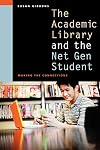
I was not impressed with this book. A lot of it is stuff that any librarian who at least reads a few of the many blogs written by librarians on topics of Library 2.0 ought to know by now. The initial chapter on the NetGens is basically a compendium of generalizations. For instance, the part about Gen-X'ers being pessimistic as a general rule, which I am sure a few of them would be happy to disprove. Though drawing on work done at U. of Rochester, some of the material can be questioned on the show more basis of other data available. The books seems to basically paint a somewhat ideal image of the NetGens. They may be digital natives, but it does not make them good researchers or even information literate. Another issue for me was the assumption, mostly unquestioned in the book, that the students are pretty much constantly plugged in. I think this is very dependent on campus and demographic. In my previous work, while there was a lot of use of social networking, there was no awareness of any tools like blogs and wikis.
Having said that, the idea of distinguishing between knowledge and information, and that the library should emphasize the provision of the former rather than the later deserves further thought and exploration. It was a good point of the book. Also the idea of an academic library as an R&D unit that allows its librarians to actually do research and development is also a very important idea. Personally, when I read LIS books, I manage to get an idea or two worth exploring further or that I want to remember. This was what I got out of it overall.
The book does provide some good ideas and suggestions for reaching this student population. For librarians who have not kept up and need an overview, this would probably make a good text. For those of us who already keep up, a lot of this material we have seen already. show less
Having said that, the idea of distinguishing between knowledge and information, and that the library should emphasize the provision of the former rather than the later deserves further thought and exploration. It was a good point of the book. Also the idea of an academic library as an R&D unit that allows its librarians to actually do research and development is also a very important idea. Personally, when I read LIS books, I manage to get an idea or two worth exploring further or that I want to remember. This was what I got out of it overall.
The book does provide some good ideas and suggestions for reaching this student population. For librarians who have not kept up and need an overview, this would probably make a good text. For those of us who already keep up, a lot of this material we have seen already. show less
Studying Students: The Undergraduate Research Project at the University of Rochester by Nancy Fried Foster
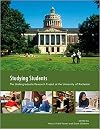
Nancy Fried Foster, the lead anthropologist, and a team of librarians from Rochester University describe the two year research project they undertook in 2005 and 2006 to address the question of, What do students really do when they write their research papers? with the views of using their findings to improve services and facilities provided by the library. Chapters outline the variety of smaller projects undertaken to address this question that used a variety of research methods including show more interviews, surveys, mapping diaries, photo elicitation, and design charettes.
I read this slim volume (a grand total of 83 pages) for work as I'm currently engaged in doing research using some of the same methods to explore use of public library space. The chapters average out at about ten pages with those focused on specific projects splitting the majority of their content evenly between detailing the methods used and then briefly exploring some of the more interesting findings. While not highly detailed for every step undertaken for the different research methods, it does give some practical examples of how the methods work. The findings weren't particularly surprising to me in comparison with the researchers as the project was done in the same year that I was a first year undergraduate student, so many of the student behaviours, while not necessarily ones I had, were very familiar to me. show less
I read this slim volume (a grand total of 83 pages) for work as I'm currently engaged in doing research using some of the same methods to explore use of public library space. The chapters average out at about ten pages with those focused on specific projects splitting the majority of their content evenly between detailing the methods used and then briefly exploring some of the more interesting findings. While not highly detailed for every step undertaken for the different research methods, it does give some practical examples of how the methods work. The findings weren't particularly surprising to me in comparison with the researchers as the project was done in the same year that I was a first year undergraduate student, so many of the student behaviours, while not necessarily ones I had, were very familiar to me. show less
http://pixxiefishbooks.blogspot.com/2009/02/academic-library-and-net-gen-student...
Libraries like to think that they are at the cutting edge of technology, but more often than not, they really aren't. Many in librarianship (the younger ones, anyway) likely played with various technologies while in library school[1], but once out in a real library, you are suddenly faced with layer upon layer of bureaucracy anytime you want to try another or get anything done.[2]
In this book, Susan Gibbons, show more the director of digital initiatives for the libraries at the University of Rochester, surveys the main Web 2.0 technologies being used by students today, and suggests ways in which libraries could use these in order to better meet the needs of students. The technologies she discusses include: social networking sites like MySpace and Facebook, RSS feeds, online gaming and MMORPGs like Second Life, wikis, blogs, collaborative sites like LibraryThing, social bookmarking sites like del.icio.us, and, of course, instant messaging.[3] She also stresses the importance of reaching students by making library services and websites available for cellphones and other mobile devices.
Some of these ideas work better than others. I see, for example, no need for my library to have a presence in something like Second Life (but maybe that's just because I don't really understand its purpose). I question the value of a Facebook page (though the idea of having "fans" is kinda neat). I've started playing around with RSS feeds (though I note the law library does not have one), though the jury is still out on whether it's saving me time or whether it's causing me to read more things than before (I lean slightly toward the latter; however, I am becoming more well-informed, at least where travel, book reviews, and alien abduction stories[4] are concerned). Library sites do need to become more accessible via cellphones, etc., and I certainly see applications like IM helping libraries gain more ground.
The book was written in 2006, so it's not (yet) too hopelessly out-of-date. While I didn't find it too helpful in terms of suggesting suggestions of things we could actually do here at my library (though that might be at least partly due to bureaucracy that stands between my ideas and actual change), it was good for giving an overview of what is out there and what some other libraries are doing with some of these tools.
[1] I know I personally loved my classes in multimedia (for which I made an electronic version of the Tolkien bestiary), electronic text design (wrote an e-paper on the (alleged) death of the book), and yes, even the dreaded systems analysis and design (my partner and I designed a database system for the law library - alas, never implemented - in which reference questions could be tracked and indexed for easy retrieval in the future).
[2] Statement not meant to imply anything about reviewer's current workplace. If anything, I have recently started finding some loopholes to work around the bureaucracy, and implement ideas that don't affect the bureaucracy. The real problem really has become finding the time to do so.
[3] I believe the book was written pre-Twitter, but that certainly has a role to play as well.
[4] That last one is (mostly) a joke. show less
Libraries like to think that they are at the cutting edge of technology, but more often than not, they really aren't. Many in librarianship (the younger ones, anyway) likely played with various technologies while in library school[1], but once out in a real library, you are suddenly faced with layer upon layer of bureaucracy anytime you want to try another or get anything done.[2]
In this book, Susan Gibbons, show more the director of digital initiatives for the libraries at the University of Rochester, surveys the main Web 2.0 technologies being used by students today, and suggests ways in which libraries could use these in order to better meet the needs of students. The technologies she discusses include: social networking sites like MySpace and Facebook, RSS feeds, online gaming and MMORPGs like Second Life, wikis, blogs, collaborative sites like LibraryThing, social bookmarking sites like del.icio.us, and, of course, instant messaging.[3] She also stresses the importance of reaching students by making library services and websites available for cellphones and other mobile devices.
Some of these ideas work better than others. I see, for example, no need for my library to have a presence in something like Second Life (but maybe that's just because I don't really understand its purpose). I question the value of a Facebook page (though the idea of having "fans" is kinda neat). I've started playing around with RSS feeds (though I note the law library does not have one), though the jury is still out on whether it's saving me time or whether it's causing me to read more things than before (I lean slightly toward the latter; however, I am becoming more well-informed, at least where travel, book reviews, and alien abduction stories[4] are concerned). Library sites do need to become more accessible via cellphones, etc., and I certainly see applications like IM helping libraries gain more ground.
The book was written in 2006, so it's not (yet) too hopelessly out-of-date. While I didn't find it too helpful in terms of suggesting suggestions of things we could actually do here at my library (though that might be at least partly due to bureaucracy that stands between my ideas and actual change), it was good for giving an overview of what is out there and what some other libraries are doing with some of these tools.
[1] I know I personally loved my classes in multimedia (for which I made an electronic version of the Tolkien bestiary), electronic text design (wrote an e-paper on the (alleged) death of the book), and yes, even the dreaded systems analysis and design (my partner and I designed a database system for the law library - alas, never implemented - in which reference questions could be tracked and indexed for easy retrieval in the future).
[2] Statement not meant to imply anything about reviewer's current workplace. If anything, I have recently started finding some loopholes to work around the bureaucracy, and implement ideas that don't affect the bureaucracy. The real problem really has become finding the time to do so.
[3] I believe the book was written pre-Twitter, but that certainly has a role to play as well.
[4] That last one is (mostly) a joke. show less
I thought this book would be more cutting edge and maybe it was for 2007. Still there are some great ideas, especially those just entering the library 2.0 scene.
Statistics
- Works
- 6
- Members
- 99
- Popularity
- #191,537
- Rating
- 3.8
- Reviews
- 7
- ISBNs
- 8