
Andrew Burt
Author of American Hysteria: The Untold Story of Mass Political Extremism in the United States
About the Author
Andrew Burt is a visiting fellow at Yale Law School's Information Society Project. A former reporter for US News World Report, his articles have appeared in The New York Times, The Financial Times, and Slate, among other publications.
Works by Andrew Burt
American Hysteria: The Untold Story of Mass Political Extremism in the United States (2015) 16 copies, 3 reviews
Associated Works
Tagged
Common Knowledge
- Organizations
- Science Fiction and Fantasy Writers of America
Members
Reviews
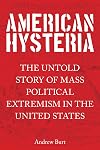
I loved this book and I love the way the author tells the story. He goes through 5 different periods in U.S. History that showed a particular hysteria and explained how it formed, then how it went from the fringes of society to more mainstream outlets, and then it says how all of them were eventually exposed as fraud. They all have common characteristics and similar base story so the individual target is always this underworld powerful cabal trying for global totalitarianism, or something show more very close to that but that's the gist of it. And then at the end the author goes through different ways to combat extremism and different ways to not fan the flames of hysteria when they inevitably crop up in American History. show less
I loved this book and I love the way the author tells the story. He goes through 5 different periods in U.S. History that showed a particular hysteria and explained how it formed, then how it went from the fringes of society to more mainstream outlets, and then it says how all of them were eventually exposed as fraud. They all have common characteristics and similar base story so the individual target is always this underworld powerful cabal trying for global totalitarianism, or something show more very close to that but that's the gist of it. And then at the end the author goes through different ways to combat extremism and different ways to not fan the flames of hysteria when they inevitably crop up in American History. show less

It is very true the spec fic reader is different to the traditional audience, we are willing and even expect to wait for information. As someone who also writes spec fic, I got a dose of this first hand from a proofreader a few months ago. After subsisting on a steady diet of Stephen King, my high fantasy piece did not sit well with them. I had written what I considered an intriguing introduction that left the reader with questions about the world so they would want to read on. The show more conversation with the reader went like this:
READER: It's well written, but you didn't explain things, how am I supposed to know what a such and such is? All you've said is that it is dead, and even dead it’s frightening.
ME: Yeah, exactly, read on and you will find out.
READER: Oh no, I need to know what it is now so things make sense.
ME: But then I'd be info dumping. There is enough info to tell you the world is different, there is magic and sometimes that magic has been used to make scary beasts people have stopped believing are real.
READER: You don't explain why they have stopped believing they are real.
ME: But then I would be info dumping...read on and you will find out.
You get the idea. Against my gut instinct, I tried to rewrite with explanation. It was horrible and lost all sense of mystery and the feeling of stepping into a world as yet unknown. I realised the proofreader's reading world was completely different to my reading and writing world. And that is what I love about spec fic. It is special, it sucks in both reader and writer on a certain wavelength in a harmonious but difficult balance of tantalising truths that build the world block by block as you go. Each page, each scene adds a touch more to generate those movie-like imaginings as we read on and on.
This short book does a marvellous job of dissecting spec fic to see what makes it tick. It was a delight to read, with wide research and good examples. It helped me understand some concepts behind the way I write like I do as I seem to employ methodologies instinctively, which to me is wonderful. I've always been drawn to spec fic and to realise the style comes naturally to me explains a lot about me. To me anyway!
I also took the advice of the author and headed over to Hatrack River Writers Workshop associated with Orson Scott Card’s web site. I had a quick browse around the Fragments Forum where you can post the first thirteen lines of a short story for critiquing (thirteen lines because that is what should grab a reader and to protect your publication rights). The warning was that some comments can be blunt. Oh yes indeed they were, but that is good, last thing you need when someone is giving you feedback is simply a “Yay, more!!” If that is what you are after, write fan fiction. I was impressed with the forum and will probably sign up.
I thoroughly recommend this book.
I'd also like to say bought this directly from the publisher (ReAnimus Press). They have a great attitude to ebooks, believing books should be able to be read on any platform. A single purchase enabled me to download copies I could use on multiple devices, I wasn't stuck with 'you must read this on a kindle or a kindle app'. Kudos. show less
READER: It's well written, but you didn't explain things, how am I supposed to know what a such and such is? All you've said is that it is dead, and even dead it’s frightening.
ME: Yeah, exactly, read on and you will find out.
READER: Oh no, I need to know what it is now so things make sense.
ME: But then I'd be info dumping. There is enough info to tell you the world is different, there is magic and sometimes that magic has been used to make scary beasts people have stopped believing are real.
READER: You don't explain why they have stopped believing they are real.
ME: But then I would be info dumping...read on and you will find out.
You get the idea. Against my gut instinct, I tried to rewrite with explanation. It was horrible and lost all sense of mystery and the feeling of stepping into a world as yet unknown. I realised the proofreader's reading world was completely different to my reading and writing world. And that is what I love about spec fic. It is special, it sucks in both reader and writer on a certain wavelength in a harmonious but difficult balance of tantalising truths that build the world block by block as you go. Each page, each scene adds a touch more to generate those movie-like imaginings as we read on and on.
This short book does a marvellous job of dissecting spec fic to see what makes it tick. It was a delight to read, with wide research and good examples. It helped me understand some concepts behind the way I write like I do as I seem to employ methodologies instinctively, which to me is wonderful. I've always been drawn to spec fic and to realise the style comes naturally to me explains a lot about me. To me anyway!
I also took the advice of the author and headed over to Hatrack River Writers Workshop associated with Orson Scott Card’s web site. I had a quick browse around the Fragments Forum where you can post the first thirteen lines of a short story for critiquing (thirteen lines because that is what should grab a reader and to protect your publication rights). The warning was that some comments can be blunt. Oh yes indeed they were, but that is good, last thing you need when someone is giving you feedback is simply a “Yay, more!!” If that is what you are after, write fan fiction. I was impressed with the forum and will probably sign up.
I thoroughly recommend this book.
I'd also like to say bought this directly from the publisher (ReAnimus Press). They have a great attitude to ebooks, believing books should be able to be read on any platform. A single purchase enabled me to download copies I could use on multiple devices, I wasn't stuck with 'you must read this on a kindle or a kindle app'. Kudos. show less
I loved this book and I love the way the author tells the story. He goes through 5 different periods in U.S. History that showed a particular hysteria and explained how it formed, then how it went from the fringes of society to more mainstream outlets, and then it says how all of them were eventually exposed as fraud. They all have common characteristics and similar base story so the individual target is always this underworld powerful cabal trying for global totalitarianism, or something show more very close to that but that's the gist of it. And then at the end the author goes through different ways to combat extremism and different ways to not fan the flames of hysteria when they inevitably crop up in American History. show less
You May Also Like
Associated Authors
Statistics
- Works
- 5
- Also by
- 5
- Members
- 22
- Popularity
- #553,377
- Rating
- 4.1
- Reviews
- 4
- ISBNs
- 5