
Sheldon Axler
Author of Linear Algebra Done Right (Undergraduate Texts in Mathematics)
About the Author
Works by Sheldon Axler
Measure, Integration & Real Analysis (Graduate Texts in Mathematics, 282) (2019) 27 copies, 1 review
Tagged
Common Knowledge
- Birthdate
- 1949-11-06
- Gender
- male
- Awards and honors
- Lester R. Ford Award (1996)
- Nationality
- USA
- Birthplace
- Philadelphia, Pennsylvania, USA
- Associated Place (for map)
- Pennsylvania, USA
Members
Reviews
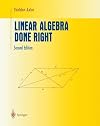
This is how linear algebra should always be presented. The unfortunate presentation one first encounters that emphasises matrices and determinants without appeal to the algebra and geometry that motivates them is absent from this text. It is a full presentation that will give you an intuitive grasp of linear algebra from both the geometric and algebraic points of view.
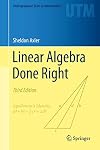
Kudos to Springer!
Axler's linear algebra textbook is famously unusual for downplaying the use of determinants; in this edition, they don't really make an appearance until the very last section of the book. It defines vector spaces in the second section. It appears to say essentially nothing about linear systems of equations, row operations, similar matrices, and a variety of other standard topics for an introductory course. In both the Preface to the Instructor and the Preface to the show more Student, Axler refers to the "second exposure to linear algebra", and he seems to be very serious about gearing his book to that purpose.
With all that out of the way, my main purpose in writing this review is to address the physical book, rather than its contents. Axler says that in this new edition "[b]eautiful new formatting, including the use of color, creates pages with an unusually pleasant appearance in both print and electronic versions." As it pertains to the print copy I received this afternoon direct from the publisher, I would say that Axler is not exaggerating. The use of color is comparable to that in the most popular calculus textbooks. It really looks sharp.
And it's not just that a lot of work went into the design of this book; the implementation is very impressive. To my eye (supplemented by reading glasses), the printing looks as sharp as it could possibly be. The black text really is black, with none of the color fringing that mars much output from color laser printers, and none of either the fading or the glare that often comes with print-on-demand books. It looks like the pages were printed by professional printers! The binding appears to be glued, but the cover looks nice.
Springer used to be not only the market leader in advanced math books; it used to produce books that looked like they had been created with some care. Then 5 or 10 years ago, things went south for customers like me who care about the physical product. Cheap bindings fell apart in a few days or arrived already broken. Cheap POD printing produced output that looked worse than that of the worst personal computer printer, and bad printing is distracting when you're trying to concentrate on the math.
I hope my copy of this book is not an outlier, and that Springer really is once again committed to quality workmanship for all titles and regardless of whether books are purchased directly from the publisher or from a retailer like Amazon. show less
Axler's linear algebra textbook is famously unusual for downplaying the use of determinants; in this edition, they don't really make an appearance until the very last section of the book. It defines vector spaces in the second section. It appears to say essentially nothing about linear systems of equations, row operations, similar matrices, and a variety of other standard topics for an introductory course. In both the Preface to the Instructor and the Preface to the show more Student, Axler refers to the "second exposure to linear algebra", and he seems to be very serious about gearing his book to that purpose.
With all that out of the way, my main purpose in writing this review is to address the physical book, rather than its contents. Axler says that in this new edition "[b]eautiful new formatting, including the use of color, creates pages with an unusually pleasant appearance in both print and electronic versions." As it pertains to the print copy I received this afternoon direct from the publisher, I would say that Axler is not exaggerating. The use of color is comparable to that in the most popular calculus textbooks. It really looks sharp.
And it's not just that a lot of work went into the design of this book; the implementation is very impressive. To my eye (supplemented by reading glasses), the printing looks as sharp as it could possibly be. The black text really is black, with none of the color fringing that mars much output from color laser printers, and none of either the fading or the glare that often comes with print-on-demand books. It looks like the pages were printed by professional printers! The binding appears to be glued, but the cover looks nice.
Springer used to be not only the market leader in advanced math books; it used to produce books that looked like they had been created with some care. Then 5 or 10 years ago, things went south for customers like me who care about the physical product. Cheap bindings fell apart in a few days or arrived already broken. Cheap POD printing produced output that looked worse than that of the worst personal computer printer, and bad printing is distracting when you're trying to concentrate on the math.
I hope my copy of this book is not an outlier, and that Springer really is once again committed to quality workmanship for all titles and regardless of whether books are purchased directly from the publisher or from a retailer like Amazon. show less
Apparently, this is one of the few Springer Verlag books nowadays that is not print-on-demand. My copy ordered off the Internet from Barnes & Noble has glossy paper, color offset printing, and a sewn binding. The spine seems unnaturally flat, but other than that it looks great. Congratulations to Dr. Axler for insisting that Springer print his book right.
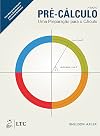
Pré-Cálculo – Uma Preparação para o Cálculo chega para instigar no estudante o interesse pelo aprendizado das disciplinas de Matemática com sua metodologia diferenciada. Como entender os conceitos e as aplicações é essencial para um bom desempenho acadêmico, o livro aborda, detalhadamente e sem ser cansativo, os tópicos necessários para dominar essa matéria tão temida pelos estudantes. Os capítulos trazem um aprofundamento maior do tema em relação à bibliografia show more tradicional da área, com exemplos de conceitos, ampla variedade de exercícios e problemas, além de um manual de soluções contido na própria obra. O autor conseguiu transmitir toda a sua experiência pedagógica nesta obra que conta, ainda, com materiais suplementares disponíveis no site da LTC Editora, selo integrante do GEN | Grupo Editorial Nacional, mediante cadastro. Se o intuito é aprender de fato como realizar as operações e não apenas encontrar resultados, Pré-Cálculo – Uma Preparação para o Cálculo é a ferramenta certa para os leitores.O livro traz ainda, como destaque, o acesso GRATUITO a um conjunto de videoaulas exclusivas da DigiAula de Pré-cálculo, com tópicos essenciais sobre os temas abordados. Para livros impressos, basta acessar o site, realizar o cadastro e inserir o código de acesso (PIN) ― fornecido na orelha interna do livro impresso ― no GEN-IO, ambiente virtual de aprendizagem do GEN | Grupo Editorial Nacional. Para e-books, as videoaulas já estão embutidas no livro digital. show less
Jan 27, 2025Portuguese (Brazil)
Lists
You May Also Like


Associated Authors
Statistics
- Works
- 9
- Members
- 573
- Popularity
- #43,719
- Rating
- 4.0
- Reviews
- 4
- ISBNs
- 46
- Languages
- 2