
Ryan Grim
Author of This Is Your Country on Drugs: The Secret History of Getting High in America
Works by Ryan Grim
Associated Works
Tagged
Common Knowledge
Members
Reviews
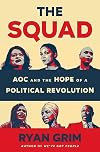
Ryan Grim’s, THE SQUAD, is, formally, a political book. It profiles four progressive women of color in the U.S. House—Alexandria Ocasio-Cortez, Ilhan Omar, Ayanna Pressley, and Rashida Tlaib—and traces their unlikely rise through the machinery of American power.
But that description misses the deeper story.
At its core, this is a book about what happens when living social movements collide with dead institutional forms. About how fear, belonging, money, media, and meaning shape political show more behavior far more than ideology alone. About how difficult it is to sustain moral courage inside systems optimized for compliance.
Grim is well positioned to tell this story. As an investigative journalist at _The Intercept_, he comes out of one of the last serious traditions of adversarial journalism in the English-speaking world. That lineage matters. The book is neither hagiography nor hit job. It is careful, attentive, and quietly unsettling.
It all begins with Bernie. When Bernie Sanders announced his presidential campaign in 2015, he raised $1.5 million from small donors in 24 hours. Campaign professionals had insisted this was impossible. Politics, they said, required large donors. It required gatekeepers. It required permission. Bernie proved otherwise.
That moment cracked the financial and psychological architecture of American politics. It revealed that a mass base, loosely organized but emotionally invested, could rival donor machines. It suggested that ordinary people still had latent political agency—if given a credible vehicle. The campaign didn’t win. But it seeded an ecosystem.
It inspired AOC to run in 2018. It legitimized language about dignity, solidarity, and economic democracy that had been treated as naïve or dangerous. It gave permission for insurgent candidacies.
Grim captures this rupture beautifully through a quote from Anand Giridharadas in February 2020 in an MSNBC interview, describing the political establishment behaving like “out-of-touch aristocrats in a dying aristocracy”—desperately trying to block Sanders without ever asking why millions were responding to him:
“Something is happening in America right now that actually does not fit our mental models. It certainly doesn’t fit the mental models of a lot of people on TV, it doesn’t fit the mental models of a lot of people in the parties, it doesn’t fit our cultural mental models. You have someone talking about, in a way we have not heard, genuine, deeper democracy, popular movements, human equality in a meaningful way, and a politics of love in the tradition of Dr. King. And winning elections, in America, the United States of America. And I just have to say—I’ve been encouraged watching you on air talk about your own rethinking of things, which I think we all have to be in this type of work, I think this is a wake-up moment for the American power establishment. For Michael Bloomberg to those of us in the media, to Democratic Party, to donors, to CEOs. Many in this establishment are behaving, in my view, as they face the prospect of a Bernie Sanders nomination, like out-of-touch aristocrats in a dying aristocracy. Just sort of ‘How do we stop this How do we block this?’ And there is no curiosity. Why is this happening? What is going on in the lives of my fellow citizens that they may be voting for something I find so hard to understand? What is happening? This is a moment for curiosity in America. I think about this network, which I love, you love, and I think we have to look within also—why is a lobbyist for Uber and Mark Zuckerberg on the air many nights explaining a political revolution to us? Why is Chris Matthews on this air talking about the victory of Bernie Sanders, who had kin murdered in the Holocaust, analogizing it to the Nazi conquest of France? The people who are stuck in an old way of thinking, in 20th century frameworks, in gulag thinking, are missing what is going on. It is time for all of us to step up, rethink, and understand the dawn of what may be, frankly, a new era in American life.”
No curiosity, only containment. The Squad emerged from that breach.
They are, in part, a media construction—four women of color in an institution built by and for white men. But they are also a real political formation: sometimes aligned, sometimes fragmented, always overexposed. Each brings a distinct history.
Ilhan Omar grew up as a Somali war refugee. That experience seems to have stripped away much of the fear that governs elite politics. Having already survived displacement and precarity, she is less susceptible to reputational threats. She will take positions and absorb the backlash. Ayanna Pressley carries the long arc of Boston’s racial and political history. Rashida Tlaib brings Detroit, labor politics, and Palestinian identity into spaces that would prefer silence. And then there is AOC.
One of the book’s most revealing threads is how different AOC’s inner life is from her public persona. Contrary to her image as a relentless firebrand, Grim portrays her as deeply conflict-avoidant, eager to be liked, and instinctively conciliatory. She is a people pleaser. This is her Achilles heel. Transformational politics requires sustained conflict. It requires disappointing allies, provoking institutions, and living with disapproval. For someone oriented toward harmony, this exacts a high psychological price. Grim shows how often AOC is torn between moral clarity and relational safety.
Her office culture reflects this tension. Most congressional offices are rigid hierarchies. Only the member speaks. Staff are invisible. Authority is centralized. AOC runs something closer to a cooperative. Staff are empowered to speak publicly, to go on record, to represent her. It is a movement-style governance model inside a bureaucratic shell. It is also fragile.
The book’s discussion of age and risk is similarly illuminating. Older voters are often described as “more conservative.” Grim complicates this. What changes is not necessarily values, but tolerance for uncertainty. As people accumulate losses and responsibilities, they become less willing to gamble. They choose survivability over aspiration. This helps explain 2020.
Bernie refused super PAC money. Elizabeth Warren accepted it. A super PAC formed behind her; she did not turn it away. The difference was not just tactical. It reflected divergent relationships to risk, security, and institutional legitimacy. Bernie doubled down on movement finance. Warren hedged.
Grim also traces how moral choices are shaped by network pressures. Jesse Jackson endorsed Bernie. Jim Clyburn endorsed Biden. These were not merely ideological acts. They were decisions embedded in dense webs of loyalty, reputation, and consequence.
Here Viktor Frankl enters the story: the deepest human fear is not pain or death, but the loss of meaning and belonging. Ostracism is existential. Most people will compromise their stated values to remain inside their tribe. This is where politics becomes ethics.
Drawing on Augusto Del Noce, Grim describes how, in tribalized environments, political affiliation becomes moral identity. Once that happens, disagreement becomes heresy. Compromise becomes betrayal. Dialogue collapses. We see this everywhere now. The pandemic intensified it. Left organizations imploded under internal conflict. Online spaces amplified grievance. Some social scientists Grim cites suggest that mediation is vastly more possible in physical presence, where bodies, tone, and shared vulnerability re-enter the field. Screens flatten empathy.
There are moments in the book that cut through abstraction. Cori Bush, once homeless, sleeping on the steps of the Capitol to demand an eviction moratorium. Not as symbolism, but as continuity with her own life. Politics not as branding, but as lived memory.
And there are harder questions hovering at the edges. What is abortion really about in an economy where most people cannot afford to raise children? How do foreign governments shape U.S. elections in subtle, normalized ways? What happens when moral language is detached from material conditions? Grim does not resolve these tensions but he does map them.
What emerges is not a heroic narrative, but a tragic one, in the classical sense—talented, principled people operating inside systems that quietly deform them. Movements translated into institutions and slowly drained of oxygen. And yet, the book is not cynical. It suggests that something real did happen in the 2010s. That millions briefly experienced themselves as political agents rather than spectators. That cracks opened in structures long treated as immutable.
Those cracks have not closed. They are unstable. They are contested. They are painful. But they exist.
And that, perhaps, is the quiet gift of THE SQUAD: not inspiration, not disillusionment, but clarity. A clearer view of what transformation actually costs. Of what courage requires. Of how fragile democracy is—and how stubborn human hope remains. show less
But that description misses the deeper story.
At its core, this is a book about what happens when living social movements collide with dead institutional forms. About how fear, belonging, money, media, and meaning shape political show more behavior far more than ideology alone. About how difficult it is to sustain moral courage inside systems optimized for compliance.
Grim is well positioned to tell this story. As an investigative journalist at _The Intercept_, he comes out of one of the last serious traditions of adversarial journalism in the English-speaking world. That lineage matters. The book is neither hagiography nor hit job. It is careful, attentive, and quietly unsettling.
It all begins with Bernie. When Bernie Sanders announced his presidential campaign in 2015, he raised $1.5 million from small donors in 24 hours. Campaign professionals had insisted this was impossible. Politics, they said, required large donors. It required gatekeepers. It required permission. Bernie proved otherwise.
That moment cracked the financial and psychological architecture of American politics. It revealed that a mass base, loosely organized but emotionally invested, could rival donor machines. It suggested that ordinary people still had latent political agency—if given a credible vehicle. The campaign didn’t win. But it seeded an ecosystem.
It inspired AOC to run in 2018. It legitimized language about dignity, solidarity, and economic democracy that had been treated as naïve or dangerous. It gave permission for insurgent candidacies.
Grim captures this rupture beautifully through a quote from Anand Giridharadas in February 2020 in an MSNBC interview, describing the political establishment behaving like “out-of-touch aristocrats in a dying aristocracy”—desperately trying to block Sanders without ever asking why millions were responding to him:
“Something is happening in America right now that actually does not fit our mental models. It certainly doesn’t fit the mental models of a lot of people on TV, it doesn’t fit the mental models of a lot of people in the parties, it doesn’t fit our cultural mental models. You have someone talking about, in a way we have not heard, genuine, deeper democracy, popular movements, human equality in a meaningful way, and a politics of love in the tradition of Dr. King. And winning elections, in America, the United States of America. And I just have to say—I’ve been encouraged watching you on air talk about your own rethinking of things, which I think we all have to be in this type of work, I think this is a wake-up moment for the American power establishment. For Michael Bloomberg to those of us in the media, to Democratic Party, to donors, to CEOs. Many in this establishment are behaving, in my view, as they face the prospect of a Bernie Sanders nomination, like out-of-touch aristocrats in a dying aristocracy. Just sort of ‘How do we stop this How do we block this?’ And there is no curiosity. Why is this happening? What is going on in the lives of my fellow citizens that they may be voting for something I find so hard to understand? What is happening? This is a moment for curiosity in America. I think about this network, which I love, you love, and I think we have to look within also—why is a lobbyist for Uber and Mark Zuckerberg on the air many nights explaining a political revolution to us? Why is Chris Matthews on this air talking about the victory of Bernie Sanders, who had kin murdered in the Holocaust, analogizing it to the Nazi conquest of France? The people who are stuck in an old way of thinking, in 20th century frameworks, in gulag thinking, are missing what is going on. It is time for all of us to step up, rethink, and understand the dawn of what may be, frankly, a new era in American life.”
No curiosity, only containment. The Squad emerged from that breach.
They are, in part, a media construction—four women of color in an institution built by and for white men. But they are also a real political formation: sometimes aligned, sometimes fragmented, always overexposed. Each brings a distinct history.
Ilhan Omar grew up as a Somali war refugee. That experience seems to have stripped away much of the fear that governs elite politics. Having already survived displacement and precarity, she is less susceptible to reputational threats. She will take positions and absorb the backlash. Ayanna Pressley carries the long arc of Boston’s racial and political history. Rashida Tlaib brings Detroit, labor politics, and Palestinian identity into spaces that would prefer silence. And then there is AOC.
One of the book’s most revealing threads is how different AOC’s inner life is from her public persona. Contrary to her image as a relentless firebrand, Grim portrays her as deeply conflict-avoidant, eager to be liked, and instinctively conciliatory. She is a people pleaser. This is her Achilles heel. Transformational politics requires sustained conflict. It requires disappointing allies, provoking institutions, and living with disapproval. For someone oriented toward harmony, this exacts a high psychological price. Grim shows how often AOC is torn between moral clarity and relational safety.
Her office culture reflects this tension. Most congressional offices are rigid hierarchies. Only the member speaks. Staff are invisible. Authority is centralized. AOC runs something closer to a cooperative. Staff are empowered to speak publicly, to go on record, to represent her. It is a movement-style governance model inside a bureaucratic shell. It is also fragile.
The book’s discussion of age and risk is similarly illuminating. Older voters are often described as “more conservative.” Grim complicates this. What changes is not necessarily values, but tolerance for uncertainty. As people accumulate losses and responsibilities, they become less willing to gamble. They choose survivability over aspiration. This helps explain 2020.
Bernie refused super PAC money. Elizabeth Warren accepted it. A super PAC formed behind her; she did not turn it away. The difference was not just tactical. It reflected divergent relationships to risk, security, and institutional legitimacy. Bernie doubled down on movement finance. Warren hedged.
Grim also traces how moral choices are shaped by network pressures. Jesse Jackson endorsed Bernie. Jim Clyburn endorsed Biden. These were not merely ideological acts. They were decisions embedded in dense webs of loyalty, reputation, and consequence.
Here Viktor Frankl enters the story: the deepest human fear is not pain or death, but the loss of meaning and belonging. Ostracism is existential. Most people will compromise their stated values to remain inside their tribe. This is where politics becomes ethics.
Drawing on Augusto Del Noce, Grim describes how, in tribalized environments, political affiliation becomes moral identity. Once that happens, disagreement becomes heresy. Compromise becomes betrayal. Dialogue collapses. We see this everywhere now. The pandemic intensified it. Left organizations imploded under internal conflict. Online spaces amplified grievance. Some social scientists Grim cites suggest that mediation is vastly more possible in physical presence, where bodies, tone, and shared vulnerability re-enter the field. Screens flatten empathy.
There are moments in the book that cut through abstraction. Cori Bush, once homeless, sleeping on the steps of the Capitol to demand an eviction moratorium. Not as symbolism, but as continuity with her own life. Politics not as branding, but as lived memory.
And there are harder questions hovering at the edges. What is abortion really about in an economy where most people cannot afford to raise children? How do foreign governments shape U.S. elections in subtle, normalized ways? What happens when moral language is detached from material conditions? Grim does not resolve these tensions but he does map them.
What emerges is not a heroic narrative, but a tragic one, in the classical sense—talented, principled people operating inside systems that quietly deform them. Movements translated into institutions and slowly drained of oxygen. And yet, the book is not cynical. It suggests that something real did happen in the 2010s. That millions briefly experienced themselves as political agents rather than spectators. That cracks opened in structures long treated as immutable.
Those cracks have not closed. They are unstable. They are contested. They are painful. But they exist.
And that, perhaps, is the quiet gift of THE SQUAD: not inspiration, not disillusionment, but clarity. A clearer view of what transformation actually costs. Of what courage requires. Of how fragile democracy is—and how stubborn human hope remains. show less
We've Got People: From Jesse Jackson to AOC, the End of Big Money and the Rise of a Movement by Ryan Grim
Some great details, some good stories. but misses the mark sometimes.
Ryan Grim's point of view is significantly to the left. The book is a combination of vignettes, brief descriptions of recent political events. Good for people with a strong interest in liberal politics and its failures and successes in the last 30 years.
Ryan Grim's point of view is significantly to the left. The book is a combination of vignettes, brief descriptions of recent political events. Good for people with a strong interest in liberal politics and its failures and successes in the last 30 years.
If you are a political junkie or just well informed, a lot of this will be familiar. But there is still a lot of interesting information about what happens behind the scenes.
We've Got People: From Jesse Jackson to AOC, the End of Big Money and the Rise of a Movement by Ryan Grim
Excellent history of the progressive movement in the Democratic party.
You May Also Like
Associated Authors
Statistics
- Works
- 3
- Also by
- 1
- Members
- 202
- Popularity
- #109,081
- Rating
- 3.9
- Reviews
- 4
- ISBNs
- 12