
Paul Goma (1935–2020)
Author of My Childhood at the Gate of Unrest
About the Author
Works by Paul Goma
Associated Works
Tagged
Common Knowledge
- Birthdate
- 1935-10-02
- Date of death
- 2020-03-25
- Gender
- male
- Cause of death
- COVID-19
- Nationality
- Romania
- Place of death
- Paris, France
- Associated Place (for map)
- Paris, France
Members
Reviews

That children understand things differently than adults is a given. Language mastery, experience, prejudice and memories of other events all go into adult judgements. Lacking these modifiers, does a child sometimes see more clearly?
The four year old boy watched the villagers from the raised porch of his home as they scrambled to flee Basarabia in 1940, after its surrender to the Russians. His father scurried around the yard below, while his mother doggedly loaded the cart with their show more belongings. It was true what the boy saw; Father was not helping. He was deliberately pretending to do other things so that the departure would be delayed.
The Goma family wound up unable to flee. It was too late by the time the cart was ready. Years later the boy asked his father why he delayed. Father was a teacher, a student of history. He could not leave because he had built the house and school with his own hands, bought the books with his own money. He wanted to teach the local peasants their nation's history as long as he could. Even as he explained all this to his son, he did it in the form of a history lecture.
The war years were not good years for the Goma family. They suffered for Father's obstinacy. When Father was arrested in 1941, and sent to a Soviet camp, even the child knew he and his mother were suffering due to Father's action, although that was never said out loud. Their only help came from the peasant mayor of the village, Old Iacob and his wife Aunt Domnica, at some risk to themselves.
It is the adult Goma looking back at his childhood who tells the story as the child saw it. The first time I read the book a month ago, I was struck by this view of war and occupation. Going over it today, it was the history narrated by the father that struck me; the history of repeated invasions and surrenders, of successive rulers and occupiers of this small part of the world.
It wasn't just this national history that repeated. Personal history repeated too. Like his real and fictional father, Paul Goma was imprisoned by the authorities and spent time being re-educated. He was banned and now lives in exile in France. His novel is his history and his remembrance of the time when a small boy sat outside on the calidor and watched and learned his first lessons. And I can still remember. And I can. And I.
And - nothing. Because we had to leave.
And when you leave, you die, that's what they say. show less
The four year old boy watched the villagers from the raised porch of his home as they scrambled to flee Basarabia in 1940, after its surrender to the Russians. His father scurried around the yard below, while his mother doggedly loaded the cart with their show more belongings. It was true what the boy saw; Father was not helping. He was deliberately pretending to do other things so that the departure would be delayed.
The Goma family wound up unable to flee. It was too late by the time the cart was ready. Years later the boy asked his father why he delayed. Father was a teacher, a student of history. He could not leave because he had built the house and school with his own hands, bought the books with his own money. He wanted to teach the local peasants their nation's history as long as he could. Even as he explained all this to his son, he did it in the form of a history lecture.
The war years were not good years for the Goma family. They suffered for Father's obstinacy. When Father was arrested in 1941, and sent to a Soviet camp, even the child knew he and his mother were suffering due to Father's action, although that was never said out loud. Their only help came from the peasant mayor of the village, Old Iacob and his wife Aunt Domnica, at some risk to themselves.
It is the adult Goma looking back at his childhood who tells the story as the child saw it. The first time I read the book a month ago, I was struck by this view of war and occupation. Going over it today, it was the history narrated by the father that struck me; the history of repeated invasions and surrenders, of successive rulers and occupiers of this small part of the world.
It wasn't just this national history that repeated. Personal history repeated too. Like his real and fictional father, Paul Goma was imprisoned by the authorities and spent time being re-educated. He was banned and now lives in exile in France. His novel is his history and his remembrance of the time when a small boy sat outside on the calidor and watched and learned his first lessons. And I can still remember. And I can. And I.
And - nothing. Because we had to leave.
And when you leave, you die, that's what they say. show less
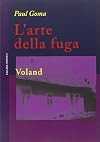
L’arte della fuga è un delizioso e commovente affresco sulla crescita e sull'evoluzione di un bambino come tanti altri a cui il destino ha riservato una vita irta di pericoli e di tensioni. La lettura è estremamente piacevole, lo stile è quanto di più fresco e diretto esista, e la situazione socio-politica emerge sullo sfondo, stagliandosi sì, ma senza mai togliere vigore alla narrazione – in primis – di una storia di vita, di crescita, di lotta per le proprie origini, a costo di show more rischiare la pelle. Voland ha dato spazio, per fortuna, ad uno scampolo di storia collettiva che merita di essere approfondito, esplorato, attraversato. E chi meglio di Goma, che il comunismo russo lo ha vissuto in prima persona, avrebbe mai potuto raccontarci che cosa significa essere privati delle proprie radici? (da mangialibri.com) show less
Paul Goma est un écrivain d’origine roumaine, ancien dissident opposé à la dictature communiste, connu pour la lutte pour les droits de l’homme en Roumanie et vivant à Paris depuis 1977. Paul Goma compte parmi les très grands écrivains de langue roumaine vivants. Ses œuvres sont publiées dans la plupart des pays d’Europe et il est notamment l’auteur de L’art de la fugue, Garde inverse et Elles étaient quatre. L’art de la fugue raconte l’histoire dramatique d’une show more famille obligée par les événements des années 1940-1947 de se réfugier, chassée par la guerre. De province en province, de ville en ville, de logement en logement, ce périple est narré par un petit Roumain bessarabien de six ans el il en dit long sur les débuts du totalitarisme. show less
Statistics
- Works
- 22
- Also by
- 1
- Members
- 91
- Popularity
- #204,135
- Rating
- 5.0
- Reviews
- 3
- ISBNs
- 35
- Languages
- 7