
Hattie Gossett
Author of Presenting...Sister No Blues
Works by Hattie Gossett
Associated Works
This Bridge Called My Back: Writings by Radical Women of Color (1981) — Contributor — 1,143 copies, 4 reviews
Daughters of Africa: An International Anthology of Words and Writings by Women of African Descent from the Ancient Egyptian to the Present (1992) — Contributor — 185 copies
Editor's Choice II: Fiction, Poetry & Art from the U.S. Small Press, 1978 to 1983 (Contemporary Anthology Series) (1987) — Contributor — 6 copies
Tagged
Common Knowledge
- Canonical name
- Gossett, Hattie
- Birthdate
- 1942
- Gender
- female
- Nationality
- USA
- Associated Place (for map)
- USA
Members
Reviews
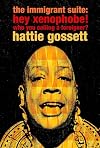
Hattie Gossett is an African-American poet and spoken word artist who lives in upper Manhattan, "where the Dominican Republic meets the Republic of Harlem". Her neighborhood is filled with past and recent immigrants of color, and she puts their voices and experiences on paper in this hard hitting collection of poems about the immigrant experience in the United States.
The voices in these poems speak of the dreams of those who seek a better life in the United States, such as the narrator in show more this excerpt from the opening poem, in america i will...#1:
These hopes are soon dashed by the realities of life in America for poor immigrants, as they face mistrust and discrimination from those who came before them, even from those who look like them, as in this excerpt from send them back!
And, in this excerpt from have we got a job for you!, the immigrant realizes that his job title and social standing in his home country are meaningless here:
The most powerful poem in this collection, thats what he told us, is narrated by a young girl brought to the US with the promise of a better life as a nanny, who is forced into the sex trade industry.
This was an interesting and eye opening collection of poems about the immigrant experience in America, whose lives and stories are often untold and ignored by the larger population. Gossett's book also contains a prologue and epilogue, which link these immigrants' current struggles to the past ones of Native Americans and African Americans. show less
The voices in these poems speak of the dreams of those who seek a better life in the United States, such as the narrator in show more this excerpt from the opening poem, in america i will...#1:
i am moving to america because in america i will...
wear shoes every day & speak my mind freely
get my own web site & platinum amex with fries on the side
take the baby to a real doctor & have my own place
see the statue of liberty & drink the best beer
for me america means...
washing my clothes in a machine not in a bucket
sleeping in a real bed
seeing mickey mouse
taking a bath whenever i want to
never forgetting my ancestors
getting paid
sending money home to my family
These hopes are soon dashed by the realities of life in America for poor immigrants, as they face mistrust and discrimination from those who came before them, even from those who look like them, as in this excerpt from send them back!
send them back where they came from
theyre taking jobs away from americans
damn stinking foreigners
sneaking in over & under the borders in the dead of nite & in broad daylite
overstaying their visas
laying around making babies & getting welfare & working for nothing & not paying taxes
cant even talk english right
sure can count that money though
who let them open up so many vegetable markets & fast food spots
(gimme 4 wings fries & a soda yo)
yeah
who let them buy up all that real estate & all those treasury notes?
its a conspiracy
sure is
uh huh
And, in this excerpt from have we got a job for you!, the immigrant realizes that his job title and social standing in his home country are meaningless here:
hot jobs dreams come true bulletin #109
doctor at home scrubs the hospital floor over here
supermarket chain owner at home picks tomatoes over here
judge at home shines shoes in the courthouse lobby over here
calling all those who lived the good life
calling all those who were in charge
all who were the obedient instruments of power
all who had a big house & servants
all whose foot never touched the ground
whose hand never got dirty
who issued orders
who happily carried out orders
have we got a job for you!
here fill out these forms
report to room d for document review
The most powerful poem in this collection, thats what he told us, is narrated by a young girl brought to the US with the promise of a better life as a nanny, who is forced into the sex trade industry.
This was an interesting and eye opening collection of poems about the immigrant experience in America, whose lives and stories are often untold and ignored by the larger population. Gossett's book also contains a prologue and epilogue, which link these immigrants' current struggles to the past ones of Native Americans and African Americans. show less
You May Also Like
Associated Authors
Statistics
- Works
- 4
- Also by
- 10
- Members
- 50
- Popularity
- #316,247
- Rating
- 4.2
- Reviews
- 1
- ISBNs
- 4
- Favorited
- 1