

Kevin W. Irwin
Author of Models of the Eucharist
About the Author
Monsignor Kevin W. Irwin is a priest of the Archdiocese of New York. Serving on The Catholic University of America faculty for over thirty years, Msgr. Irwin held the Walter J. Schmitz Chair of Liturgical Studies from 2000 to 2015 and served as the dean of the School of Theology and Religious show more Studies from 2005 to 2011. He currently holds the position of ordinary research professor. show less
Works by Kevin W. Irwin
What We Have Done, What We Have Failed to Do: Assessing the Liturgical Reforms of Vatican II (2013) 19 copies, 1 review
A Commentary on Laudato Si': Examining the Background, Contributions, Implementation, and Future of Pope Francis's Encyclical (2016) 9 copies
The Eucharistic Prayer 1 copy
Models of the Eucharist 1 copy
Tagged
Common Knowledge
- Birthdate
- 1946-02-01
- Gender
- male
- Education
- San Anselmo, Rome (STD)
University of Notre Dame (MA|Liturgical Studies) - Occupations
- Catholic priest
- Organizations
- Catholic University of America | director liturgical studies program
- Nationality
- USA
- Places of residence
- District of Columbia, USA
- Associated Place (for map)
- District of Columbia, USA
Members
Reviews
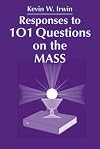
The popular Responses to 101 Questions series now turns its attention to a topic that will have wide appeal and interest among Catholics. It is a thorough explanation of the parts of the Mass-its historical, theological, and liturgical aspects, and how it derives from and relates to daily life.
Writing in a popular style, and using questions that have actually been asked in various educational settings, the author tackles questions in the following broad areas: Background and Terminology; show more Liturgical Roles; Reform of the Liturgy; Introductory Rites; Liturgy of the Word; Liturgy of the Eucharist; Communion Rite; Music at Mass; Eucharistic Doctrine and Discipline; and Eucharist and Daily Life. Questions range from the simple "Are Masses in Latin still allowed?" to the more involved "How can the real presence of our Lord continue in the bread and wine after the Eucharistic celebration has ended?" show less
Writing in a popular style, and using questions that have actually been asked in various educational settings, the author tackles questions in the following broad areas: Background and Terminology; show more Liturgical Roles; Reform of the Liturgy; Introductory Rites; Liturgy of the Word; Liturgy of the Eucharist; Communion Rite; Music at Mass; Eucharistic Doctrine and Discipline; and Eucharist and Daily Life. Questions range from the simple "Are Masses in Latin still allowed?" to the more involved "How can the real presence of our Lord continue in the bread and wine after the Eucharistic celebration has ended?" show less

liturgy & theology from patristic time

What We Have Done, What We Have Failed to Do: Assessing the Liturgical Reforms of Vatican II by Kevin W. Irwin (2-Jan-2014) Paperback by Kevin W. Irwin
Je m'intéresse aux points de vue des deux camps ceux qui préfèrent la liturgie romaine léguée, et ceux qui préfèrent la liturgie réformée. Dans ce livre, qui pourtant semble être écrit par quelqu'un qui connaît et accepte parfaitement les déclarations du magistère et la foi de l'église, j'ai trouvé un parti pris à mon point de vue insuffisamment justifié. La liturgie "Tridentine", fruit du Concile de Trente (?) était, on finirait par le croire, une liturgie solitaire où show more chacun venait se recueillir pour soi-même. Le Concile Vatican II a mis fin à cette époque tridentine obscurantiste. On est passé dans l'ère de l’Église, du peuple.
Il me semble que pour faire un bilan objectif des avancées dues au Concile Vatican II (et à la constitution Sacrosanctum Concilium), il faudrait déjà partir des données de base objectives. Je ne sache pas que la liturgie "Tridentine" ait été fabriquée en 1563 ni en 1565. Il me paraît plutôt que les différents éléments de la liturgie romaine aient été élaborés peu à peu depuis l'époque apostolique jusqu'à environ l'an mil où le plus gros a été fixé et est resté assez stable jusqu'en ... 2017 puisque la forme léguée de cette liturgie n'a, on l'a appris, jamais été abolie.
N'est-il pas un peu présomptueux qu'un consilium (et non pas concilium - sic) insinue que jusque là, pendant presque 2000 ans, on avait une théologie erronée, ou bien, disons-le, arriérée (ce qui est moins pire mais c'est bien le véritable sentiment, je le crois, de ces gens). Sinon pourquoi dirait-on que la liturgie réformée est plus fidèle à la théologie ?
Enfin, ce qui est positif, c'est que cet auteur préconise l'utilisation des antiphones et psaumes au lieu des hymnes (c'est-à-dire cantiques) qui souvent remplacent l'Introït, le graduel, l'offertoire, la communion, etc. Parce que c'est tiré directement de l’Écriture. Ça je le pense aussi. Mais alors dans quelle partie de l'écriture trouve-t-on des fillettes qui servent dans le sanctuaire, au Temple ? Bon, la théologie... a sans doute encore des progrès à accomplir. show less
Il me semble que pour faire un bilan objectif des avancées dues au Concile Vatican II (et à la constitution Sacrosanctum Concilium), il faudrait déjà partir des données de base objectives. Je ne sache pas que la liturgie "Tridentine" ait été fabriquée en 1563 ni en 1565. Il me paraît plutôt que les différents éléments de la liturgie romaine aient été élaborés peu à peu depuis l'époque apostolique jusqu'à environ l'an mil où le plus gros a été fixé et est resté assez stable jusqu'en ... 2017 puisque la forme léguée de cette liturgie n'a, on l'a appris, jamais été abolie.
N'est-il pas un peu présomptueux qu'un consilium (et non pas concilium - sic) insinue que jusque là, pendant presque 2000 ans, on avait une théologie erronée, ou bien, disons-le, arriérée (ce qui est moins pire mais c'est bien le véritable sentiment, je le crois, de ces gens). Sinon pourquoi dirait-on que la liturgie réformée est plus fidèle à la théologie ?
Enfin, ce qui est positif, c'est que cet auteur préconise l'utilisation des antiphones et psaumes au lieu des hymnes (c'est-à-dire cantiques) qui souvent remplacent l'Introït, le graduel, l'offertoire, la communion, etc. Parce que c'est tiré directement de l’Écriture. Ça je le pense aussi. Mais alors dans quelle partie de l'écriture trouve-t-on des fillettes qui servent dans le sanctuaire, au Temple ? Bon, la théologie... a sans doute encore des progrès à accomplir. show less
Jan 11, 2017French
You May Also Like


Statistics
- Works
- 25
- Members
- 551
- Popularity
- #45,289
- Rating
- 3.9
- Reviews
- 4
- ISBNs
- 35