
Ernesto Grassi (1902–1991)
Author of Rhetoric as Philosophy: The Humanist Tradition
About the Author
Ernesto Grassi was a professor of philosophy at the University of Munich and director of the Institute of Humanistic and Philosophic Studies.
Series
Works by Ernesto Grassi
Schiller : Wallensteins Lager + Die Piccolomini + Wallensteins Tod + Dokumente (1961) — Editor — 6 copies
Renaissance Humanism: Studies in Philosophy and Poetics (Medieval & Renaissance Texts & Studies S.) (1988) 4 copies, 1 review
Folly and Insanity in Renaissance Literature (Medieval and Renaissance Texts and Studies) (1986) 4 copies
Goethe : Römische Elegien + Venetianische Epigramme + Tagebuch der italienischen Reise (1984) — Editor — 4 copies
Giacomo Casanova : Memoiren 1 : Bettina : Rom, Paris, Wien : Die Flucht aus den Bleikammern (1925) — Editor — 2 copies
Giacomo Casanova : Memoiren 2 : Lotterie und Kabbala : Esther : Köln ; Bonn ; Stuttgart : Bekehrung und Verführung : Voltaire — Editor — 2 copies
Associated Works
Platon. Sämtliche Werke Bd. 1: Apologie des Sokrates, Kriton, Ion, Hippias II, Theages, Alkibiades I, Laches, Charmides, Euthyphron, Protagoras, Gorgias, Menon, Hippias I,… (1998) — Editor, some editions — 64 copies
Menon, Hippias I, Euthydemos, Menexenos, Kratylos, Lysis, Symposion (1993) — Editor, some editions — 20 copies
Parmenides ; Phaedrus ; Sophist ; Theaetetus [Translation] (1977) — Editor, some editions — 17 copies
Tagged
Common Knowledge
- Birthdate
- 1902-05-02
- Date of death
- 1991-12-22
- Gender
- male
- Occupations
- philosopher
- Nationality
- Italy
- Birthplace
- Milan, Italy
- Place of death
- Munich, Bavaria, Germany
- Associated Place (for map)
- Italy
Members
Reviews

Grassi had studied, among others, with Jaspers and Heidegger. He was for many years the editor of the deutsche enzyklopädie for which series this text was specifically written in 1957. In exploring the questions: What is art? What is understood under ‘art’ and its relation to reality? and: What are the origins of art and its relation to myth, religion and philosophy?, Grassi, starting with the concept of mimesis by Plato and Aristotle, is investing the changing and often quite show more different ideas understood by it. According to Grassi - and I agree - the questions above illuminate various aspects of art thus cannot be separated, neither can the problem of art be separated from the question what it means to be human . To encounter art requires to open oneself to the work, it requires an active engagement to enter into a discussion. The work places demands on me, which I may or may not be able to fulfil at that moment. He discusses the etymology of the term ars (lat.) - arte (ital.) - art (engl.) and its original double meaning as shown in the Italian ‘artigiano’ : craftsman and ‘artista’ : artist. In discussing art, its mythical origins and what is understood by the term ‘art’ he examines the ideas of Giambattista Vico, Cézanne, Proust, Malraux and many others. A most thorough discussion it is and very readable as he illustrates his thoughts with examples. I consider the text essential reading for anybody interested in these questions. It has been translated into Italian and Spanish but an English translation is missing. (V-17) show less
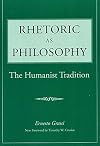
A must read for anyone interested in the relationship between rhetoric and philosophy--truly an overwhelming book. Love it.

You May Also Like
Associated Authors
Statistics
- Works
- 33
- Also by
- 7
- Members
- 156
- Popularity
- #134,404
- Rating
- 3.7
- Reviews
- 3
- ISBNs
- 35
- Languages
- 4
- Favorited
- 1