
Syd Hoff (1912–2004)
Author of Danny and the Dinosaur
About the Author
Sydney Hoff, a well-known cartoonist, author, and illustrator of books for children and young adults, was born in 1912 New York City and raised in the Bronx. His young adult novel, Irving and Me, was named one of the 10 best books for children by the New York Times. Hoff first became interested in show more drawing as a child. Although he dropped out of public school, he later attended the National Academy of Design in New York City, where he studied to become a serious painter. However, at the age of 18 he sold his first cartoon to The New Yorker; this launched his career as a cartoonist. Hoff has also drawn cartoon advertisements for CBS and has written short mysteries for popular mystery magazines. One of his earliest and most enduringly popular works is Danny and the Dinosaur, published in 1958. He wrote this book to entertain one of his daughters who was sick. Hoff's audience is, for the most part, the young child who likes clear illustrations, friendly animals, and a limited text. Hoff died of pneumonia on May 12, 2004 in Miami, Florida. He and his wife, Dora, had two children. (Bowker Author Biography) show less
Series
Works by Syd Hoff
Danny and the Dinosaur: Big Reading Collection: 5 Books Featuring Danny and His Friend the Dinosaur! (I Can Read Level 1) (2017) 73 copies, 1 review
Danny and the Dinosaur: A Very Dino Christmas (Syd Hoff's Danny and the Dinosaur) (2017) 20 copies, 1 review
The Danny and the Dinosaur Storybook Collection: 5 Beloved Stories (I Can Read Level 1) (2016) 18 copies, 1 review
Danny and the Dinosaur Storybook Favorites: Includes 5 Stories Plus Stickers! (I Can Read Level 1) (2019) 5 copies
Learning to cartoon 3 copies
The Syd Hoff I Can Read Collection Box Set: 12 books and 2 CDs Featuring Classic Stories (I Can Read Level 1) (2015) 2 copies
Shows you How to Draw Cartoons 2 copies
Herschel the hero 1 copy
Syd Hoff Reader Collection 2 1 copy
SYD HOFF (Set of 3) I CAN READ. "An I Can Read Book" Series. Sammy the Seal, Thunderhoof, Danny the Dinosaur. (1959) 1 copy
How to Draw Cartooons 1 copy
Toddler Dinosaur: Unit Bag 1 copy
danny and dinosaur 1 copy
Syd Hoff Readers 1 copy
Hunting, anyone? 1 copy
Okay--you can look now! 1 copy
Sælen Ole 1 copy
Muscles and Brains 1 copy
Eight little artists 1 copy
Associated Works
Don't Be My Valentine: A Classroom Mystery (I Can Read Book 2) (1985) — Illustrator — 185 copies, 2 reviews
Now I am Six! A Collection of Stories All About Being Six for Beginning Readers (1999) — Contributor — 169 copies, 4 reviews
Highlights of a Fighting History: 60 Years of the Communist Party, USA (1979) — Illustrator — 27 copies
Thunder over the Bronx — Illustrator — 5 copies
Parm me — Illustrator — 2 copies
Tagged
Common Knowledge
- Canonical name
- Hoff, Syd
- Legal name
- Hoff, Sydney
- Other names
- Redfield, A.
- Birthdate
- 1912-09-04
- Date of death
- 2004-05-12
- Gender
- male
- Education
- National Academy of Design (New York)
- Occupations
- cartoonist
illustrator - Organizations
- The New Yorker
Esquire
Saturday Evening Post - Relationships
- Hoff, Dora (wife)
- Cause of death
- pneumonia
- Nationality
- USA
- Birthplace
- New York, New York, USA
- Places of residence
- New York, New York, USA
Miami Beach, Florida, USA - Place of death
- Miami Beach, Florida, USA
- Associated Place (for map)
- Florida, USA
Members
Reviews

Sad and lonely because all of her witch friends had passed on and she was the last of her kind, Mrs. Switch decided to seek a new home, leaving her witchy cave to move into a new suburban tract. At first this new locale did wonders for her and for her cat, as they made friends and fit right in. But when Mrs. Switch demonstrated broom flying to the local children after story-time, her identity as a witch was revealed, and suddenly she became a pariah. It was only when the local children fell show more ill in the middle of a snow storm, and only Mrs. Switch could fetch help (on her broom) that the neighborhood accepted her for who she was...
Published in 1966, Mrs. Switch was the first of two witchy tales from author/illustrator Syd Hoff, followed in 1975 by The Witch, the Cat, and the Baseball Bat. The witch in that later title, who bears a striking resemblance to Mrs. Switch, was nasty and mean-spirited, whereas our witchy heroine here is goodhearted, and just wants to make friends. In any case, I found this one fun, if a little dated, and I appreciated the themes of belonging and difference, and how the later is eventually accommodated. The illustrations are done in a cartoon style that is vintage Syd Hoff, and have a nostalgic appeal for me, given that I grew up on some of this creator's early readers, fromDanny and the Dinosaur to Sammy the Seal. Recommended to picture book readers who enjoy vintage witchy fare. show less
Published in 1966, Mrs. Switch was the first of two witchy tales from author/illustrator Syd Hoff, followed in 1975 by The Witch, the Cat, and the Baseball Bat. The witch in that later title, who bears a striking resemblance to Mrs. Switch, was nasty and mean-spirited, whereas our witchy heroine here is goodhearted, and just wants to make friends. In any case, I found this one fun, if a little dated, and I appreciated the themes of belonging and difference, and how the later is eventually accommodated. The illustrations are done in a cartoon style that is vintage Syd Hoff, and have a nostalgic appeal for me, given that I grew up on some of this creator's early readers, fromDanny and the Dinosaur to Sammy the Seal. Recommended to picture book readers who enjoy vintage witchy fare. show less

A nasty witch and her equally unpleasant black cat decide that they hate baseball after they attend a game and witness the pleasure it brings to so many. Brooding on the matter, the witch comes up with a plan to ruin America's pastime: create an ensorcelled baseball bat, one with a disguised hole that allows the ball to pass right through it. With no hits (especially home runs), the excitement of the game will be ruined...
I have fond memories of reading some of author/illustrator Syd Hoff's show more classic early-readers as girl - notably, his Danny and the Dinosaur and Sammy the Seal - but I never happened upon The Witch, The Cat, and The Baseball Bat, which was first published in 1968. It doesn't appear to have been one of Hoff's more popular stories, and I might never have discovered it, were it not for my interest in witchy picture-books. I'm glad that I did, as I enjoyed the humor of both the story and the artwork, which (needless to say) felt very familiar to me. I appreciated the fact that, atypically, the witch wasnot reformed , and I found the forced-looking grin on the face of the witch's cat deliciously creepy! This is one I would recommend to fans of Syd Hoff's charming, vintage-style artwork, as well as to picture-book readers who enjoy witchy fare and/or stories about baseball. show less
I have fond memories of reading some of author/illustrator Syd Hoff's show more classic early-readers as girl - notably, his Danny and the Dinosaur and Sammy the Seal - but I never happened upon The Witch, The Cat, and The Baseball Bat, which was first published in 1968. It doesn't appear to have been one of Hoff's more popular stories, and I might never have discovered it, were it not for my interest in witchy picture-books. I'm glad that I did, as I enjoyed the humor of both the story and the artwork, which (needless to say) felt very familiar to me. I appreciated the fact that, atypically, the witch was

I grew up reading Syd Hoff's Danny and the Dinosaur, a beginning reader originally published in 1958 as part of the prestigious I Can Read series, and have many fond memories of Danny's day of adventure with his prehistoric friend. Who hasn't fantasized about having a pet dinosaur, or wondered what those fossilized skeletons in the museum would look like, if they suddenly came alive?
Recently, a post on one of my favorite children's literature blogs, American Indians in Children's Literature, show more drew my attention to the problematic nature of the illustration in which Danny, at the museum for the day, is looking at a display containing an Indian, a bear, and an Eskimo. I was surprised, because although I had always found it odd and inappropriate that the achievements of non-European peoples - Native Americans, Pacific Islanders - would be collected in a museum devoted to "natural" history, while similar artifacts from European peoples are labeled "art," and find their way to a different sort of museum, I had no recollection of this illustration, from my childhood reading. Needless to say, I decided to track down a copy and reread, especially when - by sheer coincidence - we chose Danny and the Dinosaur as one of our July dinosaur-themed reads over in the Picture-Book Club to which I belong.
So... does this single illustration - which unquestionably hearkens back to outdated notions of racial hierarchy (some of them still with us, unfortunately) in which Europeans are somehow more fully "human," while non-Europeans are in the same category as animals - ruin the story? Will it harm the young reader? Is Professor Debbie Reese right? Should Danny and the Dinosaur be pulled from shelves? My answers are, respectively: Yes and No, Yes, Yes, and No.
To wit: I don't know that it's fair to say that the illustration "ruins" the story, since I can only speak for myself, but I do know that I will never be entirely comfortable with this title again. I will always be thinking of that illustration, what it means, and what harm it might do. Which brings me to: yes, I think images like this, for all their seeming innocence - perhaps because of them? - can do harm. Perhaps not lasting, terrible harm, all on their own, but if combined with enough similar material, not insignificant harm either. Meaning, of course, that yes, Professor Reese is right. She's right to point out this illustration, and she's right to question it. But finally, no, no I don't think, as she does, that it should be pulled from the library shelves. Leaving aside my passionate belief that the library should be a repository for the printed word, not some revolving-door collection based on popularity (or even morality), I also think that titles such as this fade away when they have no more significance, and it's worse than useless trying to forbid them. Worse, because we give things immense power by forbidding them...
I gave this three stars, because it would be untruthful, in light of my childhood love of it, to give it less. But although I wouldn't support its removal from the library, I also wouldn't go out of my way to promote it. show less
Recently, a post on one of my favorite children's literature blogs, American Indians in Children's Literature, show more drew my attention to the problematic nature of the illustration in which Danny, at the museum for the day, is looking at a display containing an Indian, a bear, and an Eskimo. I was surprised, because although I had always found it odd and inappropriate that the achievements of non-European peoples - Native Americans, Pacific Islanders - would be collected in a museum devoted to "natural" history, while similar artifacts from European peoples are labeled "art," and find their way to a different sort of museum, I had no recollection of this illustration, from my childhood reading. Needless to say, I decided to track down a copy and reread, especially when - by sheer coincidence - we chose Danny and the Dinosaur as one of our July dinosaur-themed reads over in the Picture-Book Club to which I belong.
So... does this single illustration - which unquestionably hearkens back to outdated notions of racial hierarchy (some of them still with us, unfortunately) in which Europeans are somehow more fully "human," while non-Europeans are in the same category as animals - ruin the story? Will it harm the young reader? Is Professor Debbie Reese right? Should Danny and the Dinosaur be pulled from shelves? My answers are, respectively: Yes and No, Yes, Yes, and No.
To wit: I don't know that it's fair to say that the illustration "ruins" the story, since I can only speak for myself, but I do know that I will never be entirely comfortable with this title again. I will always be thinking of that illustration, what it means, and what harm it might do. Which brings me to: yes, I think images like this, for all their seeming innocence - perhaps because of them? - can do harm. Perhaps not lasting, terrible harm, all on their own, but if combined with enough similar material, not insignificant harm either. Meaning, of course, that yes, Professor Reese is right. She's right to point out this illustration, and she's right to question it. But finally, no, no I don't think, as she does, that it should be pulled from the library shelves. Leaving aside my passionate belief that the library should be a repository for the printed word, not some revolving-door collection based on popularity (or even morality), I also think that titles such as this fade away when they have no more significance, and it's worse than useless trying to forbid them. Worse, because we give things immense power by forbidding them...
I gave this three stars, because it would be untruthful, in light of my childhood love of it, to give it less. But although I wouldn't support its removal from the library, I also wouldn't go out of my way to promote it. show less
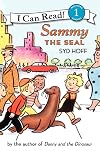
Sammy the Seal is the dystopian novel that 1984 was meant to be. What is Big Brother if not a semiaquatic anglophone determined to force himself into the lives of unsuspecting humans? Orwell envisioned a world where you were always being watched, whether you liked it or not. This, of course, pales in comparison to Syd Hoff's nightmarish conception of a totalitarian regime that grants a seal the right to take a bath IN YOUR TUB whenever it pleases, whether you like it or not.
Sammy is a show more despot who just happens to spend time in a zoo. He's clearly the Kim Jong-Un of the place. All the other animals are forced to pretend that they're happy for him, smiling toothy, herbivorous smiles as Sammy flops out the door and leaves them all in their cages. Sammy allows the zookeeper to keep up appearances as an authority figure despite his obvious lack of authority. This morphs a man who used to stand for something into a spineless, groveling sycophant that exists only to enable Sammy's innermost fantasies, the most terrifying of which is attending school.
Sammy begins his time in the classroom as an anonymous observer, hoping to catch the teacher in the midst of a lesson that she'd live to regret. Having failed to discern anything other than party rhetoric in her teaching, Sammy makes his presence known to her via an off-key rendition of the song that all the students are forced to sing (there's no better tool for molding young minds than a song). As the lesson continues, Sammy starts playing with blocks adorned with the letters of the alphabet, and his illiteracy becomes apparent to the reader. What happens next is hard to understand the first time through. At first, when Sammy provides clear evidence that he can't read, nothing is done to rectify this obvious academic concern. Then, just a few pages later, Hoff writes, "He learned how to read. He learned how to write." And then this happens:
Do you see that handwriting? It's immaculate! We've got to get this guy on illuminated manuscripts immediately!
So what's going on here? Why did Sammy stink at making words with the blocks only to turn into Máel Muire mac Céilechair in record time? Looking back, it quickly becomes apparent that Sammy could always read. He was able to independently reach a school that he was visiting for the first time, making it very likely he made use of maps and street signs. Sammy's inability to spell anything with the blocks is nothing more than a test. But a test of what? There are two possible explanations, both of them deeply disturbing.
The first is a cynical test of loyalty. Sammy feigns illiteracy to see if the teacher or any of her students would bring up such an embarrassing attribute, which would be to no one's detriment but their own. Imagine the potential consequences of acknowledging any trait of Sammy's that contradicts the social policy of apotheosis. If you say Sammy can't read, doesn't that imply that you think he should learn how to read, meaning that his failure to do so to this point is, in your opinion, an error in judgment??> Blasphemy gets you nowhere, and it gets you there in a hurry.
As terrifying as that idea may be, don't worry, it might be even worse than that. If the teacher would notice Sammy's illiteracy, she would at the very least react in a way to quickly move past the situation. She would more than likely put the blocks away in an attempt to keep the children from noticing what she just noticed, preventing them from saying something stupid that would result in the public execution of their families. But this doesn't occur. Instead, the teacher lets them continue until recess, at which point a casual game of volleyball starts up. What this means, of course, is that she fails to notice Sammy's illiteracy, proving that she has the exact same problem. That's right. This teacher can't read.
While this might seem like a bad thing, it's music to Sammy's ears. He wants teachers that can't read because illiterate teachers teach illiterate students, and a population that can't read or write is much easier to control. Sammy is playing the long game, and if this classroom is representative of education throughout Sammy's nation, then he's succeeding.
The story ends with Sammy returning to the zoo and declaring, "There's no place like home!" He rejoins his fellow seals and chows down on some fish. This seems uncharacteristic for the seal we know Sammy to be, but there's a reason for this. Rather than end the story of Sammy the Seal, Hoff decided to instead offer the reader a new beginning, a solution to the problems that Sammy creates. Hoff indicates that Sammy is perfectly happy in his zoo enclosure, and only his unnecessary exposure to the outside world turns him into a megalomaniac. If the zookeeper kept Sammy where he was and prevented him from expanding his territory, peace could be possible. In Hoff's mind, if you give the seal some fish and pat him on the head, he probably won't come after you.
Syd Hoff and Neville Chamberlain had (at least) two things in common. They both believed in the power of appeasement, and they were both dead wrong. That doesn't mean there aren't lessons to be taken from the cautionary tale of Sammy the Seal. Make sure your kid's teachers know how to read, and if you ever need a calligrapher, hit up the nearest pinniped. show less
Sammy is a show more despot who just happens to spend time in a zoo. He's clearly the Kim Jong-Un of the place. All the other animals are forced to pretend that they're happy for him, smiling toothy, herbivorous smiles as Sammy flops out the door and leaves them all in their cages. Sammy allows the zookeeper to keep up appearances as an authority figure despite his obvious lack of authority. This morphs a man who used to stand for something into a spineless, groveling sycophant that exists only to enable Sammy's innermost fantasies, the most terrifying of which is attending school.
Sammy begins his time in the classroom as an anonymous observer, hoping to catch the teacher in the midst of a lesson that she'd live to regret. Having failed to discern anything other than party rhetoric in her teaching, Sammy makes his presence known to her via an off-key rendition of the song that all the students are forced to sing (there's no better tool for molding young minds than a song). As the lesson continues, Sammy starts playing with blocks adorned with the letters of the alphabet, and his illiteracy becomes apparent to the reader. What happens next is hard to understand the first time through. At first, when Sammy provides clear evidence that he can't read, nothing is done to rectify this obvious academic concern. Then, just a few pages later, Hoff writes, "He learned how to read. He learned how to write." And then this happens:
Do you see that handwriting? It's immaculate! We've got to get this guy on illuminated manuscripts immediately!
So what's going on here? Why did Sammy stink at making words with the blocks only to turn into Máel Muire mac Céilechair in record time? Looking back, it quickly becomes apparent that Sammy could always read. He was able to independently reach a school that he was visiting for the first time, making it very likely he made use of maps and street signs. Sammy's inability to spell anything with the blocks is nothing more than a test. But a test of what? There are two possible explanations, both of them deeply disturbing.
The first is a cynical test of loyalty. Sammy feigns illiteracy to see if the teacher or any of her students would bring up such an embarrassing attribute, which would be to no one's detriment but their own. Imagine the potential consequences of acknowledging any trait of Sammy's that contradicts the social policy of apotheosis. If you say Sammy can't read, doesn't that imply that you think he should learn how to read, meaning that his failure to do so to this point is, in your opinion, an error in judgment??> Blasphemy gets you nowhere, and it gets you there in a hurry.
As terrifying as that idea may be, don't worry, it might be even worse than that. If the teacher would notice Sammy's illiteracy, she would at the very least react in a way to quickly move past the situation. She would more than likely put the blocks away in an attempt to keep the children from noticing what she just noticed, preventing them from saying something stupid that would result in the public execution of their families. But this doesn't occur. Instead, the teacher lets them continue until recess, at which point a casual game of volleyball starts up. What this means, of course, is that she fails to notice Sammy's illiteracy, proving that she has the exact same problem. That's right. This teacher can't read.
While this might seem like a bad thing, it's music to Sammy's ears. He wants teachers that can't read because illiterate teachers teach illiterate students, and a population that can't read or write is much easier to control. Sammy is playing the long game, and if this classroom is representative of education throughout Sammy's nation, then he's succeeding.
The story ends with Sammy returning to the zoo and declaring, "There's no place like home!" He rejoins his fellow seals and chows down on some fish. This seems uncharacteristic for the seal we know Sammy to be, but there's a reason for this. Rather than end the story of Sammy the Seal, Hoff decided to instead offer the reader a new beginning, a solution to the problems that Sammy creates. Hoff indicates that Sammy is perfectly happy in his zoo enclosure, and only his unnecessary exposure to the outside world turns him into a megalomaniac. If the zookeeper kept Sammy where he was and prevented him from expanding his territory, peace could be possible. In Hoff's mind, if you give the seal some fish and pat him on the head, he probably won't come after you.
Syd Hoff and Neville Chamberlain had (at least) two things in common. They both believed in the power of appeasement, and they were both dead wrong. That doesn't mean there aren't lessons to be taken from the cautionary tale of Sammy the Seal. Make sure your kid's teachers know how to read, and if you ever need a calligrapher, hit up the nearest pinniped. show less
Lists
Awards


You May Also Like


Associated Authors
Statistics
- Works
- 145
- Also by
- 28
- Members
- 31,105
- Popularity
- #636
- Rating
- 3.6
- Reviews
- 199
- ISBNs
- 547
- Languages
- 2
- Favorited
- 3


