
Scott D. Seligman
Author of Chinese At a Glance
About the Author
Scott D. Seligman is a historian and retired corporate executive. He received degrees from Princeton University and Harvard University. He worked as a legislative assistant in Congress, a businessman in China, and a communications director of a Fortune 50 company. He is the author of several show more scholarly and business books including Chinese Business Etiquette, The First Chinese American, and Tong Wars: The Untold Story of Vice, Money, and Murder in New York's Chinatown. (Bowker Author Biography) show less
Works by Scott D. Seligman
Tong Wars: The Untold Story of Vice, Money, and Murder in New York's Chinatown (2016) 64 copies, 1 review
Chinese Business Etiquette: A Guide to Protocol, Manners, and Culture in thePeople's Republic of China (1999) 63 copies, 2 reviews
The Great Kosher Meat War of 1902: Immigrant Housewives and the Riots That Shook New York City (2020) 35 copies, 2 reviews
The Chief Rabbi's Funeral: The Untold Story of America's Largest Antisemitic Riot (2024) 7 copies, 1 review
Murder in Manchuria: The True Story of a Jewish Virtuoso, Russian Fascists, a French Diplomat, and a Japanese Spy in Occupied China (2023) 4 copies
The Great Christmas Boycott Of 1906 Antisemitism and the Battle over Christianity in the Public Schools (2025) 4 copies
Now You're Talking Mandarin Chinese In No Time: Book and Audio CD Package (Now You're Talking Series) (2006) 3 copies
The Third Degree: The Triple Murder That Shook Washington and Changed American Criminal Justice (2018) 3 copies, 1 review
Tagged
Common Knowledge
- Gender
- male
- Nationality
- USA
- Places of residence
- District of Columbia, USA
- Associated Place (for map)
- District of Columbia, USA
Members
Reviews
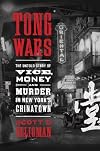
When I think of gang wars in New York, what immediately comes to mind is The Godfather and Mafia soldiers going to the mattresses; if I think about it a little longer I might remember Herbert Asbury and the battles between the Short Tails and the Dead Rabbits chronicled in The Gangs of New York. I had no idea there were equally violent conflicts in the early 20th century between the Hip Sing tong and the On Leong tong over gambling, opium and prostitution in New York City’s Chinatown. show more Author Scott Seligman is described as “fluent in Mandarin and conversant in Cantonese” in his dust cover biography, which must have been a huge help in putting together the Tong Wars story; Seligman notes that the was no standard spelling for Chinese words; newspaper reports and court records just made their best guess. Further, some Chinese adopted the western mode of putting their family name second, others went by nicknames, and some even used their place of business as a personal name.
Seligman notes “tong” means “chamber”, and most tongs started out as benevolent societies much like the Masons or the Oddfellows or the Elks. That changed – at least, the nonChinese perception changed; most Chinese seemed to feel that if a man wanted to relax by gambling a little, having a whore, and smoking a pipe of opium after a hard day at the laundry that was nobody’s business but his own. The tongs saw themselves as facilitating this arrangement, which they did by bribing New York City police to look the other way. Bribes took money, and the tongs got it by levying “protection” on Chinese businesses. Alas, there were some people who did think gambling, prostitution and drugs were vices that should be suppressed; the Parkhurst Society, named after a prominent New York City clergyman, set off to suppress them, convincing police to stage raids and district attorneys to prosecute. The tongs reacted by going after each other in an attempt to keep their shares of a diminishing pot.
The carnage was awesome. Tong members stabbed, hatcheted, shot, poisoned and dynamited each other; from Selgiman’s account it was usually relatively low ranking members that got hit. In that sense it wasn’t like Mafia struggles for control of an organization where leaders were targets; instead the violence centered on the concept of “face”; if the Hip Sings killed an On Leong, the On Leongs had to retaliate with an equivalent murder or be shamed. There were numerous attempts at stopping the violence, both by the authorities and by the Chinese themselves; nothing really worked. Widely publicized peace treaties were painfully negotiated and didn’t even last for a day; there were arrests, imprisonments, deportations and electrocutions but they didn’t slow things down either. It was The Great Depression and the consequent drying up of the cash pool plus a patriotic response to the Japanese invasion of China that finally got the tongs to sign a lasting treaty, in 1933. There was still a murder now and then, but they were now most likely for good American reasons of personal animosity rather than tong rivalry, and the tong leaders were always quick to smooth things over.
Fascinating; Seligman is an engaging writer and manages to keep the characters and chronology straight. This is helped by a list of dramatis personae at the beginning of the book and a glossary and gazetteer at the end, plus a map of Chinatown with locations identified. Photographs of the participants and Chinatown scenes, end notes (by page number), references and a good index. Instructive history. show less
Seligman notes “tong” means “chamber”, and most tongs started out as benevolent societies much like the Masons or the Oddfellows or the Elks. That changed – at least, the nonChinese perception changed; most Chinese seemed to feel that if a man wanted to relax by gambling a little, having a whore, and smoking a pipe of opium after a hard day at the laundry that was nobody’s business but his own. The tongs saw themselves as facilitating this arrangement, which they did by bribing New York City police to look the other way. Bribes took money, and the tongs got it by levying “protection” on Chinese businesses. Alas, there were some people who did think gambling, prostitution and drugs were vices that should be suppressed; the Parkhurst Society, named after a prominent New York City clergyman, set off to suppress them, convincing police to stage raids and district attorneys to prosecute. The tongs reacted by going after each other in an attempt to keep their shares of a diminishing pot.
The carnage was awesome. Tong members stabbed, hatcheted, shot, poisoned and dynamited each other; from Selgiman’s account it was usually relatively low ranking members that got hit. In that sense it wasn’t like Mafia struggles for control of an organization where leaders were targets; instead the violence centered on the concept of “face”; if the Hip Sings killed an On Leong, the On Leongs had to retaliate with an equivalent murder or be shamed. There were numerous attempts at stopping the violence, both by the authorities and by the Chinese themselves; nothing really worked. Widely publicized peace treaties were painfully negotiated and didn’t even last for a day; there were arrests, imprisonments, deportations and electrocutions but they didn’t slow things down either. It was The Great Depression and the consequent drying up of the cash pool plus a patriotic response to the Japanese invasion of China that finally got the tongs to sign a lasting treaty, in 1933. There was still a murder now and then, but they were now most likely for good American reasons of personal animosity rather than tong rivalry, and the tong leaders were always quick to smooth things over.
Fascinating; Seligman is an engaging writer and manages to keep the characters and chronology straight. This is helped by a list of dramatis personae at the beginning of the book and a glossary and gazetteer at the end, plus a map of Chinatown with locations identified. Photographs of the participants and Chinatown scenes, end notes (by page number), references and a good index. Instructive history. show less
Chinese Business Etiquette: A Guide to Protocol, Manners, and Culture in the People's Republic of China by Scott D. Seligman

A fascinating and informative brass tacks guide for Westerners doing business in the PRC by an American businessman who has resided and worked there for the past 28 years. Reviewed and lauded by various international business nabobs. While not geared to the casual traveler, it is an insider's view of the how's and why's of Chinese culture that would be helpful to anyone who is interested in visiting China or understanding the culture of Chinese immigrants in one's own country. As a book that show more promotes understanding and harmony between cultures, this one gets kudos from me! show less
The Great Kosher Meat War of 1902: Immigrant Housewives and the Riots That Shook New York City by Scott D. Seligman
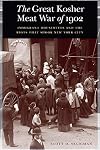
This is the story of the 1902 and subsequent kosher meat riots and strikes led by female immigrant orthodox jews after rising meat prices.
This is extremely well written and has a very easy flow to it.
You will also learn about the large beaf trust and how it was eventually desolved by the Supreme Court.
This is not just a story about the meat riots but also encompasses the labor movement and eventually the rent strikes which took the lessons from the meat strikes to get results.
I would highly show more recommend this for anyone interested in that era. show less
This is extremely well written and has a very easy flow to it.
You will also learn about the large beaf trust and how it was eventually desolved by the Supreme Court.
This is not just a story about the meat riots but also encompasses the labor movement and eventually the rent strikes which took the lessons from the meat strikes to get results.
I would highly show more recommend this for anyone interested in that era. show less
The Chief Rabbi's Funeral: The Untold Story of America's Largest Antisemitic Riot by Scott D. Seligman
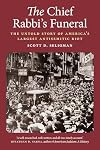
The chief rabbis funeral doesn't just tell the story of the funeral but also sets the scene of what led up to the riot and the aftermath of the riot when the jews finally decided not to take it laying down.
An amazing book beautifully written.
Highly recommend
An amazing book beautifully written.
Highly recommend
Awards


You May Also Like


Statistics
- Works
- 14
- Members
- 357
- Popularity
- #67,135
- Rating
- 3.7
- Reviews
- 7
- ISBNs
- 46
- Languages
- 1