
Valerie Grieg (1922–2013)
Author of Inside Ballet Technique: Separating Anatomical Fact from Fiction in the Ballet Class
Works by Valerie Grieg
Inside Ballet Technique: Separating Anatomical Fact from Fiction in the Ballet Class (1994) 80 copies, 2 reviews
Tagged
Common Knowledge
- Birthdate
- 1922
- Date of death
- 2013-03-27
- Gender
- female
- Nationality
- Australia
- Associated Place (for map)
- Australia
Members
Reviews
Inside Ballet Technique: Separating Anatomical Fact from Fiction in the Ballet Class by Valerie Grieg

Lots of dance anatomy. Can't say I learned very much as a ballet beginner, but it was still an interesting read.
Inside Ballet Technique-Separating Anatomical Fact from Fiction in the Ballet Class by Valerie Grieg
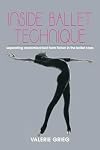
The more knowledge the dancer-and the dancer's parents and teachers-has about the body as an instrument of artisic expression, the better the dancer. Inside Ballet Techniques introduces the reader to the natural anatomical laws governing human movement and body mechanics, and relates them directly to the dancer's acquisition of technique in the daily ballet class. Easy to read, simply and clearly illustrated, Inside Ballet Techniques provides a fresh perspective on the basic tenets of show more classical ballet, answering many questions that commonly persist in the minds of career-track students and dancers.
Valieri Grieg trained in her native Australia and danced with the Victorian Ballet, the forerunner of Ballet Victoria, She later became assistant artistic director of Ballet Victoria, and coordinator of the Victorial Ballet Guild schools. On a sabbatical in New York she took courses at the Juillard School for a year, after which she settled in Ohio. She taught company class for the fledgling Ohio Ballet, and served as founding coordinator of the dance Department at the University of Akron. Returning to New York, she studied kinesthetic anatomy with Irene Dowd and was introduced to the work of Mabel Todd and Lulu Swelgard as well as to the findings of contemporary kinesiologists. Further independ research led to integrating this material with traditional ballet technique. When not carrying out teaching and choroeagraphic assignments throughout the country, she teaches and coaches private students in Manhattan.
Contents
Acknowledgments
Introduction
1 Getting it all straight
The moving body
Stabilizing the structure
The role of muscles
A portrait in fascia
A personal computer
A different language
2 What we need to know about muscles
Muscles and the nervous system
The structure of a muscle
The way muscles function
Muscle tone and balance
A word about stretching
Imagery-The dancer's magic tookl
Questions for you to answer
3 The stem of aplomb
The spinal column
Getting centered
Movement possibilities and limitations in each area
The dancer's stance
Some postural muscles of the trunk
Questions for you to answer
4 The control center
The structure of the hips
The placement of the pelvis
Square hips? In battements tendus and high leg extension
Postural muscles of the hip
Questions for you to answer
5 Well turned out
Factors determining the range of turnout
Turnout is a movement
The turnout in action
The muscle controversy
Fifth position-The home base
Claiming our heritage
Muscles of the thigh
Questions for you to answer
6 Above the waist
The rib cage-Its structure and placement
A muscle of respiration
The free and easy shoulder girdle
The shoulder joint
Mechanics of the ports de bras
Muscles of the upper torso
Questions for you to answer
7 A modified hinge
The structures of the knee
Alignment of the knee
The knee in action
The knee in disorder
Muscles acting on the knee
Questions for you to answer
8 The bottom of it all
The structure of the foot-The ankle; The foot itself; The arches of the foot
The foot in action
The weight-bearing foot
The foot and the turnout
Pointe work
Muscles of the lower leg and foot
Questions for you to answer
9 What we say, and what we mean
10 Conclusion
References
Bibliography
Index show less
Valieri Grieg trained in her native Australia and danced with the Victorian Ballet, the forerunner of Ballet Victoria, She later became assistant artistic director of Ballet Victoria, and coordinator of the Victorial Ballet Guild schools. On a sabbatical in New York she took courses at the Juillard School for a year, after which she settled in Ohio. She taught company class for the fledgling Ohio Ballet, and served as founding coordinator of the dance Department at the University of Akron. Returning to New York, she studied kinesthetic anatomy with Irene Dowd and was introduced to the work of Mabel Todd and Lulu Swelgard as well as to the findings of contemporary kinesiologists. Further independ research led to integrating this material with traditional ballet technique. When not carrying out teaching and choroeagraphic assignments throughout the country, she teaches and coaches private students in Manhattan.
Contents
Acknowledgments
Introduction
1 Getting it all straight
The moving body
Stabilizing the structure
The role of muscles
A portrait in fascia
A personal computer
A different language
2 What we need to know about muscles
Muscles and the nervous system
The structure of a muscle
The way muscles function
Muscle tone and balance
A word about stretching
Imagery-The dancer's magic tookl
Questions for you to answer
3 The stem of aplomb
The spinal column
Getting centered
Movement possibilities and limitations in each area
The dancer's stance
Some postural muscles of the trunk
Questions for you to answer
4 The control center
The structure of the hips
The placement of the pelvis
Square hips? In battements tendus and high leg extension
Postural muscles of the hip
Questions for you to answer
5 Well turned out
Factors determining the range of turnout
Turnout is a movement
The turnout in action
The muscle controversy
Fifth position-The home base
Claiming our heritage
Muscles of the thigh
Questions for you to answer
6 Above the waist
The rib cage-Its structure and placement
A muscle of respiration
The free and easy shoulder girdle
The shoulder joint
Mechanics of the ports de bras
Muscles of the upper torso
Questions for you to answer
7 A modified hinge
The structures of the knee
Alignment of the knee
The knee in action
The knee in disorder
Muscles acting on the knee
Questions for you to answer
8 The bottom of it all
The structure of the foot-The ankle; The foot itself; The arches of the foot
The foot in action
The weight-bearing foot
The foot and the turnout
Pointe work
Muscles of the lower leg and foot
Questions for you to answer
9 What we say, and what we mean
10 Conclusion
References
Bibliography
Index show less
Statistics
- Works
- 1
- Members
- 80
- Popularity
- #224,853
- Rating
- 4.3
- Reviews
- 2
- ISBNs
- 2