
Sarah Hilary
Author of Someone Else's Skin
Series
Works by Sarah Hilary
Associated Works
Tagged
Common Knowledge
- Birthdate
- 1967
- Gender
- female
- Agent
- Gregory and Company
- Nationality
- UK
- Birthplace
- Cheshire, England, UK
- Places of residence
- Bath, Somerset, England, UK
- Associated Place (for map)
- England, UK
Members
Reviews
Fragile: Secrets and Betrayal in the Stunning Break-out Psychological Thriller from the Theakstons' Crime Novel of the Year Winner by Sarah Hilary

Foster child Nell invites herself into Doctor Robin Wilder's London home, Starling Villas, after overhearing that he needs a personal assistant, but who is taking who for a ride? Nell has been living on the streets since she and her foster brother Joe Peach ran away from the children's home in Wales, hoping to escape both the grasping woman controlling their lives and the tragedy that befell another younger child. Doctor Wilder and the attic room he offers her in exchange for cooking and show more cleaning could be Nell's fresh start, except that she is still haunted by her foster family and doesn't know if she can trust her new employer, especially when his estranged wife returns home.
Blurbs and summaries can make any book sound intriguing, if not exciting, and comparing the author to Daphne Du Maurier and Patricia Highsmith is sure to draw many readers - like myself - into taking a chance. Unfortunately, Sarah Hilary's book fell way short of expectations - she's certainly no Du Maurier! The chapters in Nell's first person voice are filled with YA clichés, like the character describing her 'indigo blue' eyes and 'creamy neck', and how brave and honest and hardworking she is. 'If Robin Wilder imagined his wife’s stones only skipped the surface of my skin, he had no idea how deep I ran, what fears and furies I felt,' she puffs at one point. The other chapters, from the perspective of the foster mother who is like a Welsh Cruella DeVil, seemed to have been written only to boost the heroine from a second angle:
Back at the beginning, Meagan thought Nell was like the sea. Wild and choppy but you could learn its tides, chart its patterns. That summer, she’d started to see the girl was more like their precious pool. Deep and treacherous, full of caves where currents flowed to an ancient rhythm, stealing through the spaces in the stone, taking fish and rocks and anything lost, sucking it into a place no one could ever follow or find.
Who in the hell talks like that, about a teenager she can't stand and used for child labour in her foster home? This was my biggest problem with the writing - to paraphrase a description of Starling Villas, the book is full of rich words but empty inside. None of the characters had any emotional impact. Nell's 'woe is me' act got old very fast. She always has to be the victim, claiming that she fell in love with her older, married boss within the space of a few months and in the same breath accusing him of misleading her when she practically forced her way into the job and his house! ‘I know nothing about you. We’re strangers, yet I’m living in here, cooking your meals—’ she cries at one point. And whose plan was that, idiot?
The plot was equally unconvincing and so very, very slow! There is a subplot about a dead foster child that Nell and Joe grew attached to, which until the last chapter is little more than an excuse for Nell to beat herself up and pretend that her crappy life choices are actually karma preventing her from being happy, and the mildest threat about Robin and Carolyn Wilder's kinky lifestyle. That's over two hundred pages of Nell fawning over Robin and his creepy house while thinking back over her idyllic summers full of young love and child abuse in Wales. I think the memories were possibly meant to build Nell, Joe and the dead child, Rosie, into sympathetic, believable characters, but if so, that exercise failed for me. I didn't care about any of them, actively hated Nell by the halfway point, and found the whole Disney does Dickens take on foster care patently ridiculous. So parents can just hand over their kids if a baby cries too much or if they want to start a second family, hey? Good to know! I'll file that fact with manmade lakes in old quarries storing heat and being the perfect place for a swim!
Honestly, poor old Daphne must be spinning in her grave. This is slow, silly drivel with a deeply annoying lead character, who could have done with a little of the second Mrs De Winter's nervous charm, and a plot that is sacrificed to introspection and self pity. The 'nods' to Rebecca only added insult to injury. show less
Blurbs and summaries can make any book sound intriguing, if not exciting, and comparing the author to Daphne Du Maurier and Patricia Highsmith is sure to draw many readers - like myself - into taking a chance. Unfortunately, Sarah Hilary's book fell way short of expectations - she's certainly no Du Maurier! The chapters in Nell's first person voice are filled with YA clichés, like the character describing her 'indigo blue' eyes and 'creamy neck', and how brave and honest and hardworking she is. 'If Robin Wilder imagined his wife’s stones only skipped the surface of my skin, he had no idea how deep I ran, what fears and furies I felt,' she puffs at one point. The other chapters, from the perspective of the foster mother who is like a Welsh Cruella DeVil, seemed to have been written only to boost the heroine from a second angle:
Back at the beginning, Meagan thought Nell was like the sea. Wild and choppy but you could learn its tides, chart its patterns. That summer, she’d started to see the girl was more like their precious pool. Deep and treacherous, full of caves where currents flowed to an ancient rhythm, stealing through the spaces in the stone, taking fish and rocks and anything lost, sucking it into a place no one could ever follow or find.
Who in the hell talks like that, about a teenager she can't stand and used for child labour in her foster home? This was my biggest problem with the writing - to paraphrase a description of Starling Villas, the book is full of rich words but empty inside. None of the characters had any emotional impact. Nell's 'woe is me' act got old very fast. She always has to be the victim, claiming that she fell in love with her older, married boss within the space of a few months and in the same breath accusing him of misleading her when she practically forced her way into the job and his house! ‘I know nothing about you. We’re strangers, yet I’m living in here, cooking your meals—’ she cries at one point. And whose plan was that, idiot?
The plot was equally unconvincing and so very, very slow! There is a subplot about a dead foster child that Nell and Joe grew attached to, which until the last chapter is little more than an excuse for Nell to beat herself up and pretend that her crappy life choices are actually karma preventing her from being happy, and the mildest threat about Robin and Carolyn Wilder's kinky lifestyle. That's over two hundred pages of Nell fawning over Robin and his creepy house while thinking back over her idyllic summers full of young love and child abuse in Wales. I think the memories were possibly meant to build Nell, Joe and the dead child, Rosie, into sympathetic, believable characters, but if so, that exercise failed for me. I didn't care about any of them, actively hated Nell by the halfway point, and found the whole Disney does Dickens take on foster care patently ridiculous. So parents can just hand over their kids if a baby cries too much or if they want to start a second family, hey? Good to know! I'll file that fact with manmade lakes in old quarries storing heat and being the perfect place for a swim!
Honestly, poor old Daphne must be spinning in her grave. This is slow, silly drivel with a deeply annoying lead character, who could have done with a little of the second Mrs De Winter's nervous charm, and a plot that is sacrificed to introspection and self pity. The 'nods' to Rebecca only added insult to injury. show less
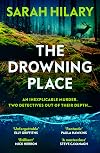
When he was 11, Joseph Ashe was on a school bus when it veered off the road into a reservoir. Everyone on board drowned apart from Joseph. Why did he survive and no one else did? It’s a mystery, but as Joseph never moved away from his childhood town in the Peak District, he’s treated with either awe or a kind of suspicion. Now a DS in the Edenscar police, he’s joined by DI Laurie Bower, a newcomer to the area with personal reasons for her move, in investigating a terrible local crime. show more
The Drowning Place is a well-written police procedural with the addition of a number of other interesting aspects to the storyline: there’s the accident that Joe inexplicably survived and the legacy of that, which is his uncanny supernatural ability; there’s Laurie’s home life and her move from an inner-city police force to a more rural one (expecting a slower pace and then being thrust into the heart of a major investigation); and there’s the setting in the Peak District, an area with which I’m reasonably familiar.
The characters are all well-drawn and often flawed. Joe has a massive case of survivors’ guilt but his police work helps a little with that. I found him hugely likeable, if something of a closed book. Laurie is a no-nonsense cop with tons of experience so I’m looking forward to seeing her and Joe work alongside each other in the next book in the series, and I’m also keen to see if more insights about what happened on the day of the crash emerge.
The plot of this book is dark and compelling, although I must admit that at times I found it a little difficult to concentrate on, possibly due to the number of characters or the complex storyline. I’m definitely interested in reading the next Joe and Laurie book – the quirkiness of this one has me curious to know more. show less
The Drowning Place is a well-written police procedural with the addition of a number of other interesting aspects to the storyline: there’s the accident that Joe inexplicably survived and the legacy of that, which is his uncanny supernatural ability; there’s Laurie’s home life and her move from an inner-city police force to a more rural one (expecting a slower pace and then being thrust into the heart of a major investigation); and there’s the setting in the Peak District, an area with which I’m reasonably familiar.
The characters are all well-drawn and often flawed. Joe has a massive case of survivors’ guilt but his police work helps a little with that. I found him hugely likeable, if something of a closed book. Laurie is a no-nonsense cop with tons of experience so I’m looking forward to seeing her and Joe work alongside each other in the next book in the series, and I’m also keen to see if more insights about what happened on the day of the crash emerge.
The plot of this book is dark and compelling, although I must admit that at times I found it a little difficult to concentrate on, possibly due to the number of characters or the complex storyline. I’m definitely interested in reading the next Joe and Laurie book – the quirkiness of this one has me curious to know more. show less

An overcrowded prison is a tinderbox waiting to explode and when HMP Cloverton does so the outcomes are devastating. Prisoners dead, brutally attacked by other inmates, several prisoners in hospital suffering from the effects of smoke from the fire and one escapee. Michael Vokes is a talented artist and known psychopath, although he had not been convicted of anything more than aggravated burglary his former cellmate hung himself and Vokes has a string of women writing to him. Marnie Rome is show more tasked with finding Vokes and after visiting his home her team is in a race against time. However it is hard to work out who wants to harm Vokes and who wants to help him.
This is a slightly different episode in the series and works incredibly well. The emphasis is less on the team and more on the psychology, the way people are manipulated by words. The twist was flagged up fairly early on but Hilary managed to keep the crucial point until fairly late on. I particularly enjoyed the parallel tales about Rome's parents murder and the questions being put in her head alongside the questions being asked by the people under Vokes' spell. This is a really strong series of police procedurals and it is only getting better. show less
This is a slightly different episode in the series and works incredibly well. The emphasis is less on the team and more on the psychology, the way people are manipulated by words. The twist was flagged up fairly early on but Hilary managed to keep the crucial point until fairly late on. I particularly enjoyed the parallel tales about Rome's parents murder and the questions being put in her head alongside the questions being asked by the people under Vokes' spell. This is a really strong series of police procedurals and it is only getting better. show less
A 13-year old girl is gunned down in drive-by shooting, not uncommon in London but in affluent Muswell Hill a shock. Linking her to the notorious Erskine Tower block, DI Marnie Rome begins to uncover a set of seamy goings on beyond even Operation Trident's gang information. Her DS, Noah Jake is literally still haunted by his dead brother and is struggling to stay focused on the job along dealing with his family issues. When a woman plummets from the 28th floor of the tower block then show more suddenly Rome's team is on to something.
Hilary has created a really strong set of characters in Rome and her team. In this the focus is more on Jake and the passages about him are written with extreme tenderness and care, the balance between sanity and madness is very fine. The plot is clever, picking up on the underlying themes of the series with its focus on gangs but spinning in an altogether different direction with race, human trafficking and money laundering taking the centre stage. As ever Hilary knows how to stay on the right side of cliche and to drive an interesting plot. show less
Hilary has created a really strong set of characters in Rome and her team. In this the focus is more on Jake and the passages about him are written with extreme tenderness and care, the balance between sanity and madness is very fine. The plot is clever, picking up on the underlying themes of the series with its focus on gangs but spinning in an altogether different direction with race, human trafficking and money laundering taking the centre stage. As ever Hilary knows how to stay on the right side of cliche and to drive an interesting plot. show less
Lists
Awards


You May Also Like


Associated Authors
Statistics
- Works
- 12
- Also by
- 5
- Members
- 549
- Popularity
- #45,446
- Rating
- 3.6
- Reviews
- 65
- ISBNs
- 86
- Languages
- 4