
Margit Rowell
Author of The Russian Avant-Garde Book 1910-1934
About the Author
Margit Rowell is Chief Curator of the Department of Drawings at The Museum of Modern Art, New York.
Image credit: via Gagosian Quarterly
Works by Margit Rowell
Associated Works
Joan Miró; magnetic fields 7 copies
Tagged
Common Knowledge
Members
Reviews
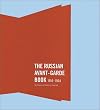
Russian avant-garde books made between 1910 and 1934 reflect a vivid and tumultuous period in that nation's history that had ramifications for art, society, and politics. The early books, with their variously sized pages of coarse paper, illustrations entwined with printed, hand-written, and stamped texts, and provocative covers, were intended to shock academic conventions and bourgeois sensibilities. After the 1917 Revolution, books appeared with optimistic designs and photomontage meant to show more reach the masses and symbolize a rational, machine-led future. Later books showcased modern Soviet architecture and industry in the service of the government's agenda. Major artists adopted the book format during these two decades. They include Natalia Goncharova, El Lissitzky, Kazimir Malevich, Aleksandr Rodchenko, Olga Rozanova, the Stenberg brothers, Varvara Stepanova, and others. These artists often collaborated with poets, who created their own transrational language to accompany the imaginative illustrations. Three major artistic movements, Futurism, Suprematism, and Constructivism, that developed during this period in painting and sculpture also found their echo in the book format. This publication accompanied an exhibition of Russian avant-garde books at The Museum of Modern Art, New York. All of the books in the exhibitio show less
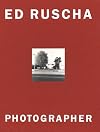
Although known for his paintings and drawings, California artist Ed Ruscha has also attracted critical attention for his photography. A new exhibition and accompanying catalogue, Ed Ruscha, Photographer, departs from earlier analyses to explore how the artists different disciplines painting, drawing, printmaking, and photography are guided and shaped by a single vision. Ruschas relationship to photography is complex and ambivalent and his work is difficult to define. He has referred to his show more photography as a hobby but from the outset it has drawn considerable critical interest. The small books of photographs that Ruscha produced in the sixties and seventies earned him a reputation as an underground artist among his peers, and have influenced subsequent generations of artists in Europe and North America. The photographs were snapshot size, with an amateurish quality that intrigued his contemporaries. Neither purely documentary nor solely artistic, their subject matter was stereotypical and banal, with motifs drawn from sites in Southern California or the western United States. This, combined with their serial presentation, created a mythical road-movie or photo-novel effect with Beat Generation innuendos and inspired interest among artists at a time when serial logic was prominent in Pop art and Minimalism, and later in Conceptual art. Margit Rowell is an art historian, critic and museum curator working mostly in Paris and New York. Working independently today, her earlier long-term affiliations were with the Guggenheim Museum, New York, the Musee National dArt Moderne, Centre Georges Pompidou, Paris, and The Museum of Modern Art, New York, where she organized exhibitions of classical modern and contemporary artists (among them Joan Miro, Constantin Brancusi, Sigmar Polke, and Luciano Fabro). In 2004, she organized a major exhibition of the drawings of Ed Ruscha for the Whitney Museum of American Art, which traveled to Los Angeles and Washington, D.C., and inspired the present study of Ed Ruschas photographs. show less

Published on the occasion of the exhibition from the Hamburg Kunsthalle 16 July-17 October 1999.
Antonin Artaud : works on paper : [exhibition], The Museum of Modern Art, New York, Oktober 3, 1996, to January 7, 1997 by Margit Rowell

exhibition pamphlet only. not book as shown
You May Also Like


Associated Authors
Statistics
- Works
- 34
- Also by
- 4
- Members
- 610
- Popularity
- #41,202
- Rating
- 4.4
- Reviews
- 6
- ISBNs
- 43
- Languages
- 3