
Jennifer Grotz
Author of Cusp: Poems
About the Author
Image credit: Poetry Foundation Website
Works by Jennifer Grotz
Associated Works
Dear Yusef: Essays, Letters, and Poems, For and About One Mr. Komunyakaa (2024) — Contributor — 3 copies
Tagged
Common Knowledge
- Canonical name
- Grotz, Jennifer
- Gender
- female
- Education
- Indiana University
University of Houston - Occupations
- professor
poet - Organizations
- University of Rochester
- Awards and honors
- George Garrett New Writing Award for Poetry (2007)
- Nationality
- USA
- Places of residence
- Rochester, New York, USA
- Associated Place (for map)
- USA
Members
Reviews
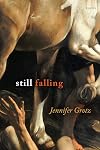
Thank you NetGalley and (publisher) for sending this book for review consideration. All opinions are my own.
This was literally awesome. That’s the only word I can think of. Awesome.
Jennifer Gratz’s, “Still Falling” is a poetry book of storytelling enveloped in nature and the senses, like the way a freight train desperately wants to be heard, or greetings of the crow. It surrounds grief, shows the aftermath of certain devastating moments and relationships we all experience, and show more observes the world/nature in such a distinctive, intelligent way.
When I first read this, I was searching for answers, for explanations, for some sort of resolve. However, this book is not focused on giving the juicy details of our despair, of our trauma. It gives us just enough. For example, it seems as if the “you” in these poems, which I read as most of the time as the same person the speaker seems to know intimately, remains unnamed. In poems like, “Who Understands”, I’m left with more questions than when I began. While in other poems, like “Grief”, grief becomes something so distinct, so obvious and easy to understand that I’m right there. I’m standing at the stove with the speaker, sweating and crying and coping just as they are. What the poems have in common though is intimacy and the speaker’s curiosity and wisdom despite it.
This book is full of honesty, of relationships, the sudden and the gradual loss of them. It’s curious of humanity, of love, of death. I think of “Staring at the Sun”, though most of these poems end or include some sort of philosophical or unanswerable question. This is what tells me the speaker has so much left to discover. At the same time, the speaker is incredibly wise. They are smart enough to ask the questions no one else thinks of. Besides its theme, the imagery in this book is perfection. It’s obscure and sensory and unique. Gosh. This is such an incredible book of poetry. I love love loved it.
This was literally awesome. That’s the only word I can think of. Awesome.
some of favorite lines:
"At first, like grief, snow covers everything"
"He weighed 953 pounds. To make him stop, / all I had to do was hold my breath."
"I wrapped my hand around cattail / and squeezed: spongy and veloured / as an espresso-soaked ladyfinger" show less
This was literally awesome. That’s the only word I can think of. Awesome.
Jennifer Gratz’s, “Still Falling” is a poetry book of storytelling enveloped in nature and the senses, like the way a freight train desperately wants to be heard, or greetings of the crow. It surrounds grief, shows the aftermath of certain devastating moments and relationships we all experience, and show more observes the world/nature in such a distinctive, intelligent way.
When I first read this, I was searching for answers, for explanations, for some sort of resolve. However, this book is not focused on giving the juicy details of our despair, of our trauma. It gives us just enough. For example, it seems as if the “you” in these poems, which I read as most of the time as the same person the speaker seems to know intimately, remains unnamed. In poems like, “Who Understands”, I’m left with more questions than when I began. While in other poems, like “Grief”, grief becomes something so distinct, so obvious and easy to understand that I’m right there. I’m standing at the stove with the speaker, sweating and crying and coping just as they are. What the poems have in common though is intimacy and the speaker’s curiosity and wisdom despite it.
This book is full of honesty, of relationships, the sudden and the gradual loss of them. It’s curious of humanity, of love, of death. I think of “Staring at the Sun”, though most of these poems end or include some sort of philosophical or unanswerable question. This is what tells me the speaker has so much left to discover. At the same time, the speaker is incredibly wise. They are smart enough to ask the questions no one else thinks of. Besides its theme, the imagery in this book is perfection. It’s obscure and sensory and unique. Gosh. This is such an incredible book of poetry. I love love loved it.
This was literally awesome. That’s the only word I can think of. Awesome.
some of favorite lines:
"At first, like grief, snow covers everything"
"He weighed 953 pounds. To make him stop, / all I had to do was hold my breath."
"I wrapped my hand around cattail / and squeezed: spongy and veloured / as an espresso-soaked ladyfinger" show less
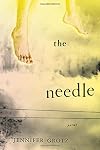
In the title poem of Jennifer Grotz’s new volume, she writes: “Memory meticulously stitches / the market square / where stalls of fruit / ripened in the heat.” She is writing about a square in Krakow (the city is the subject of many of the poems in the first section of the book), but as the title The Needle suggests, memory stitching together moments, thoughts, and emotions is the theme that runs throughout the book.
I found myself wanting to bookmark so many of these poems that I had show more to stop myself. Grotz uses whole sentences, and her style is so calm and fluid that the poems just seem natural. Yet, they retain that mystery of language that is in all good poetry. Grotz illuminates the beauty in the everyday, the minutiae, but also takes the beautiful and focuses on the details the rest of us miss.
In “Landscape with Town Square,” Grotz’s metaphors are playful:
One way to survive is to be a little piece of scenery
Among the mirabilia of the square, spending one’s time
In an outdoor cafe while a weather system of people
Drips ice cream on the ground…
Yet, she becomes introspective at the end, after a rain has cleared the square, and returns to her theme of how we decipher memory and what we have seen:
It is hard to know which view is really reality: the square itself, wiped clean
Of all the people, or the incomprehensible shuffling of the people
Who are incomprehensible and shuffling all over the world, all the time.
Either view scours the heart, keeps down its wild romantic notions.
In the second section, Grotz focuses on childhood memories. The most powerful poems in the volume are about her brother who passed away. I do not know the details, but the poems are very intimate. Grotz writes in “He Who Made the Lamb Made Thee:”
Later we were taught about original sin
but as children, I remember when we found it.
That’s what we did as children: we looked for things
after dinner was over, as the sun was going down…
They discovered a cat the older neighborhood boys had killed in a field . Grotz’s brother had watched, and it had a profound effect on him. She writes about that loss of innocence:
…the cat
didn’t have to be lost and soon you
would break down doors, bang your fist into windows
and mirrors and even my face
as you turned into something no one could tame.
Earlier that day we had plucked honeysuckle
and sipped the tiny mouths.
The third section of the book focuses on the poet’s observations of herself (I am making the assumption here that it is the poet and not some other speaker) and objects. There is a sense of longing in these poems, but Grotz also made me crack a smile or two. She writes in “Aubade:”
A bee flew up my dress
and stung my thigh
at the exact moment I was thinking of you.
That was your first try.
Grotz’s previous volume, Cusp, won the Bread Load Writers’ Conference Bakeless Prize and several other honors. The Needle is a strong testimony that she is indeed one of America’s best young poets. The Needle will be available March 2011 from Houghton Mifflin Harcourt. show less
I found myself wanting to bookmark so many of these poems that I had show more to stop myself. Grotz uses whole sentences, and her style is so calm and fluid that the poems just seem natural. Yet, they retain that mystery of language that is in all good poetry. Grotz illuminates the beauty in the everyday, the minutiae, but also takes the beautiful and focuses on the details the rest of us miss.
In “Landscape with Town Square,” Grotz’s metaphors are playful:
One way to survive is to be a little piece of scenery
Among the mirabilia of the square, spending one’s time
In an outdoor cafe while a weather system of people
Drips ice cream on the ground…
Yet, she becomes introspective at the end, after a rain has cleared the square, and returns to her theme of how we decipher memory and what we have seen:
It is hard to know which view is really reality: the square itself, wiped clean
Of all the people, or the incomprehensible shuffling of the people
Who are incomprehensible and shuffling all over the world, all the time.
Either view scours the heart, keeps down its wild romantic notions.
In the second section, Grotz focuses on childhood memories. The most powerful poems in the volume are about her brother who passed away. I do not know the details, but the poems are very intimate. Grotz writes in “He Who Made the Lamb Made Thee:”
Later we were taught about original sin
but as children, I remember when we found it.
That’s what we did as children: we looked for things
after dinner was over, as the sun was going down…
They discovered a cat the older neighborhood boys had killed in a field . Grotz’s brother had watched, and it had a profound effect on him. She writes about that loss of innocence:
…the cat
didn’t have to be lost and soon you
would break down doors, bang your fist into windows
and mirrors and even my face
as you turned into something no one could tame.
Earlier that day we had plucked honeysuckle
and sipped the tiny mouths.
The third section of the book focuses on the poet’s observations of herself (I am making the assumption here that it is the poet and not some other speaker) and objects. There is a sense of longing in these poems, but Grotz also made me crack a smile or two. She writes in “Aubade:”
A bee flew up my dress
and stung my thigh
at the exact moment I was thinking of you.
That was your first try.
Grotz’s previous volume, Cusp, won the Bread Load Writers’ Conference Bakeless Prize and several other honors. The Needle is a strong testimony that she is indeed one of America’s best young poets. The Needle will be available March 2011 from Houghton Mifflin Harcourt. show less
Awards
You May Also Like
Associated Authors
Statistics
- Works
- 5
- Also by
- 10
- Members
- 80
- Popularity
- #224,853
- Rating
- 3.6
- Reviews
- 2
- ISBNs
- 7