
James Fitzjames Stephen (1829–1894)
Author of Liberty, Equality, Fraternity
About the Author
Image credit: G. F. Watts, d. 1904
Works by James Fitzjames Stephen
Associated Works
Tagged
Common Knowledge
- Legal name
- Stephen, Sir James Fitzjames, 1st Baronet
- Birthdate
- 1829-03-03
- Date of death
- 1894-04-11
- Gender
- male
- Education
- Eton College
King's College London
University of Cambridge (Trinity College) - Occupations
- lawyer
judge
journalist - Organizations
- Cambridge Apostles
- Awards and honors
- Baronet
Queen's Counsel - Relationships
- Stephen, Leslie (brother)
Stephen, James Kenneth (son)
Woolf, Virginia (niece) - Nationality
- England
UK - Birthplace
- Kensington, London, England, UK
- Places of residence
- London, England, UK
- Place of death
- Suffolk, England, UK
- Burial location
- Kensal Green Cemetery, London, England, UK
- Associated Place (for map)
- London, England, UK
Members
Reviews
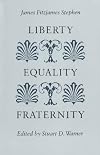
I discovered this book while reading something about Mill. It was a critique of Mill's On Liberty and it presents a number of arguments that are hard to fault, but also a number of arguments that, if spoken today, would require endless apologies and may even require one to step down as a politician. Nevertheless, Stephen was a lawyer (and later a notable judge) and at times he could be verbose, at other times insightful, at still others rather strange. Yet his critique of Mill leaves me with show more plenty of food for thought. He argues in the same way I have listened to conservatives argue against a Bill of Rights for Australia. There is a modicum of liberalism in the English sense of the word, and I might be presumptuous and say in a similar vein to Edmund Burke. When I read Mill, I felt like I was reading my own education in summary. When I read Stephen, I feel like I am getting an education. Some suggest that Liberty, Equality, Fraternity was James Fitzjames Stephen's masterpiece, and apparently Oxford is reproducing his works in several volumes. Stephen didn't disagree with utilitarianism nor liberalism, but he did disagree with the extremes of liberalism that Mill advocated, and especially against the emancipation of women as outlined in Mill's On the Subjection of Women. Stephen's arguments were deeply rooted in his conception of the evidence observed in nature, rather than an idealism as characterised by Mill. Yet Stephen's conclusion displays another form of idealism, and I couldn't help thinking that it was a rather weak way of summing up, rather like an undergraduate essay that lost its argument and tries to finish in an upbeat fashion. Yet there were many lessons to be gleaned from Stephen, and the Liberty Fund's inclusion of this work as an important contribution is well-founded, despite history's favouring Mill. I must admit that it took me a while to get through this, and the combination of wordy ideas and arguments, along with rather fine print, made this somewhat of an exercise in discipline rather than enlightenment. And I am all the wiser for doing so. show less
Stephen presents a conservative critique of John Stuart Mill's liberalism (very weak, I have to say, on the issue of women's rights).
You May Also Like
Associated Authors
Statistics
- Works
- 17
- Also by
- 1
- Members
- 154
- Popularity
- #135,794
- Rating
- 4.1
- Reviews
- 2
- ISBNs
- 38
- Languages
- 1