
Val Guest (1911–2006)
Author of Casino Royale [1967 film]
About the Author
Image credit: britmovie.co.uk
Works by Val Guest
The Quatermass Xperiment [1955 film] (1955) — Director; Audiokommentar, some editions; Interview, some editions; Writer — 38 copies, 1 review
Hammer Films - Ultimate Collection [Blu-ray] — Director — 8 copies
Killer Force / Brannigan 2 copies
Breaker! Breaker! / Killer Force — Director — 1 copy
The Margaret Lockwood Collection: Give Us The Moon [and] Highly Dangerous — Director — 1 copy
Hammer House of Mystery and Suspence: The Complete Series — Director — 1 copy
The Boys in Blue [1982 film] 1 copy
80,000 Suspects [1963 film] 1 copy
The Peter Cushing Collection [DVD] — Director — 1 copy
Associated Works
Tagged
Common Knowledge
- Legal name
- Guest, Valmond Maurice
- Birthdate
- 1911-12-11
- Date of death
- 2006-05-10
- Gender
- male
- Occupations
- film director
screenwriter
producer - Nationality
- England
UK - Birthplace
- Maida Vale, London, England, UK
- Places of residence
- Palm Springs, California, USA
- Place of death
- Palm Desert, California, USA
- Associated Place (for map)
- California, USA
Members
Reviews

Rating: well, why not? 3* of five
Oops! Forgot one. This is 1967's film version I'm discussing, not the book, which was *awful*. That's not fair...it's not horrid writing, it's just so very very very dated and not in a good way. Kind of a time capsule of what was wrong with 1954.
Ya know...this film version was pretty damn lame, too. What redeems it is the sheer balls-out what-did-I-just-watch comedic pace of the thing. David Niven is LUDICROUS as Bond, but good as this character who isn't show more Bond but is called Bond. The return of Ursula Andress, this time as superspy Vesper Lynd (not to be mistaken for 2006's Vesper, completely different character), is notable; but the turn to the comedic and ridiculous is signalled by Bond having a child by Mata Hari, yclept Mata Bond.
It was one of the many moments where I rolled my eyes so hard I think I saw my brain. There's a bit with a flying saucer in London that convinced me I was having an LSD flashback.
Don't go into the film thinking it's a Bond flick and maybe it's okay...but frankly, it feels a little too Sixties-hip-via-Hollywood for me to do more than smile faintly.
Why watch it, then? Because David Niven is very good at being urbanely nuts. It's a meta-performance. If he arched his eyebrow any higher, he's lose it in his receding hairline. Because Ursula Andress is classic as Vesper. Because Orson Welles is endearingly baffled as Le Chiffre, seeming not to have seen a script before being shoved in front of the camera. It's like a Warhol-movie moment. If you're a straight guy, Jacqueline Bisset and Barbara Bouchet are pneumatically endowed. But Peter Sellers was a major disappointment to me. Clouseau was his only character at that point, I guess. Blah.
Fun. Not Bond, but fun. Sort of. show less
Oops! Forgot one. This is 1967's film version I'm discussing, not the book, which was *awful*. That's not fair...it's not horrid writing, it's just so very very very dated and not in a good way. Kind of a time capsule of what was wrong with 1954.
Ya know...this film version was pretty damn lame, too. What redeems it is the sheer balls-out what-did-I-just-watch comedic pace of the thing. David Niven is LUDICROUS as Bond, but good as this character who isn't show more Bond but is called Bond. The return of Ursula Andress, this time as superspy Vesper Lynd (not to be mistaken for 2006's Vesper, completely different character), is notable; but the turn to the comedic and ridiculous is signalled by Bond having a child by Mata Hari, yclept Mata Bond.
It was one of the many moments where I rolled my eyes so hard I think I saw my brain. There's a bit with a flying saucer in London that convinced me I was having an LSD flashback.
Don't go into the film thinking it's a Bond flick and maybe it's okay...but frankly, it feels a little too Sixties-hip-via-Hollywood for me to do more than smile faintly.
Why watch it, then? Because David Niven is very good at being urbanely nuts. It's a meta-performance. If he arched his eyebrow any higher, he's lose it in his receding hairline. Because Ursula Andress is classic as Vesper. Because Orson Welles is endearingly baffled as Le Chiffre, seeming not to have seen a script before being shoved in front of the camera. It's like a Warhol-movie moment. If you're a straight guy, Jacqueline Bisset and Barbara Bouchet are pneumatically endowed. But Peter Sellers was a major disappointment to me. Clouseau was his only character at that point, I guess. Blah.
Fun. Not Bond, but fun. Sort of. show less
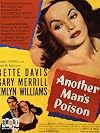
Utterly ridiculous but somewhat compelling story of mystery writer Davis (who certainly doesn't write every day!), on-the-run Gary Merrill (whose American accent is never explained since he is supposed to be Davis's estranged husband, who is presumably British), and nosy veterinarian Williams (who gives the best performance). The vet knows something funny is going on. Yes, it is. Two men presumably find the aging Davis, who was never good-looking to begin with, utterly irresistable. Oh, show more well, everyone pretty much gets what they deserve by the end of this one--and it is quite an ending. I should add that the setting in Northern England is amazing. Also that Merrill and Davis were married when this was made. About year 2 out of the 10 it lasted. show less

A strip number where four young women clad in the skimpiest kilts you're ever likely to see, performing a burlesque take of "Loch Lomond" is the main highlight in this disappointingly boring and overly stretched film. It tells the tale of sleazy agent Johnny Jackson (Laurence Harvey) who discovers teenage singing sensation Bert Rudge (Cliff Richard), renaming him "Bongo Herbert" (surely the worst stage name in history). The film presents an interesting time capsule for late-50s Soho and is show more peopled with some great characters, has plenty of nice period detail and looks great throughout thanks to director Val Guest. Unfortunately the film is far too long for a such a meagre story and way too much of the run time comes across as padding. Laurence Harvey gives an annoyingly hyper and stylised performance in the lead role, his accent wandering all over the place from Cockney wide by to cod-Yiddish via a South African affectation. Cliff Richard in his first role strangely lacks any form of charisma with Yolande Donlan, as aging stage star Dixie Collins, making an odd romantic foil for him. It is left to a young Sylvia Syms, as Maisie, a stripper and Johnny Jackson's neglected girlfriend to give any acting depth or inspiration. She also looks pretty fantastic in a basque, stockings and suspenders combo introducing the Scottish strippers and a rather unusual take on Mary Queen of Scots. show less

This lesser, but still enjoyable Hammer thriller, opens with racing car driver Alan Colby (Ronald Lewis) suffering a serious head injury in a car crash as he departs on honeymoon with new wife, Denise (Diane Cilento). After recuperation, the pair head off to the French Rivera for a delayed honeymoon. Unfortunately Colby cannot perform sexually and is prone to sudden rages that frequently lead him to attacking Denise. The pair meet with renowned French psychiatrist, Doctor Prade (Claude show more Dauphin) who appears inordinately keen to help Colby, going so far as to follow the couple back to London. With Colby becoming increasingly erratic and Prade coming up with more elaborate cures, the danger escalates and the mystery deepens. Director Val Guest and Ronald Scott Thorn (who wrote the novel on which the film is based) deliver an elaborate, if repetitive and overly talky script. The narrative has a tendency to wander and some elements are far from credible, particularly portions of the repressed memories jumbo-jumbo that Prade has a tendency to spout. It is therefore to Guest’s directorial credit that he manages to make the mystery quite so compelling and manages to maintain close interest in developments throughout. Some sequences are individually first class, particularly the opening pull-back that reveals the car crash, which is played out to a perfectly inappropriate upbeat jazz number. There is also a number of surprisingly risqué elements for the time with a topless Diane Cilento happy to enjoy a bubble bath that leaves little to the imagination. Gilbert Taylor’s crisp black-and-white photography is lovely and he expertly captures much of the charm and ambience of the Rivera. The three main players are good - Diane Cilento is bonnie and vivacious (despite an accent that wanders throughout Italy, France and England); Ronald Lewis veers between cloying love and dangerous volatility in a heartbeat, while well-known French actor Claude Dauphin is intelligent, sly and charming to a fault. Overall “The Full Treatment” has multiple flaws but it still works as a decent mystery. Elements of the plot may be overly drawn out and overly talkative but there is enough in the acting performances, the technical capability on show and the overall themes to make it interesting and entertaining all the way to the end. show less
Lists
Awards

You May Also Like


Associated Authors
Statistics
- Works
- 41
- Also by
- 4
- Members
- 551
- Popularity
- #45,289
- Rating
- 3.3
- Reviews
- 14
- ISBNs
- 37