
Henri René Guieu (1926–2000)
Author of Flying Saucers Come from Another World
About the Author
Image credit: Gordonpacha
Works by Henri René Guieu
Tagged
Common Knowledge
- Canonical name
- Guieu, Henri René
- Other names
- Guieu, Jimmy
Гийо, Джимми
Γκυγιέ, Τζίμμυ
Vauzière, Claude
Rostaing, Claude
Verseau, Dominique (show all 8)
Quieu, Jimmy
Quint, Jimmy G. (with Georges Pierquin) - Birthdate
- 1926-03-19
- Date of death
- 2000-01-02
- Gender
- male
- Occupations
- ufologist
science fiction writer - Organizations
- Institut Mondial des Sciences Avancées
- Cause of death
- cancer
- Nationality
- France
- Birthplace
- Aix-en-Provence, Bouches-du-Rhône, Provence-Alpes-Côte d'Azur, France
- Places of residence
- Marseille, Bouches-du-Rhône, Provence-Alpes-Côte d'Azur, France
- Place of death
- Vernouillet, France
- Associated Place (for map)
- Bouches-du-Rhône, Provence-Alpes-Côte d'Azur, France
Members
Reviews

In a Siberian gulag a Russian general and scientist are rescued from certain death at the hands of Stalinist MKV types by a telepathic humanoid alien, called Zimko, a 'Polarian' who hails from the Pole Star system. It soon become apparent that the general, the scientist, and Zimko are previously acquainted because footnotes repeatedly tell us to go read the previous book in which they all appeared. After freeing the prisoners the alien destroys the gulag's buildings (and presumably all the show more Stalinist MKV types inside - a mass murder which is a bit rich coming from someone prone to delivering standard UFOlogical messages of wisdom, peace, and all that interstellar brotherhood nonsense aliens in the 1950s were always spouting - before they got into anal probing and cattle mutilation). So off they fly to Paris in their Adamski type flying saucer. The Russians get their bodies restored to their previous book, pre-gulag, shape by the wonders of Space Brother tech; being levitated and slowly rotated in mid air, bathed by 'golden bioregenerating rays', like rotisserie chickens.
In France we meet a group of people, who I presume we have also met in previous book/s because they sit around watching a TV news program about UFOs saying things like:
--- Et nul n'admettrait que toi Yuln, fit remarquer Bob Angelvin, tu est n'es pas une Terrienne mais un humanoid originaire du system solaire de l'Etoile Polaire; une femme parfaitment humain venue d'une autre monde a bord, jusment d'une soucoupe volante que l'on raille avec autant l'ignorance !
"And no one would concede that you, Yuln," Bob Angelvin pointed out, "are not an Earthling but a humanoid originating from the Pole Star's solar system; a perfectly human woman who came from another world aboard, precisely the kind of 'flying saucer' that they mock with such ignorance!"
Their little family gathering, reminding each other who they are, is telepathically interrupted by Zimko who tells them it's time the human race learned the truth and to gather in a field where a different bunch of aliens from Wolf 359 will pick them up. The Wolfiens are really short, not telepathic, but have learned all the important Earth languages: French, English, German, Russian - some have even had an education even more complete! (Just in case any of them wanted to chat to anyone from the less important bits of the world like China, India, Japan, Africa...) But don't worry about the Wolfiens they only appear in this one scene. There's a lot of that in this book. People appear, are namechecked from previous books, and then just become part of the furniture. You would have thought from the opening that the Russian general and scientist rescued from the gulag at a great cost to human life and almost starting a war between America and Russia, would play an important part in the events that followed, but you would be wrong; once rescued they just fade into the background.
Zimko, head Polarian (Ooooh. Glad to varda your eek, Mr Zimko!) will more often than not, introduce himself, or be introduced - or just referred to by our omniscient narrator - as 'Zimko "Chief of the Space Commandos originating from the Pole Star solar system"'. Just about every time.
His friend, always referred to as a page-filling "Commander in Chief of Intelligence of the Confederated Worlds", glories in the name of 'Nheg Honky'. (So glad I wasn't drinking anything when he appeared on the page.)
Everyone flies to a secret base under the Himalayas for a bit of R&R, but only a bit, because as soon as everyone has been rotisseried to perfect health, Zimko and Honky (now there's a name for a double act) gather the world's leaders together in their other (orbiting) HQ and, for a couple of chapters, info dump the last couple of books in the series at them. (I know this because footnotes keep telling us to go read the books in which all this stuff happened.) The Polarians are an ancient, benign, and peaceful race. They tried to colonise Earth long ago at a place called Lumuria. Other races told them they were daft to build a civilisation on a swamp, but they built it all the same, just to show 'em. It sank into the swamp. So, they built a second one in Mu and that sank into another swamp. So, they built a third one in Atlantis. That burned down, fell over, then sank into a third swamp and then the sea fell on it. After that everyone was a bit too distracted by this vast interstellar war they had got involved in fighting a couple of nasty lizardanoid species. Too busy anyway to rescue any survivors from Atlantis who had all swum to Egypt anyway but here they are now. Oh, and the nasty lizardanoid species are about to attack Earth.
'Golly!' say the world's leaders, and within a couple of paragraphs have abandoned all philosophical, cultural, and ideological differences and formed a world government based on the US constitution with a few amendments.
Phew! that was easy.
Life is good.
We are now over 100 pages into a 180 page book. 100 pages of setting things up - rehashing all the previous books in the series by having people gather in groups and have them listen to long speeches which start like this. "My friends, as you very well know... ". Serious "Is this book ever actually going to get started?" thoughts had been crossing my mind for the previous 50 pages.
Luckily for us the hideous and horrible lizardanoid species isn't going to disappear from the book so easily. They have a cunning plan. A few of them sneak to Earth in their invisible flying saucer. They beat to death a couple of spare Polarians they happen to have around, dump them in a field and hypnothingy a couple of captured humans into believing they have escaped an off world Polarian Death Camp (slipping a roll of faked off world Polarian Death Camp footage into their pockets to back up their story). Despite the protestations that the footage is faked, "Just look at it! It's shot from two different angles in the same frame and you can see the matte lines!" the world's leaders do a quick 180 and, in a single night, murder and capture all the Polarians on Earth.
Zimko who wasn't on Earth (yet another meeting to attend on some other HQ somewhere else) organises a rescue mission and, with a superscience freezo-ray, immobilises the whole human race in mid stride, rescues all his friends, and buggers off to yet another Polarian HQ. This time on Venus.
The lizard people - the saviours of the Earth - arrive and set up a impregible defence shield around the planet.
Life is good.
But...
The lizard people start to show their true colours and, in pure 1930's pulp fashion, start lusting after human women (WHY?!). Human volunteers are required to start a breeding program to create a hybrid race (again WHY?!). Zimko and his cohort of obedient names, who have (between chapters) altered their appearances and equipped themselves with hitherto unheard-of telepathic powers, volunteer for the breeding programme which Zimko had known would happen. (Somehow, possibly by waving their hands about and using a stream of meaningless polysyllabic words, they had been able to get through the impregnable defence shield.)
The King of the Lizard people comes from his home planet and, at a great ball (in Paris natch), makes his evil lusty moves on Zimko's sister. The Polarians unleash their hitherto unheard-of telepathic powers and fry the Lizard people's brains. The Polarian fleet sweeps in and with their superscience freezo-rays on 'lizard' setting immobilise all the lizard people then stuff them in a giant spaceship which they send back to their home planet where - because it is made of anti-matter - it will destroy the whole lot of them when it come in contact with their non anti-matter planet. (Why this thing didn't explode the Earth is not explained.)
Gods that was boring.
There are no characters in this book. Only names; lots of them; whole lists of names that troop into rooms and are greeted, taken to another room announced to the people assembled there. All are thanked (sometimes by name) for attending this highly important meeting which consists of listening to Zimko give another of his "My friends, as you very well know... " speeches which everyone instantly acclaims and totally agrees with. None of the buggers actually does anything.
Jimmy Guieu was a big name in French SF - possibly not respected or even liked but certainly known. He was big on the UFO circuit and, in the latter part of the twentieth century, his name was used to sell books as 'Jimmy Guieu Presents!' with the actual author's name shrunk down to semi-invisibility on the cover.
The whole book is just endless telling telling telling - apart from one brief sequence in the middle where the POV changes to a small French village where first contact is made with the lizard people. The scene looks like it came out of a different book or possibly someone else took over the typewriter while Jimmy went for lunch. show less
In France we meet a group of people, who I presume we have also met in previous book/s because they sit around watching a TV news program about UFOs saying things like:
--- Et nul n'admettrait que toi Yuln, fit remarquer Bob Angelvin, tu est n'es pas une Terrienne mais un humanoid originaire du system solaire de l'Etoile Polaire; une femme parfaitment humain venue d'une autre monde a bord, jusment d'une soucoupe volante que l'on raille avec autant l'ignorance !
"And no one would concede that you, Yuln," Bob Angelvin pointed out, "are not an Earthling but a humanoid originating from the Pole Star's solar system; a perfectly human woman who came from another world aboard, precisely the kind of 'flying saucer' that they mock with such ignorance!"
Their little family gathering, reminding each other who they are, is telepathically interrupted by Zimko who tells them it's time the human race learned the truth and to gather in a field where a different bunch of aliens from Wolf 359 will pick them up. The Wolfiens are really short, not telepathic, but have learned all the important Earth languages: French, English, German, Russian - some have even had an education even more complete! (Just in case any of them wanted to chat to anyone from the less important bits of the world like China, India, Japan, Africa...) But don't worry about the Wolfiens they only appear in this one scene. There's a lot of that in this book. People appear, are namechecked from previous books, and then just become part of the furniture. You would have thought from the opening that the Russian general and scientist rescued from the gulag at a great cost to human life and almost starting a war between America and Russia, would play an important part in the events that followed, but you would be wrong; once rescued they just fade into the background.
Zimko, head Polarian (Ooooh. Glad to varda your eek, Mr Zimko!) will more often than not, introduce himself, or be introduced - or just referred to by our omniscient narrator - as 'Zimko "Chief of the Space Commandos originating from the Pole Star solar system"'. Just about every time.
His friend, always referred to as a page-filling "Commander in Chief of Intelligence of the Confederated Worlds", glories in the name of 'Nheg Honky'. (So glad I wasn't drinking anything when he appeared on the page.)
Everyone flies to a secret base under the Himalayas for a bit of R&R, but only a bit, because as soon as everyone has been rotisseried to perfect health, Zimko and Honky (now there's a name for a double act) gather the world's leaders together in their other (orbiting) HQ and, for a couple of chapters, info dump the last couple of books in the series at them. (I know this because footnotes keep telling us to go read the books in which all this stuff happened.) The Polarians are an ancient, benign, and peaceful race. They tried to colonise Earth long ago at a place called Lumuria. Other races told them they were daft to build a civilisation on a swamp, but they built it all the same, just to show 'em. It sank into the swamp. So, they built a second one in Mu and that sank into another swamp. So, they built a third one in Atlantis. That burned down, fell over, then sank into a third swamp and then the sea fell on it. After that everyone was a bit too distracted by this vast interstellar war they had got involved in fighting a couple of nasty lizardanoid species. Too busy anyway to rescue any survivors from Atlantis who had all swum to Egypt anyway but here they are now. Oh, and the nasty lizardanoid species are about to attack Earth.
'Golly!' say the world's leaders, and within a couple of paragraphs have abandoned all philosophical, cultural, and ideological differences and formed a world government based on the US constitution with a few amendments.
Phew! that was easy.
Life is good.
We are now over 100 pages into a 180 page book. 100 pages of setting things up - rehashing all the previous books in the series by having people gather in groups and have them listen to long speeches which start like this. "My friends, as you very well know... ". Serious "Is this book ever actually going to get started?" thoughts had been crossing my mind for the previous 50 pages.
Luckily for us the hideous and horrible lizardanoid species isn't going to disappear from the book so easily. They have a cunning plan. A few of them sneak to Earth in their invisible flying saucer. They beat to death a couple of spare Polarians they happen to have around, dump them in a field and hypnothingy a couple of captured humans into believing they have escaped an off world Polarian Death Camp (slipping a roll of faked off world Polarian Death Camp footage into their pockets to back up their story). Despite the protestations that the footage is faked, "Just look at it! It's shot from two different angles in the same frame and you can see the matte lines!" the world's leaders do a quick 180 and, in a single night, murder and capture all the Polarians on Earth.
Zimko who wasn't on Earth (yet another meeting to attend on some other HQ somewhere else) organises a rescue mission and, with a superscience freezo-ray, immobilises the whole human race in mid stride, rescues all his friends, and buggers off to yet another Polarian HQ. This time on Venus.
The lizard people - the saviours of the Earth - arrive and set up a impregible defence shield around the planet.
Life is good.
But...
The lizard people start to show their true colours and, in pure 1930's pulp fashion, start lusting after human women (WHY?!). Human volunteers are required to start a breeding program to create a hybrid race (again WHY?!). Zimko and his cohort of obedient names, who have (between chapters) altered their appearances and equipped themselves with hitherto unheard-of telepathic powers, volunteer for the breeding programme which Zimko had known would happen. (Somehow, possibly by waving their hands about and using a stream of meaningless polysyllabic words, they had been able to get through the impregnable defence shield.)
The King of the Lizard people comes from his home planet and, at a great ball (in Paris natch), makes his evil lusty moves on Zimko's sister. The Polarians unleash their hitherto unheard-of telepathic powers and fry the Lizard people's brains. The Polarian fleet sweeps in and with their superscience freezo-rays on 'lizard' setting immobilise all the lizard people then stuff them in a giant spaceship which they send back to their home planet where - because it is made of anti-matter - it will destroy the whole lot of them when it come in contact with their non anti-matter planet. (Why this thing didn't explode the Earth is not explained.)
Gods that was boring.
There are no characters in this book. Only names; lots of them; whole lists of names that troop into rooms and are greeted, taken to another room announced to the people assembled there. All are thanked (sometimes by name) for attending this highly important meeting which consists of listening to Zimko give another of his "My friends, as you very well know... " speeches which everyone instantly acclaims and totally agrees with. None of the buggers actually does anything.
Jimmy Guieu was a big name in French SF - possibly not respected or even liked but certainly known. He was big on the UFO circuit and, in the latter part of the twentieth century, his name was used to sell books as 'Jimmy Guieu Presents!' with the actual author's name shrunk down to semi-invisibility on the cover.
The whole book is just endless telling telling telling - apart from one brief sequence in the middle where the POV changes to a small French village where first contact is made with the lizard people. The scene looks like it came out of a different book or possibly someone else took over the typewriter while Jimmy went for lunch. show less
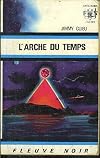
First published in 1970 L'Arche du Temp tells the story of a young 'primitive' called 'Roy the Strong' who, within a few pages, it becomes apparent is one of a tribe of survivors of some ancient, unexplained catastrophe - possibly Velikovskyian in nature - which happened in a previous book (where it probably was explained). Rob and his tribe are attacked by savage people from the east and repel them. They are perturbed by a strange triangle which has appeared on the 'new Island' which show more appeared off the (French) coast during the ancient catastrophe and which no one dares visit because of 'The Spirits' that dwell there.
The triangle glows and vibrates and finally Rod, some friends and a group from a friendly tribe to the north go to investigate. They have the blessings of the village elders including the keeper of the ancient books, 'Pedro the Wise'. On the island they discover the triangle is in fact a fantasticality huge pyramid which, to cut it short (not that it is a long book) is an escape capsule from Atlantis which foundered in the last Velikovskyian catastrophe but one. Inside are two hundred fertile young couples and half the ruling class (the more sceptical half presumably died a horrible death a long time ago) They wake from suspended animation as Rod and his pals arrive. The Ark contains not only a Virgin Princess - who instantly falls in love (and vice versa) with Rod the Strong - but also a scheming regent who has to be thwarted before he takes power. Can the Princess stay virgo intacta long enough to ascend the throne? There are van Vogtian 'spy beams' and secret tunnels, assassination attempts and clumsy frame-ups. Rod and his primitives are edumicated with the wisdom of the ancient Atlanteans with a helmet teaching device which also unearths their 'dormant race memories' (one of my most hated plot devices) which allows the author to fill in some gaps in the back story without having to have his characters go and find out for themselves.
Rod, the princess and his friends go to Paris in one of the Atlantean flying saucers (sic) and do a bit of exploring. When they come back they are attacked by the regent's troops in a bigger flying saucer but Rod and his 'primitives' win the battle against the super-science, blaster toting Atlanteans with their superior jungle craft and setting a load of bear traps which all the Atlanteans dutifully step in.
Pulling the old Republic Serial trick of holding the enemy troop leader at gunpoint while hiding out of sight, they pretend to have been captured and return to the pyramid. The regent, lured into bad movie villain complacency, has the tables turned on him and is defeated within a couple of pages. The princess decides against summarily executing him and his henchmen as the crowd want when his villainy is unmasked but instead sends them off to the pyramid's medical facility to get their organs harvested so some good will come of their deaths - before launching into a page long speech about the wonderful world of equality, peace, freedom and liver transplants that will soon be theirs. show less
The triangle glows and vibrates and finally Rod, some friends and a group from a friendly tribe to the north go to investigate. They have the blessings of the village elders including the keeper of the ancient books, 'Pedro the Wise'. On the island they discover the triangle is in fact a fantasticality huge pyramid which, to cut it short (not that it is a long book) is an escape capsule from Atlantis which foundered in the last Velikovskyian catastrophe but one. Inside are two hundred fertile young couples and half the ruling class (the more sceptical half presumably died a horrible death a long time ago) They wake from suspended animation as Rod and his pals arrive. The Ark contains not only a Virgin Princess - who instantly falls in love (and vice versa) with Rod the Strong - but also a scheming regent who has to be thwarted before he takes power. Can the Princess stay virgo intacta long enough to ascend the throne? There are van Vogtian 'spy beams' and secret tunnels, assassination attempts and clumsy frame-ups. Rod and his primitives are edumicated with the wisdom of the ancient Atlanteans with a helmet teaching device which also unearths their 'dormant race memories' (one of my most hated plot devices) which allows the author to fill in some gaps in the back story without having to have his characters go and find out for themselves.
Rod, the princess and his friends go to Paris in one of the Atlantean flying saucers (sic) and do a bit of exploring. When they come back they are attacked by the regent's troops in a bigger flying saucer but Rod and his 'primitives' win the battle against the super-science, blaster toting Atlanteans with their superior jungle craft and setting a load of bear traps which all the Atlanteans dutifully step in.
Pulling the old Republic Serial trick of holding the enemy troop leader at gunpoint while hiding out of sight, they pretend to have been captured and return to the pyramid. The regent, lured into bad movie villain complacency, has the tables turned on him and is defeated within a couple of pages. The princess decides against summarily executing him and his henchmen as the crowd want when his villainy is unmasked but instead sends them off to the pyramid's medical facility to get their organs harvested so some good will come of their deaths - before launching into a page long speech about the wonderful world of equality, peace, freedom and liver transplants that will soon be theirs. show less

Recopilación de relatos extraídos de Omnibus of Science Fiction (1952), de Groff Conklin (aunque en la portada aparece como recopilador Kurt Singer, no es así).
Un perfecto caballero (1952), de R.J. McGregor. Una joven un poco locuela, queda atrapada en un planeta. Divertido.
La peste escarlata (1912), de Jack London. Un anciano cuenta a sus nietos, casi trogloditas, cómo han llegado al momento en que están, es decir, un mundo postapocalíptico, ya que la Tierra se vio asolada por un show more virus que mataba en pocos momentos. Magistral relato largo de un autor que no suele aparecer en las listas de ciencia ficción, cuando sin duda esta pieza ha influenciado a múltiples artistas, llegando hasta hoy en día.
La cuarta dinastía (1936), de R.R. Winterbotham. La narración trata sobre un manuscrito encontrado en un futuro muy lejano. La trama trata sobre una pareja en hibernación que despierta siglos después. Buen relato.
Un conductor de masas (1941), de Ross Rocklynne. Un joven viajero en el tiempo aparece en el futuro, en una sociedad donde la inmortalidad es posible, a través de la tecnología. Dicho joven exige esta inmortalidad, y al serle denegada, incita a las masas. Interesante. Lo mejor, la parte final.
El cebo (1946), de William Tenn. El protagonista tiene un plan para incitar a la sociedad a dar el siguiente paso tecnológico. Muy buen relato.
Casi mortal (1916), de Austin Hall. Este relato es más de terror y suspense que de ciencia ficción. Pero no importa, es una muy buena historia de vampiros.
Las abejas de Borneo (1931), de William H. Gray. Tras un trauma, un apicultor experimenta con sus abejas para crear una especie mortífera. Buen relato.
Adaptación (1951), de Alan E. Nourse. Bajo una bóveda se encuentra un objeto que vuelve loco a todo aquel que lo observa. Esto supone más que un problema a los investigadores, que sin embargo han encontrado una voluntaria que podría salir bien de la observación. Gran relato, con muy buenas ideas. show less
Un perfecto caballero (1952), de R.J. McGregor. Una joven un poco locuela, queda atrapada en un planeta. Divertido.
La peste escarlata (1912), de Jack London. Un anciano cuenta a sus nietos, casi trogloditas, cómo han llegado al momento en que están, es decir, un mundo postapocalíptico, ya que la Tierra se vio asolada por un show more virus que mataba en pocos momentos. Magistral relato largo de un autor que no suele aparecer en las listas de ciencia ficción, cuando sin duda esta pieza ha influenciado a múltiples artistas, llegando hasta hoy en día.
La cuarta dinastía (1936), de R.R. Winterbotham. La narración trata sobre un manuscrito encontrado en un futuro muy lejano. La trama trata sobre una pareja en hibernación que despierta siglos después. Buen relato.
Un conductor de masas (1941), de Ross Rocklynne. Un joven viajero en el tiempo aparece en el futuro, en una sociedad donde la inmortalidad es posible, a través de la tecnología. Dicho joven exige esta inmortalidad, y al serle denegada, incita a las masas. Interesante. Lo mejor, la parte final.
El cebo (1946), de William Tenn. El protagonista tiene un plan para incitar a la sociedad a dar el siguiente paso tecnológico. Muy buen relato.
Casi mortal (1916), de Austin Hall. Este relato es más de terror y suspense que de ciencia ficción. Pero no importa, es una muy buena historia de vampiros.
Las abejas de Borneo (1931), de William H. Gray. Tras un trauma, un apicultor experimenta con sus abejas para crear una especie mortífera. Buen relato.
Adaptación (1951), de Alan E. Nourse. Bajo una bóveda se encuentra un objeto que vuelve loco a todo aquel que lo observa. Esto supone más que un problema a los investigadores, que sin embargo han encontrado una voluntaria que podría salir bien de la observación. Gran relato, con muy buenas ideas. show less

You May Also Like
Associated Authors
Statistics
- Works
- 169
- Members
- 578
- Popularity
- #43,350
- Rating
- 3.2
- Reviews
- 158
- ISBNs
- 208
- Languages
- 3
- Favorited
- 1