
Jen Knox
Author of Musical Chairs
Works by Jen Knox
Open Times [short story] 1 copy
Associated Works
Tagged
Common Knowledge
There is no Common Knowledge data for this author yet. You can help.
Members
Reviews
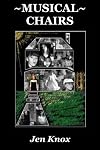
Finally a memoir that isn’t wholly depressing or full of purple prose glorifying cozy memories. I tend to shy away from memoirs because of reminiscent qualities or ‘what I’ve learned’ advice and reflections. This is a poignant account of one girl’s journey from childhood to adulthood. The story is well-crafted through a fluid telling that is both engaging and honest. The author offers no excuses, but rather details her life events as they unfolded. Nothing is glorified or show more horrified, but exposed for the reader to see, which allows for sympathy, not pity. Nothing is over done, which gives the story a truthful and believable quality. The comic relief and timing is perfect and does not distract from the gritty topics presented.
Although I could never personally achieve what Knox accomplished with this book because the pain of self-examination is too terrifying for me to explore, I think there are places in the story that are a tad rushed. The connection between grandmother is clear as far as ‘running,’ but my curiosity is also drawn to the lineage of mental illness and alcohol. I want to know to date, even after her move, how is Jen coping with these struggles, or is she? show less
Although I could never personally achieve what Knox accomplished with this book because the pain of self-examination is too terrifying for me to explore, I think there are places in the story that are a tad rushed. The connection between grandmother is clear as far as ‘running,’ but my curiosity is also drawn to the lineage of mental illness and alcohol. I want to know to date, even after her move, how is Jen coping with these struggles, or is she? show less
I’m not a people person. That’s my first line at job interviews.
It would be more accurate to say that I’ve never been interested in autobiographies. Or biographies, for that matter. I suppose I exalt imagination over reality and never desired to “learn something” from the actual lives of others. Don’t try this at home? I’d rather take my chances. And I never succumbed to hero-worship, either, wanting to know “what they were like” if such a thing has any meaning. So how did show more I end up reading a memoir?
A few months ago, I completed the research I’ve been doing for my new novel so I finally returned to reading books for pleasure. But hold! I have a stack of GoodReads authors’ books collecting under my coffeetable. All of these books were either traded in exchange for my first novel or were purchased online while the author purchased my book in kind. It’s an interesting and somewhat nerve-wracking process because I don’t want to waste my time on crappy books, and I don’t like the idea of trashing a virtual friend’s book. On the other hand, I hope to discover a few hidden gems this way and some books I’d never read otherwise. Fortunately, Jen Knox’s Musical Chairs is in the latter group.
I had no idea that memoirs were a whole genre of autobiography. If someone put me up against a wall—say, a Genre Executioner—I’d say an autobiography was for famous people, and a memoir was for the rest of us. I Wikipedia’d “memoir,” and apparently such is not the case. The distinction is ambiguous, but autobiographies apparently relate the narrator’s entire life, while memoirs are more likely to focus on particular events or time periods and are less interested in names/dates/people. And famous people do write memoirs. Why not … they’re famous. They can do ANYTHING.
Given my prejudice, I was skeptical I would enjoy this book, thinking that the only memoir worth reading would surely feature stories like “How I invaded Poland and lost.” Anyone else who wrote a memoir was self-indulgent, weren’t they? I mean … who cares? How interesting could Jen Knox’s story be?
Well, it was pretty damn interesting. She might not be famous, but she was an alcoholic-runaway-stripper-now-writer-with-panic-attacks who nearly died a couple times. Her life is worth reading about. This is confessional writing, so it deserves praise just for being that. I imagine it must’ve been difficult to put into words for the world to read. And if it wasn’t … come to think of it, perhaps it would have been valuable if she had expounded a bit on how she felt about baring her soul (pardon the pun) to the general public and even her family.
Without a doubt, this book is an interesting read. The central question of it remains rather ambiguous, however. I do not call this a flaw because it’s clearly honest. She talks about why she thinks she became a stripper and why she ran away, and she says it wasn’t “low self-esteem” or “daddy issues,” but was primarily that both actions seemed “glamorous” to her. She also mentions having a need to keep moving and not slow down in association with her running away. But I can’t help but wonder why her NEED to be glamorous or keep moving reached such an extreme level that it drove her to run away or turn to stripping. I want deeper answers. And I’ll tell you why … because I’m having a daughter myself in just about a month, so…
Now, I want to be clear. I’m NOT psychoanalyzing Jen, nor am I presuming to understand what really drove her. I am about to make a textual analysis based how I would snoop through any novel to understand its meaning. Call it “reader response.”
More than anything else for me, this book was a cautionary tale about how not to be a FATHER. She says it wasn’t “Daddy-issues” (what kind of Daddy issues would those be?), but I didn’t find this bare statement convincing because it wasn’t backed up by the text. He comes across as both domineering and distant—unemotional and unaffectionate. She tells one story of him forcing her to run and run and run with him in the park against her will, and to me it read like torture. Jen never blames him, which is probably a good thing for her. She has taken responsibility for her actions. Yet given my reading of the story as an outsider, if someone asked me after reading it why this 15-year-old Jen Knox ran away, I’d say it’s because her father was so alternately distant and controlling that her life burst out of its gates. And given that her father seemed so central (he may or may not have told her “don’t come back” when she said she was going to leave), I wish there had been more time spent on him. I may have missed it, but I don’t recall a detailed physical description of him, which would’ve helped me imagine him better.
Of course, the truth may be otherwise (if there is any such thing) but given where my head is right now, with fatherhood coming, this is my interpretation. It would appear that I did learn something from this story after all. Love your kids and show it openly … without telling them what to do. Find a way to balance discipline with freedom. Then, hopefully, your daughters won’t run away and become strippers … and your sons won’t carry guns and sell cheap pot. Good pot, yes. Cheap pot, no.
This book gave me a lot to chew on. Given I’m a skeptic about autobiographies, I hope you’ll take this as review as a ringing endorsement. show less
It would be more accurate to say that I’ve never been interested in autobiographies. Or biographies, for that matter. I suppose I exalt imagination over reality and never desired to “learn something” from the actual lives of others. Don’t try this at home? I’d rather take my chances. And I never succumbed to hero-worship, either, wanting to know “what they were like” if such a thing has any meaning. So how did show more I end up reading a memoir?
A few months ago, I completed the research I’ve been doing for my new novel so I finally returned to reading books for pleasure. But hold! I have a stack of GoodReads authors’ books collecting under my coffeetable. All of these books were either traded in exchange for my first novel or were purchased online while the author purchased my book in kind. It’s an interesting and somewhat nerve-wracking process because I don’t want to waste my time on crappy books, and I don’t like the idea of trashing a virtual friend’s book. On the other hand, I hope to discover a few hidden gems this way and some books I’d never read otherwise. Fortunately, Jen Knox’s Musical Chairs is in the latter group.
I had no idea that memoirs were a whole genre of autobiography. If someone put me up against a wall—say, a Genre Executioner—I’d say an autobiography was for famous people, and a memoir was for the rest of us. I Wikipedia’d “memoir,” and apparently such is not the case. The distinction is ambiguous, but autobiographies apparently relate the narrator’s entire life, while memoirs are more likely to focus on particular events or time periods and are less interested in names/dates/people. And famous people do write memoirs. Why not … they’re famous. They can do ANYTHING.
Given my prejudice, I was skeptical I would enjoy this book, thinking that the only memoir worth reading would surely feature stories like “How I invaded Poland and lost.” Anyone else who wrote a memoir was self-indulgent, weren’t they? I mean … who cares? How interesting could Jen Knox’s story be?
Well, it was pretty damn interesting. She might not be famous, but she was an alcoholic-runaway-stripper-now-writer-with-panic-attacks who nearly died a couple times. Her life is worth reading about. This is confessional writing, so it deserves praise just for being that. I imagine it must’ve been difficult to put into words for the world to read. And if it wasn’t … come to think of it, perhaps it would have been valuable if she had expounded a bit on how she felt about baring her soul (pardon the pun) to the general public and even her family.
Without a doubt, this book is an interesting read. The central question of it remains rather ambiguous, however. I do not call this a flaw because it’s clearly honest. She talks about why she thinks she became a stripper and why she ran away, and she says it wasn’t “low self-esteem” or “daddy issues,” but was primarily that both actions seemed “glamorous” to her. She also mentions having a need to keep moving and not slow down in association with her running away. But I can’t help but wonder why her NEED to be glamorous or keep moving reached such an extreme level that it drove her to run away or turn to stripping. I want deeper answers. And I’ll tell you why … because I’m having a daughter myself in just about a month, so…
Now, I want to be clear. I’m NOT psychoanalyzing Jen, nor am I presuming to understand what really drove her. I am about to make a textual analysis based how I would snoop through any novel to understand its meaning. Call it “reader response.”
More than anything else for me, this book was a cautionary tale about how not to be a FATHER. She says it wasn’t “Daddy-issues” (what kind of Daddy issues would those be?), but I didn’t find this bare statement convincing because it wasn’t backed up by the text. He comes across as both domineering and distant—unemotional and unaffectionate. She tells one story of him forcing her to run and run and run with him in the park against her will, and to me it read like torture. Jen never blames him, which is probably a good thing for her. She has taken responsibility for her actions. Yet given my reading of the story as an outsider, if someone asked me after reading it why this 15-year-old Jen Knox ran away, I’d say it’s because her father was so alternately distant and controlling that her life burst out of its gates. And given that her father seemed so central (he may or may not have told her “don’t come back” when she said she was going to leave), I wish there had been more time spent on him. I may have missed it, but I don’t recall a detailed physical description of him, which would’ve helped me imagine him better.
Of course, the truth may be otherwise (if there is any such thing) but given where my head is right now, with fatherhood coming, this is my interpretation. It would appear that I did learn something from this story after all. Love your kids and show it openly … without telling them what to do. Find a way to balance discipline with freedom. Then, hopefully, your daughters won’t run away and become strippers … and your sons won’t carry guns and sell cheap pot. Good pot, yes. Cheap pot, no.
This book gave me a lot to chew on. Given I’m a skeptic about autobiographies, I hope you’ll take this as review as a ringing endorsement. show less
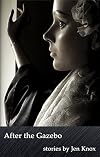
The stories in Jen Knox's After the Gazebo are eclectic, but unified in tone. They are stories of people who have been beaten up by a hard world, but have been left with a sense of hope. Sometimes the characters make bad decisions, but often these are tales of circumstances that build up and overwhelm. The subjects include topics such as substance abuse, the problems of aging, abusive relationships, raging storms, car accidents, and so many others. But the writing is character oriented with show more the focus not on what happens as much as it is on how it impacts the people.
Knox's writing style is wonderful. Here are a couple of first sentences:
From Disengaged:
The closest I've come to a passionate encounter in the last two decades was with Henry, and he died soon after we met.
From Types of Circus:
The last day I saw Michelle, she weighed 325.2 pounds.
Both of these sentences captured me as soon as I read them. In the first case the death draws me in. In the second the .2 pounds intrigues me. I could go on and on with examples of how Knox subtly and carefully holds her readers' attention.
Two stories in the collection are particularly intriguing because they may or may not be connected. These are Scratching the Silver and Lying to Old Men. Both are about a man named Rattle who has a one night stand with an underage exotic dancer. The first one is written from Rattle's point of view. The second is from the point of view of the woman. But the stories play out in very different ways, leaving me wondering if they are about two different men with the same unusual name and affair, or about the same man with two different dancers (she's named in the first story, but not in the second), or if this is a case of looking at the results of the same event with two very different choices. Knox placed Scratching the Silver early in the collection and Lying to Old Men late, so she wasn't pushing this connection. Still, if she did not want them to be considered as a pair, I believe she would have changed Rattle's name.
Both of the two “Rattle” stories stand own. In fact, according to the acknowledgments:Scratching the Silver first appeared in Per Contra and Lying to Old Men received finalist status for the 2013 Fulton Prize and was introduced in The Adirondack Review. But together they are even more powerful. Like all the stories in After the Gazebo they made me think and feel.
Steve Lindahl – author of Motherless Soul and White Horse Regressions show less
Knox's writing style is wonderful. Here are a couple of first sentences:
From Disengaged:
The closest I've come to a passionate encounter in the last two decades was with Henry, and he died soon after we met.
From Types of Circus:
The last day I saw Michelle, she weighed 325.2 pounds.
Both of these sentences captured me as soon as I read them. In the first case the death draws me in. In the second the .2 pounds intrigues me. I could go on and on with examples of how Knox subtly and carefully holds her readers' attention.
Two stories in the collection are particularly intriguing because they may or may not be connected. These are Scratching the Silver and Lying to Old Men. Both are about a man named Rattle who has a one night stand with an underage exotic dancer. The first one is written from Rattle's point of view. The second is from the point of view of the woman. But the stories play out in very different ways, leaving me wondering if they are about two different men with the same unusual name and affair, or about the same man with two different dancers (she's named in the first story, but not in the second), or if this is a case of looking at the results of the same event with two very different choices. Knox placed Scratching the Silver early in the collection and Lying to Old Men late, so she wasn't pushing this connection. Still, if she did not want them to be considered as a pair, I believe she would have changed Rattle's name.
Both of the two “Rattle” stories stand own. In fact, according to the acknowledgments:Scratching the Silver first appeared in Per Contra and Lying to Old Men received finalist status for the 2013 Fulton Prize and was introduced in The Adirondack Review. But together they are even more powerful. Like all the stories in After the Gazebo they made me think and feel.
Steve Lindahl – author of Motherless Soul and White Horse Regressions show less
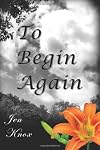
Jen Knox has written a short story collection that unveils the souls of its characters through simple vignettes and everyday experiences. She finds a kind of painful poetry in the mundane choices we make, or the paths we find ourselves stumbling down as the result of decisions we didn't even realize we were making.
Even when her characters speak rationally, they seem driven by emotions of which they aren't fully aware. There is an admirable lightness of touch on display here, no showboating, show more no moralizing. Knox is humane without being sentimental. Her characters aren't always sympathetic, which makes them all the more believable.
The stories tend to flash fiction length with the longest being 13 pages but most just a few. Even so, they felt sufficient to communicate a contained experience without leaving me wanting more. They each captured a brief chapter in someone's life, and they did it realistically.
My only criticism? She deserves a much better cover than she got. The cover verges on sappy, and that's a very poor reflection of the emotional honesty on display here. show less
Even when her characters speak rationally, they seem driven by emotions of which they aren't fully aware. There is an admirable lightness of touch on display here, no showboating, show more no moralizing. Knox is humane without being sentimental. Her characters aren't always sympathetic, which makes them all the more believable.
The stories tend to flash fiction length with the longest being 13 pages but most just a few. Even so, they felt sufficient to communicate a contained experience without leaving me wanting more. They each captured a brief chapter in someone's life, and they did it realistically.
My only criticism? She deserves a much better cover than she got. The cover verges on sappy, and that's a very poor reflection of the emotional honesty on display here. show less
Awards


You May Also Like
Associated Authors
Statistics
- Works
- 11
- Also by
- 3
- Members
- 128
- Popularity
- #157,244
- Rating
- 4.3
- Reviews
- 16
- ISBNs
- 10
- Favorited
- 2
