
Alex Halberstadt
Author of Young Heroes of the Soviet Union: A Memoir and a Reckoning
Works by Alex Halberstadt
Associated Works
Tagged
Common Knowledge
- Birthdate
- 1970-07-18
- Gender
- male
- Education
- Oberlin College
Columbia University - Nationality
- USA
- Places of residence
- Brooklyn, New York, USA
- Associated Place (for map)
- New York, USA
Members
Reviews
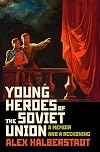
At least for me, what Halberstadt's memoir of trying to sort out his immediate family history speaks to is the dream of being able to ask the right people the right questions of just what the hell was going on when it mattered. A big part of why I read history relating to Eastern Europe is to get some sense what the horizons of my own family were; when asking my late father about such matters, he dryly noted that he could count the number of times his father spoke of the "Old Country" on one show more hand.
Be that as it may, the real guts of this book for most people will be Halberstadt's efforts to get some sense of his grandfather before he passed on; a man who apparently was the last living bodyguard of Stalin's personal security detachment. The rest relates to overcoming his sense of estrangement from his father; this mostly being in pursuit of Halberstadt trying to sort out his own personal issues. I can see how some readers would find this frustrating, though don't take it personally; Halberstadt is frustrated with himself! For all the stress and strain, Halberstadt's acknowledgements end on a surprising grateful note in regards to his family.
Besides that, it strikes me that Halberstadt was lucky to strike while the iron was still hot, before COVID and full-tilt war between Russia and Ukraine would have made this enterprise impossible. That does make this book a document of a particular moment in time. show less
Be that as it may, the real guts of this book for most people will be Halberstadt's efforts to get some sense of his grandfather before he passed on; a man who apparently was the last living bodyguard of Stalin's personal security detachment. The rest relates to overcoming his sense of estrangement from his father; this mostly being in pursuit of Halberstadt trying to sort out his own personal issues. I can see how some readers would find this frustrating, though don't take it personally; Halberstadt is frustrated with himself! For all the stress and strain, Halberstadt's acknowledgements end on a surprising grateful note in regards to his family.
Besides that, it strikes me that Halberstadt was lucky to strike while the iron was still hot, before COVID and full-tilt war between Russia and Ukraine would have made this enterprise impossible. That does make this book a document of a particular moment in time. show less
I wasn't sure how to rate this book as I wasn't sure what it was really about for a while. It starts off by describing an experiment conducted on lab mice in which a pleasant aroma was introduced at the same time as an electric shock was given. Then just the scent without the shock to see if the mice still exhibited a negative reaction. They did. So did their children and grandchildren who had never even had contact with the original lab mice. This raised the question if post trauma can be show more genetically inherited by humans.
The author, Alex Halberstadt, was born in, and spent his childhood in post WW2 Russia. So I rather expected the book to be an examination of the possibility that the Cold War could have been strongly influenced by a type of genetically inherited post traumatic syndrome in Russia. However, it was more of a personal memoir of his life. He is an excellent writer, using descriptive adjectives in such a superlative way that I could easily imagine myself being in the time and place he was describing. And the book provides a nice look into Soviet society from a commoners perspective.
His memoir describes his attempt to locate his grandfather, Vasilly, who is cold and distant, a very quiet man who says little about his past. As it turns out, he was one of Stalin's body guards who was also in Beria's inner circle. He would have seen much to remain quiet about - perhaps even participated in much to remain quiet about as well. But this is only part of his search for his heritage, though, from my perspective, by far the most interesting. In fact, in the hands of a good producer like a Ron Howard or a Steven Spielberg, it could make a spell-binding movie. I imagine this movie being filmed in a combination of color and black-and-white. With the modern-day scenes of Alex searching the Russian countryside for his family and his interviews with Vasilly in color, while Vasilly's stories and answers to his questions, which dates back to Stalin's purges of the 1930s being shot in black-and-white. This storyline could be compelling, the scenery magnificent, especially if Putin would allow it to be filmed on site, and would leave us questioning human behavior like no film has since Schindler's List.
I won this Advanced Readers Copy in a drawing from Goodreads.com and offer this review voluntarily. The book is tentatively offered for publication to the public in March of 2020. show less
The author, Alex Halberstadt, was born in, and spent his childhood in post WW2 Russia. So I rather expected the book to be an examination of the possibility that the Cold War could have been strongly influenced by a type of genetically inherited post traumatic syndrome in Russia. However, it was more of a personal memoir of his life. He is an excellent writer, using descriptive adjectives in such a superlative way that I could easily imagine myself being in the time and place he was describing. And the book provides a nice look into Soviet society from a commoners perspective.
His memoir describes his attempt to locate his grandfather, Vasilly, who is cold and distant, a very quiet man who says little about his past. As it turns out, he was one of Stalin's body guards who was also in Beria's inner circle. He would have seen much to remain quiet about - perhaps even participated in much to remain quiet about as well. But this is only part of his search for his heritage, though, from my perspective, by far the most interesting. In fact, in the hands of a good producer like a Ron Howard or a Steven Spielberg, it could make a spell-binding movie. I imagine this movie being filmed in a combination of color and black-and-white. With the modern-day scenes of Alex searching the Russian countryside for his family and his interviews with Vasilly in color, while Vasilly's stories and answers to his questions, which dates back to Stalin's purges of the 1930s being shot in black-and-white. This storyline could be compelling, the scenery magnificent, especially if Putin would allow it to be filmed on site, and would leave us questioning human behavior like no film has since Schindler's List.
I won this Advanced Readers Copy in a drawing from Goodreads.com and offer this review voluntarily. The book is tentatively offered for publication to the public in March of 2020. show less
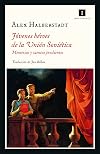
Biografía documental sobre el origens jueus de la familia de l'Alex a l'antiga Unió Soviética. Narra la cruesa delnazisme, l'efecte que va tindre en la seva població i especialment a la seva familia. També descriu molt bé el dia a dia de la societat rusa i els seus costums. L'Alex et fa viatjar a Rusia a través del seu escerit.
I received this ARC during a Goodreads giveaway. The opinions of this review are my own.
In the beginning of the book, there is the results of an experiment conducted in 2013 by researchers at Emory University. The experiment questions whether or not trauma can be inherited. This is the route that I expected Young Heroes of the Soviet Union to take. It did not. What this book is, however, is a memoir and nothing else.
When I read the synopsis for this book, the experiment results in the show more beginning, and studied the cover of the book, I have to admit that I automatically assumed that it was going to be more of a clinical read. I was pleasantly surprised. The journey that Alex set himself upon couldn't have been an easy one emotionally.
The Holocaust is a subject that should be talked about, studied in schools, and kept alive through those conversations. If we don't know and/or understand history, how can we learn from it and keep from repeating it? This book isn't just about the Holocaust. In fact, it is only mentioned at certain points throughout the book.
As many books as I have read, as many movies/documentaries that I have watched on the subject of the Holocaust, I did not know that Russia treated their Jewish communities not much, if any, better than the Germans. The older generations lost everything. Their families, their homes, livelihoods, and for many, their lives. Learning of his family's losses, seeing the differences in how they were treated (Alex included), knowing of and living through so much cruelty, had to be heartbreaking.
This memoir is an example of the strength, bravery, and perseverance of the Jewish people. It also sends us on the journey with Alex to find his and his family's truths, to form a relationship with his (Russian) father and grandfather, and I believe more than anything, to find himself. show less
In the beginning of the book, there is the results of an experiment conducted in 2013 by researchers at Emory University. The experiment questions whether or not trauma can be inherited. This is the route that I expected Young Heroes of the Soviet Union to take. It did not. What this book is, however, is a memoir and nothing else.
When I read the synopsis for this book, the experiment results in the show more beginning, and studied the cover of the book, I have to admit that I automatically assumed that it was going to be more of a clinical read. I was pleasantly surprised. The journey that Alex set himself upon couldn't have been an easy one emotionally.
The Holocaust is a subject that should be talked about, studied in schools, and kept alive through those conversations. If we don't know and/or understand history, how can we learn from it and keep from repeating it? This book isn't just about the Holocaust. In fact, it is only mentioned at certain points throughout the book.
As many books as I have read, as many movies/documentaries that I have watched on the subject of the Holocaust, I did not know that Russia treated their Jewish communities not much, if any, better than the Germans. The older generations lost everything. Their families, their homes, livelihoods, and for many, their lives. Learning of his family's losses, seeing the differences in how they were treated (Alex included), knowing of and living through so much cruelty, had to be heartbreaking.
This memoir is an example of the strength, bravery, and perseverance of the Jewish people. It also sends us on the journey with Alex to find his and his family's truths, to form a relationship with his (Russian) father and grandfather, and I believe more than anything, to find himself. show less
Lists
Awards


You May Also Like
Associated Authors
Statistics
- Works
- 3
- Also by
- 2
- Members
- 151
- Popularity
- #137,934
- Rating
- 4.0
- Reviews
- 7
- ISBNs
- 16
- Languages
- 2
- Favorited
- 1