
Marc Headley
Author of Blown for Good: Behind the Iron Curtain of Scientology
Works by Marc Headley
Tagged
Common Knowledge
- Gender
- male
- Nationality
- USA
- Birthplace
- Los Angeles, California, USA
- Associated Place (for map)
- California, USA
Members
Reviews
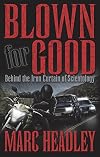
Marc Headley was in Scientology for 15 years. He writes about the horrors and "acceptable" treatment of members. From incredibly short meal breaks to very few hours of sleep for days on end in order to keep COB David Miscavige happy, the stories are shocking. Mr. Headley recounts his experience in harrowing detail yet matter-of-fact succinctness. I found myself compelled to carefully read every page in order to absorb the unreal accounts of a cult that is so deeply hidden that this book show more screams for people to wake up and realize what is really happening inside Scientology. show less

Headley is well known among the ex-Scientologists who have spoken out in spite of repercussions from the organization. His book is in high demand - I found copies on ebay and elsewhere selling for a great deal of money. So I was pleased when I was able to purchase it directly from Marc and Claire through their website, and it is signed by them as well.
I have been interested in the "religion" for some time. Perhaps since I first saw the storefronts on Hollywood Blvd in the late 1960s and show more early 1970s. I didn't fall for the e-Meter offerings even though I was a susceptible young person at the time (and a close friend fell for Nam-myoho-renge-kyo Buddhists, also on the Blvd). I noticed the odd gleam in the eyes of the Scientologists trying to draw us into the building and (I think correctly) assumed they were fanatics.
Over the years I have heard stories about how Scientology is run, what the beliefs are, what makes people go into it and not come out. So I have watched the films, seen the television shows, read many books on the subject. This is the latest I have read.
Headley's account is unusually detailed. Over the course of fifteen years, he grew from an impressionable teen to a cynical adult, all within the walls of the church. Because he got into the church so young and because his family was also involved, he really knew no other life, had nothing to compare it to. That is a major reason, I think, that he stayed so long in such an abusive environment.
He happened to be intelligent and gifted in technical areas, which served him well. He spent much time in the Golden Era Productions, in every part of creating and replicating film and audio productions. He was probably the most capable at the time he was there and therefore managed to escape some of the worst abuses (but not all). All of the staff and "volunteers" were routinely subjected to very long hours, little sleep, little food and little time to eat it. They were sometimes forced to do work that was dangerous and unhealthy at best.
It takes a kind of fanaticism to do this kind of work day after day, year after year. But when a person can see no other way it may be simply that they are imprisoned. Most of the residents in the Sea Org and on the various bases (the live-in Scientologists) had no money, no credit, no car, no licenses, nothing to aid them in the outside world. So they stayed until they could stay no more.
Which is finally what happened to Marc, even though he had held on for years after he had become disenchanted because his wife was there, too, and he didn't want to lose her. When a staff person "blows" (escapes), other Scientologists are not allowed to communicate with that person again. Which includes family and close friends. This was a huge incentive to stay.
i particularly liked the detailed descriptions of what Marc did day to day, week to week, over the years, and his descriptions of his encounters with Dave Miscavige, the current leader of Scientology. The book filled in blanks for me.
What was odd to me, though, was that I couldn't tell if he was buying what the organization was selling. Did he believe that church members were saving the world? Did he think that he would be essentially immortal? Did he buy that outsiders were criminals who didn't want the world to improve? The tone of the book is so cynical that I couldn't be sure if that tone came after or was always there. That is, was it hindsight that put that cast on the stories? If he didn't believe it , or didn't believe most of it, then we go back to his reasons for staying - he knew no other life, his family was in it, the world outside was unknown. He also found satisfaction in his work when he was allowed to do it right.
I also read Mike Rinder's account of his time in Scientology. A very different path but strewn with the same abuses. I felt that Rinder gave us more of how he felt at the time so that we could understand why he did not question the Scientology "shore story" of Lisa McPherson, for example, a woman who died because of how she was "helped" by Scientologists. I got the sense that Mike really bought it all until it all crashed down, but I do not think that was the case with Marc.
Marc is not a great writer. It is easy enough to read his account, especially given the content, but it's clearly amateur writing. I appreciate that he simply got it down on paper so we have it. show less
I have been interested in the "religion" for some time. Perhaps since I first saw the storefronts on Hollywood Blvd in the late 1960s and show more early 1970s. I didn't fall for the e-Meter offerings even though I was a susceptible young person at the time (and a close friend fell for Nam-myoho-renge-kyo Buddhists, also on the Blvd). I noticed the odd gleam in the eyes of the Scientologists trying to draw us into the building and (I think correctly) assumed they were fanatics.
Over the years I have heard stories about how Scientology is run, what the beliefs are, what makes people go into it and not come out. So I have watched the films, seen the television shows, read many books on the subject. This is the latest I have read.
Headley's account is unusually detailed. Over the course of fifteen years, he grew from an impressionable teen to a cynical adult, all within the walls of the church. Because he got into the church so young and because his family was also involved, he really knew no other life, had nothing to compare it to. That is a major reason, I think, that he stayed so long in such an abusive environment.
He happened to be intelligent and gifted in technical areas, which served him well. He spent much time in the Golden Era Productions, in every part of creating and replicating film and audio productions. He was probably the most capable at the time he was there and therefore managed to escape some of the worst abuses (but not all). All of the staff and "volunteers" were routinely subjected to very long hours, little sleep, little food and little time to eat it. They were sometimes forced to do work that was dangerous and unhealthy at best.
It takes a kind of fanaticism to do this kind of work day after day, year after year. But when a person can see no other way it may be simply that they are imprisoned. Most of the residents in the Sea Org and on the various bases (the live-in Scientologists) had no money, no credit, no car, no licenses, nothing to aid them in the outside world. So they stayed until they could stay no more.
Which is finally what happened to Marc, even though he had held on for years after he had become disenchanted because his wife was there, too, and he didn't want to lose her. When a staff person "blows" (escapes), other Scientologists are not allowed to communicate with that person again. Which includes family and close friends. This was a huge incentive to stay.
i particularly liked the detailed descriptions of what Marc did day to day, week to week, over the years, and his descriptions of his encounters with Dave Miscavige, the current leader of Scientology. The book filled in blanks for me.
What was odd to me, though, was that I couldn't tell if he was buying what the organization was selling. Did he believe that church members were saving the world? Did he think that he would be essentially immortal? Did he buy that outsiders were criminals who didn't want the world to improve? The tone of the book is so cynical that I couldn't be sure if that tone came after or was always there. That is, was it hindsight that put that cast on the stories? If he didn't believe it , or didn't believe most of it, then we go back to his reasons for staying - he knew no other life, his family was in it, the world outside was unknown. He also found satisfaction in his work when he was allowed to do it right.
I also read Mike Rinder's account of his time in Scientology. A very different path but strewn with the same abuses. I felt that Rinder gave us more of how he felt at the time so that we could understand why he did not question the Scientology "shore story" of Lisa McPherson, for example, a woman who died because of how she was "helped" by Scientologists. I got the sense that Mike really bought it all until it all crashed down, but I do not think that was the case with Marc.
Marc is not a great writer. It is easy enough to read his account, especially given the content, but it's clearly amateur writing. I appreciate that he simply got it down on paper so we have it. show less
I read a few reviews that knocked this book, but if you are familiar with the story in the book, you understand why this may not be a great literary work. It is a truly personal tale told in a specific voice, that of the author, which makes this book so great. It isn't overly dramatized or emotional, strictly the facts as remembered by the author, and is exactly what it claims to be.
Headley's writing style is informal, jargon-laden in the way I'm all too familiar with from reading far too much about Scientology, and occasionally a bit jarring, but the emotional impact he brings to this memoir is nonetheless powerful. Unlike many other Scientology accounts I've read, he was actually born into a family who got involved with Scientology when he was still very young, and so his account made for a fascinating comparison.
Authoritarianism is evil.
Authoritarianism is evil.
Statistics
- Works
- 1
- Members
- 93
- Popularity
- #200,858
- Rating
- 4.0
- Reviews
- 7
- ISBNs
- 3