
James Boice
Author of Who Killed The Fonz?
About the Author
Disambiguation Notice:
James Boice, 1982- wrote MVP: a novel
Most copies of the books by James Montgomery Boice, 1938- are listed on that author page.
Works by James Boice
向神覺醒 1 copy
The Sermon on the Mount 1 copy
Associated Works
McSweeney's 12: Unpublished, Unknown, and/or Unbelievable (2003) — Contributor — 290 copies, 4 reviews
Tagged
Common Knowledge
Members
Reviews
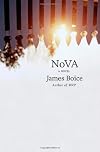
James Boice’s novel NoVA is a harsh, beautiful worm’s-eye view of a contemporary America in the process of slow collapse, and possibly the best — the most fully realized, inventive and emotionally plangent — novel to appear in the last five years. Boice, who is only 26, combines an astonishing capacity for empathetic imagination with the ruthless eye of a documentarian, and he nails his consumer-glutted suburban wasteland and its deadening banality with complete authority.
NoVA — show more the acronym stands for Northern Virginia — opens with the suicide of a troubled teen named Grayson Donald, who hangs himself from the rim of a playground basketball hoop late one night. Boice sidesteps the potential cliché of this setup by eschewing a straightforward narrative in favor of a widening circle of alternating narrators, where Grayson’s mental deterioration becomes one thread in a kaleidoscopic tapestry of lives utterly drained of meaning by affluence, boredom, pornography, video games, fast food and mall culture. The perspectives of the other characters, including Grayson’s retired military father, his schoolteacher mother, a pair of their smug boomer neighbors and a thuggish teen slacker, are all conveyed through canny use of the free indirect style, that most slippery of narrative techniques. The only off note in this symphony of voices comes from the author’s attempt at inhabiting the lives of a group of itinerant Salvadoran gang members, whose cameo-like rampage feels both misplaced and superfluous. There is no need to import violence and despair into James Boice’s Centreville.
The author’s Wolfean eye for sociological detail, his unerring understanding of cars, music, clothing, prices, brands — all the endless crud and flash of contemporary American consumerism — is more than just picture-making or contextual authenticity. Writers from Flaubert to John Updike have understood that a fulgent style wedded to sordid subject matter is a basic version of the aesthetic experience; almost nowhere in recent fiction does this experience receive as forceful an expression as in NoVA. This profane, caustic, despairing book transforms its subject matter through the sheer dogged accuracy of its impressions and the beauty of its language. Look around you, it seems to say; you may not like what you see, but it can’t be denied. From THE L MAGAZINE, December 24 2008 show less
NoVA — show more the acronym stands for Northern Virginia — opens with the suicide of a troubled teen named Grayson Donald, who hangs himself from the rim of a playground basketball hoop late one night. Boice sidesteps the potential cliché of this setup by eschewing a straightforward narrative in favor of a widening circle of alternating narrators, where Grayson’s mental deterioration becomes one thread in a kaleidoscopic tapestry of lives utterly drained of meaning by affluence, boredom, pornography, video games, fast food and mall culture. The perspectives of the other characters, including Grayson’s retired military father, his schoolteacher mother, a pair of their smug boomer neighbors and a thuggish teen slacker, are all conveyed through canny use of the free indirect style, that most slippery of narrative techniques. The only off note in this symphony of voices comes from the author’s attempt at inhabiting the lives of a group of itinerant Salvadoran gang members, whose cameo-like rampage feels both misplaced and superfluous. There is no need to import violence and despair into James Boice’s Centreville.
The author’s Wolfean eye for sociological detail, his unerring understanding of cars, music, clothing, prices, brands — all the endless crud and flash of contemporary American consumerism — is more than just picture-making or contextual authenticity. Writers from Flaubert to John Updike have understood that a fulgent style wedded to sordid subject matter is a basic version of the aesthetic experience; almost nowhere in recent fiction does this experience receive as forceful an expression as in NoVA. This profane, caustic, despairing book transforms its subject matter through the sheer dogged accuracy of its impressions and the beauty of its language. Look around you, it seems to say; you may not like what you see, but it can’t be denied. From THE L MAGAZINE, December 24 2008 show less
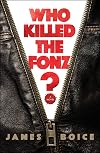
I watched my share of Happy Days after school, followed by Laverne and Shirley--who confusingly had my grandmother's couch in their apartment. I never would have imagined I needed any sort of update or closure with the Happy Days gang, but it turn out this was a very fun, nostalgic read that only took me one day to read. It's the early 80's. After a screen writing Oscar about a decade ago, Richard Cunningham hasn't found a lot of success in Los Angeles. When his mother relays a message from show more his sister Joanie, that their old friend Fonzie went head over handlebars into Lake MIchigan, he wonders if he can go home again. Heading back home, to the house Joanie has redecorated, Richard reconnects with old friends he wished he'd kept in touch with, hears a bit about Wisconsin politics and kind of solves a murder. From the table of contents that had me humming a certain theme song, right to the end, I was thoroughly entertained. show less
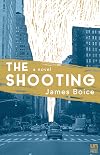
I rarely rate books five stars, but I can't think of one damned thing that I would change in this book. It's perfect. The only thing I didn't like about the book is that, eventually, it ended. ;)
I stumbled upon this book quite accidentally; I was looking for another book, and this book's title was just similar enough to the one I was searching for that I picked it up, too. And it ended up being my favorite novel of 2016, and one of my favorite books of all time!
The premise at first sounds show more simple - white guy, black kid, and a gun. As you can probably imagine, it doesn't end up great for the black kid, a fifteen year old African-American named Clayton. But the author goes so, so much deeper than that. You get into the heads of Lee Fisher, the shooter, who has a pretty messed up childhood of his own; Clayton Kabede, the child of immigrant parents who fled Africa fearful for their lives; and everyone the shooting affects, from Clayton's parents, to his girlfriend Stacey, to his friends, to just random people who were in contact with Clayton or Lee or somehow affected by the shooting in some way (the grief counselor, the reporter who doesn't get the scoop, the girl Lee liked in college, etc, etc).
There are many victims of gun culture in this book.Lee Fisher is portrayed as one of those victims, even though he was the shooter in this particular shooting, who was raised by his arguably mentally ill father, who doesn't even care enough about his kid to get treatment for a serious eye infection - or does he? One of the things the author does is create a rather sympathetic character in Lee...at first. Then the author slowly introduces different perspectives to things Lee says, and suddenly you aren't sure WHAT is going on in the story. How much of what Lee says is truthful, and how much did he make up in his own head? What are his true motivations? The reader is left with a lot of unanswered questions, but I'm totally okay with that. And then there is Clayton, of course, who has a lengthy chapter of his own. It killed a piece of my soul to read about his origins (I won't spoil that) and to see things through his eyes, knowing for most of it that he is going to end up dead. I cried; I'm not going to pretend that I didn't. Then there is Jenny, who lost her own daughter, Michelle, in a horrific school shooting ten years prior. She's crusading around the country, trying to repeal the Second Amendment. She ends up being assassinated in the end, but she turns out to be a complex character in her own right. You'll see what I mean when you read the book. At first she is portrayed as pretty sympathetic too, but she does things that are pretty horrible by the end, all in the name of advancing her cause.
Be prepared to question things. Be prepared to have your heart torn to pieces. And be prepared to look at your own stances on gun control, or lack there of, and examine them. This book deserves to be a bestseller. People should be talking about this book. We need to have a discussion about the issues raised in this book; to call this novel "timely" is an understatement.
Highly recommended. show less
I stumbled upon this book quite accidentally; I was looking for another book, and this book's title was just similar enough to the one I was searching for that I picked it up, too. And it ended up being my favorite novel of 2016, and one of my favorite books of all time!
The premise at first sounds show more simple - white guy, black kid, and a gun. As you can probably imagine, it doesn't end up great for the black kid, a fifteen year old African-American named Clayton. But the author goes so, so much deeper than that. You get into the heads of Lee Fisher, the shooter, who has a pretty messed up childhood of his own; Clayton Kabede, the child of immigrant parents who fled Africa fearful for their lives; and everyone the shooting affects, from Clayton's parents, to his girlfriend Stacey, to his friends, to just random people who were in contact with Clayton or Lee or somehow affected by the shooting in some way (the grief counselor, the reporter who doesn't get the scoop, the girl Lee liked in college, etc, etc).
There are many victims of gun culture in this book.
Be prepared to question things. Be prepared to have your heart torn to pieces. And be prepared to look at your own stances on gun control, or lack there of, and examine them. This book deserves to be a bestseller. People should be talking about this book. We need to have a discussion about the issues raised in this book; to call this novel "timely" is an understatement.
Highly recommended. show less
The Shooting by James Boice
Fragmented in structure and varied in tone—as though a metaphorical representation of America’s fractious gun debate; or, worse still, that of a society ripped apart by the physical, psychological, and political effects of gun violence—The Shooting is a book that insists you care for its characters despite the obvious nature of its politics. And, let’s be clear, this is by far the most overtly political book I’m covering in a column dominated by political show more books.
Though in some ways as close to nonfiction as fiction can come, this is no simple sermon on gun control. Somewhere between a novel and a linked collection, framed with a sort of beguilingly poetic architecture formalists will appreciate, The Shooting is a drama about a poor, young, black child in the wrong place (with the wrong rich, troubled, gun-obsessed, white man) at the wrong time. In a sense, it’s like Boice is bringing the news to us. Rather than the clipped, colorized two-dimensionality of television or the Internet’s whirling game show of half-lies, this is the news we need to understand our world, a rich, parallel reality rendered with nuanced backstories.
In these pages, you can almost hear the tears of children like Trayvon Martin, the screams of parents mourning massacres from Connecticut to California. But rather than an indictment of all guns everywhere, this is a portrait of the many costs that come with our love of guns, the way a broken system can so easily result in mistakes that seem insignificant if you are untouched by them, but truly do have the capacity to shatter lives. Readers of The Shooting will feel their hearts fill with empathy for everyone from shooters and activists to victims and families. This is an inventive, pointed, at times even majestic book, one that showcases James Boice’s considerable literary gifts.
http://www.thenervousbreakdown.com/kbaumeister/2016/10/the-nervous-breakdowns-re... show less
Fragmented in structure and varied in tone—as though a metaphorical representation of America’s fractious gun debate; or, worse still, that of a society ripped apart by the physical, psychological, and political effects of gun violence—The Shooting is a book that insists you care for its characters despite the obvious nature of its politics. And, let’s be clear, this is by far the most overtly political book I’m covering in a column dominated by political show more books.
Though in some ways as close to nonfiction as fiction can come, this is no simple sermon on gun control. Somewhere between a novel and a linked collection, framed with a sort of beguilingly poetic architecture formalists will appreciate, The Shooting is a drama about a poor, young, black child in the wrong place (with the wrong rich, troubled, gun-obsessed, white man) at the wrong time. In a sense, it’s like Boice is bringing the news to us. Rather than the clipped, colorized two-dimensionality of television or the Internet’s whirling game show of half-lies, this is the news we need to understand our world, a rich, parallel reality rendered with nuanced backstories.
In these pages, you can almost hear the tears of children like Trayvon Martin, the screams of parents mourning massacres from Connecticut to California. But rather than an indictment of all guns everywhere, this is a portrait of the many costs that come with our love of guns, the way a broken system can so easily result in mistakes that seem insignificant if you are untouched by them, but truly do have the capacity to shatter lives. Readers of The Shooting will feel their hearts fill with empathy for everyone from shooters and activists to victims and families. This is an inventive, pointed, at times even majestic book, one that showcases James Boice’s considerable literary gifts.
http://www.thenervousbreakdown.com/kbaumeister/2016/10/the-nervous-breakdowns-re... show less
Lists
You May Also Like
Associated Authors
Statistics
- Works
- 12
- Also by
- 1
- Members
- 101
- Popularity
- #188,709
- Rating
- 3.6
- Reviews
- 15
- ISBNs
- 15
- Favorited
- 1