
Andrew McGinn
Author of The Legacy
Works by Andrew McGinn
Associated Works
Tagged
Common Knowledge
- Canonical name
- McGinn, Andrew
- Gender
- male
Members
Reviews

I’m not sure who the intended audience is. The basic story of a kid who inherits his dad’s long-time and ultra-cutesy comic strip is ok, but the inevitable sacrifice of his artistic integrity on the altar of the almighty dollar is a story for whom exactly? As far as I can tell despite his hipster rebel posturing he’s now writing the comic he so despised and thus what was gained by telling his losing battle with his true calling?
Maybe I shouldn’t have used the word kid to describe our show more hero (?), but that’s how he comes across. Even approaching 30 he still bucks under the weight of traditionalism and tries to find solace in Noam Chomsky and the Pixies. I mean, isn’t he a little old for the teenage angst routine? In keeping with that character, he tries to get out from under his obligations to his dead father by sabotaging the strip dad worked so hard to maintain during his life. Yeah, that’s grown up. Couldn’t you have just said no and been adult instead of playing little games for your own amusement?
Overall the story reads like one big inside joke. It tried hard. I’m not that much older than Chas, but I was never so determined to out-cool my parents that I had to sneer at virtually everything they liked or valued (at least not after I turned 20 or so). Portraying mom as an aging Lucy in Charlie Brown’s sweater. Oh come on. Jealous much? It did make me laugh out loud once though – the Little Piggies panel was pretty good despite the color-by-numbers liberalism in the rest of the social commentary. And so were some of the notes about original panels in the history of comics section – immigrant blood on baby seal skin got a chuckle. But in the end, the lure of an easy paycheck looks like it was too strong to resist. Pretty soon he’s fluff-tumbled into what looks like the same life he thought so little of. I wonder if he’s in therapy over it.
An ironic thing is that I don’t remember reading the comic in question in my life; ever. And I grew up with one of the most right-wing, conservative newspapers in the country. I am at a loss as to why they didn’t carry it. Too overextended hanging onto Hagar the Horrible, Beetle Baily, The Family Circus, Blondie and Garfield I suppose. show less
Maybe I shouldn’t have used the word kid to describe our show more hero (?), but that’s how he comes across. Even approaching 30 he still bucks under the weight of traditionalism and tries to find solace in Noam Chomsky and the Pixies. I mean, isn’t he a little old for the teenage angst routine? In keeping with that character, he tries to get out from under his obligations to his dead father by sabotaging the strip dad worked so hard to maintain during his life. Yeah, that’s grown up. Couldn’t you have just said no and been adult instead of playing little games for your own amusement?
Overall the story reads like one big inside joke. It tried hard. I’m not that much older than Chas, but I was never so determined to out-cool my parents that I had to sneer at virtually everything they liked or valued (at least not after I turned 20 or so). Portraying mom as an aging Lucy in Charlie Brown’s sweater. Oh come on. Jealous much? It did make me laugh out loud once though – the Little Piggies panel was pretty good despite the color-by-numbers liberalism in the rest of the social commentary. And so were some of the notes about original panels in the history of comics section – immigrant blood on baby seal skin got a chuckle. But in the end, the lure of an easy paycheck looks like it was too strong to resist. Pretty soon he’s fluff-tumbled into what looks like the same life he thought so little of. I wonder if he’s in therapy over it.
An ironic thing is that I don’t remember reading the comic in question in my life; ever. And I grew up with one of the most right-wing, conservative newspapers in the country. I am at a loss as to why they didn’t carry it. Too overextended hanging onto Hagar the Horrible, Beetle Baily, The Family Circus, Blondie and Garfield I suppose. show less
 This review was written for LibraryThing Early Reviewers.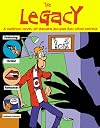
I found a lot to like in the graphic novel LEGACY by Andrew McGinn and David Neitzke.
I agree with many of the other reviews of this Early Reviewers book, that the basic premise is thin. But the pleasures of this tale are in the telling of it, not in the plot. And the more familiar you are with newspaper comics in the last decades of the 20th century, the more you will enjoy the satire of those same comics.
The banality of the Garfield-style strip which is nicely parodied; the whole idea of a show more comic of a Katzenjammer Kids comic being kept alive for a century; the parody of the right-wing ranting TV commentator in Chapter three; the foolishness of those "real-life" comics from the sixties ("Morgan Parker, Notary Public" and "Dr. Benway, M.D.") which have mercifully disappeared from the daily comics of today; the nicely drawn Barny Rubble-style character in the guise of a newspaper editor; there are a LOT of nicely thought-out examinations of the newspaper comic strip as it existed in former decades.
And there are many nice touches, some of which show real wisdom. I especially liked this: "...aside from Miles Davis, most people wake up one day and find that they've lost all their cool. It's like your hair. It just goes a little at a time..."
Special kudos to McGinn and Neitzke for the coda to the book. They managed to encapsulate 75 years of comic strip history in about 20 pages. Nicely done.
While I would not suggest this as the first graphic novel to give to a reader not familiar with the form, I would definitely bring it to the the attention of those readers who already know about the history of comics. The more you know, the more you will enjoy The Legacy show less
I agree with many of the other reviews of this Early Reviewers book, that the basic premise is thin. But the pleasures of this tale are in the telling of it, not in the plot. And the more familiar you are with newspaper comics in the last decades of the 20th century, the more you will enjoy the satire of those same comics.
The banality of the Garfield-style strip which is nicely parodied; the whole idea of a show more comic of a Katzenjammer Kids comic being kept alive for a century; the parody of the right-wing ranting TV commentator in Chapter three; the foolishness of those "real-life" comics from the sixties ("Morgan Parker, Notary Public" and "Dr. Benway, M.D.") which have mercifully disappeared from the daily comics of today; the nicely drawn Barny Rubble-style character in the guise of a newspaper editor; there are a LOT of nicely thought-out examinations of the newspaper comic strip as it existed in former decades.
And there are many nice touches, some of which show real wisdom. I especially liked this: "...aside from Miles Davis, most people wake up one day and find that they've lost all their cool. It's like your hair. It just goes a little at a time..."
Special kudos to McGinn and Neitzke for the coda to the book. They managed to encapsulate 75 years of comic strip history in about 20 pages. Nicely done.
While I would not suggest this as the first graphic novel to give to a reader not familiar with the form, I would definitely bring it to the the attention of those readers who already know about the history of comics. The more you know, the more you will enjoy The Legacy show less
This review was written for LibraryThing Early Reviewers.An Angry Young Man on a kick to stun the world with subversive cartooning suddenly finds himself with the responsibility of his late father's bland daily strip; panic ensues, as always.
The struggle between (the appearance) of personal integrity and (the appearance) of a demoralizing responsibility makes for a common story, but McGinn (script) and Neitzke (art) play it out through the filter of the history of American comics and really reward the attentive reader.
A brief "coda" looks back at show more the story from the future, and is a quick delight of parody that really elevates the book as a whole. show less
The struggle between (the appearance) of personal integrity and (the appearance) of a demoralizing responsibility makes for a common story, but McGinn (script) and Neitzke (art) play it out through the filter of the history of American comics and really reward the attentive reader.
A brief "coda" looks back at show more the story from the future, and is a quick delight of parody that really elevates the book as a whole. show less
This review was written for LibraryThing Early Reviewers.The Legacy, written by Andrew McGinn and illustrated by David Neitzke will ring close to home for many potential readers. Ostensibly about the trials of the son of a nationally syndicated cartoonist who wants to pass the torch of following in his footsteps and not let his long-running strip die, it can also be seen as a parable about the burden placed on any child to continue in the path of their parents (I think this is exceptionally true of firemen, policemen, career military men, doctors, show more loggers and farmers).
In this particular case, the son wants to be a cutting-edge in-your face indie comix creator, while his dad's strip hasn't changed since the early sixties, and it's humor was early fifties style even then. The protagonist, Charles Brown (yep, only he is referred to as "Chas"), unable to deny his dad's deathbed plea (which may or may not have actually happened) for him to carry on the strip, takes it over with the intention of driving a stake into it's heart. The journey he takes to do so, and the resolution of his dilemma, rings true and is worth checking out.
Two notes before closing:
1) The Legacy is probably not suitable for middle schoolers, due to language (and I think the story could have been told just fine without dropping bombs- not everyone talks like that).
2) My favorite part of the entire book was The Coda, 18 pages of a sometimes accurate (with only the names being changed) , sometimes garishly overplayed history of comics, complete with references to the McCarthy era, the War on E.C., Underground Comix and the changing comic scene. This section was very well done, and i look forward to more of the same by this team. show less
In this particular case, the son wants to be a cutting-edge in-your face indie comix creator, while his dad's strip hasn't changed since the early sixties, and it's humor was early fifties style even then. The protagonist, Charles Brown (yep, only he is referred to as "Chas"), unable to deny his dad's deathbed plea (which may or may not have actually happened) for him to carry on the strip, takes it over with the intention of driving a stake into it's heart. The journey he takes to do so, and the resolution of his dilemma, rings true and is worth checking out.
Two notes before closing:
1) The Legacy is probably not suitable for middle schoolers, due to language (and I think the story could have been told just fine without dropping bombs- not everyone talks like that).
2) My favorite part of the entire book was The Coda, 18 pages of a sometimes accurate (with only the names being changed) , sometimes garishly overplayed history of comics, complete with references to the McCarthy era, the War on E.C., Underground Comix and the changing comic scene. This section was very well done, and i look forward to more of the same by this team. show less
This review was written for LibraryThing Early Reviewers.Statistics
- Works
- 1
- Also by
- 1
- Members
- 19
- Popularity
- #609,293
- Rating
- 3.6
- Reviews
- 10
- ISBNs
- 1
