
Al Sweigart
Author of Automate the Boring Stuff with Python: Practical Programming for Total Beginners
About the Author
Al Sweigart is a celebrated software developer, the creator of a wildly popular Udemy Python course, and a programming teacher. A fellow at the Python Software Foundation, Sweigart is also the author of three other Python books with No Starch Press, including the worldwide bestseller Automate the show more Boring Stuff with Python. show less
Works by Al Sweigart
Automate the Boring Stuff with Python: Practical Programming for Total Beginners (2015) 764 copies, 9 reviews
Cracking Codes with Python: An Introduction to Building and Breaking Ciphers (2018) 90 copies, 1 review
Hacking Secret Ciphers with Python: A beginner's guide to cryptography and computer programming with Python (2013) 30 copies
The Recursive Book of Recursion: Ace the Coding Interview with Python and JavaScript (2022) 29 copies, 1 review
Coding with Minecraft: Build Taller, Farm Faster, Mine Deeper, and Automate the Boring Stuff (2018) 24 copies
Automate the Boring Stuff with Python Workbook: Projects and Exercises to Sharpen Your Python Skills (2025) 5 copies
Tagged
Common Knowledge
- Birthdate
- 20th Century
- Gender
- male
- Nationality
- USA
- Places of residence
- USA
- Associated Place (for map)
- USA
Members
Reviews

Hey, kids, have you ever wanted to make your own VIDEO GAMES!?
Invent Your Own Computer Games with Python reminds me of a book I got from the library once when I was a very young boy. It was about making video games in BASIC, and I had some fun with it. Sweigart has taken the same approach (and probably the book he mentioned as being inspiration for his book was the same book I read as a child), and has given us an updated book for an updated programming language using updated computers.
The show more language, no longer BASIC, is Python, one of the more simple programming languages for newbies to learn.
While the first few examples are all text-based, the latter few delve into Python's ability to draw 2D images to your screen. I would imagine somebody with a computer and a penchant for learning Python through the medium of video games would have no problem devouring this book, which is freely available from Sweigart's website devoted to it (http://inventwithpython.com).
While I, a seasoned programmer who knows enough Python to know he likes Perl better, found the book a little too simplistic for myself. Constantly, I was optimizing his code examples in my head (which I'm sure Sweigart also was tempted to do when he wrote them out). I realized, of course, that Sweigart was going for readability, and not for line of code reduction or fewer iterations. Optimization may be too advanced a topic to teach a kid wanting to make VIDEO GAMES.
The book is written towards a younger audience, but is completely readable, and understandable, by an older audience: you computer illiterate parents whose children fix your computers for you ALL THE TIME. This book could give you a little bit higher of an advantage when it comes to out-tech-ing your kid.
While the book was a wonderful introduction to programming and video games, I find that the amount of helpful make your own games resources are either outdated, or more a "make OUR own games." What I'd like to see, maybe is a Third Edition with optional exercises: "Congratulations: You're able to type in code exactly as it appears in a book. Now, do you understand it? Change the game so it does this instead!" Something like that.
I'd also like a Volume Two, in which Sweigart delves into the world of 3D games and network games. So, Al, if you're reading this, I fully expect such a book before too long. Okay?
Putting my personal feelings of Python aside, I found this book to be a valuable resource when it comes to teaching people (especially young people) how to program, which I feel empowers them to do what they want with their computer devices, have fun, and maybe even become the next big game development studio out there. show less
Invent Your Own Computer Games with Python reminds me of a book I got from the library once when I was a very young boy. It was about making video games in BASIC, and I had some fun with it. Sweigart has taken the same approach (and probably the book he mentioned as being inspiration for his book was the same book I read as a child), and has given us an updated book for an updated programming language using updated computers.
The show more language, no longer BASIC, is Python, one of the more simple programming languages for newbies to learn.
While the first few examples are all text-based, the latter few delve into Python's ability to draw 2D images to your screen. I would imagine somebody with a computer and a penchant for learning Python through the medium of video games would have no problem devouring this book, which is freely available from Sweigart's website devoted to it (http://inventwithpython.com).
While I, a seasoned programmer who knows enough Python to know he likes Perl better, found the book a little too simplistic for myself. Constantly, I was optimizing his code examples in my head (which I'm sure Sweigart also was tempted to do when he wrote them out). I realized, of course, that Sweigart was going for readability, and not for line of code reduction or fewer iterations. Optimization may be too advanced a topic to teach a kid wanting to make VIDEO GAMES.
The book is written towards a younger audience, but is completely readable, and understandable, by an older audience: you computer illiterate parents whose children fix your computers for you ALL THE TIME. This book could give you a little bit higher of an advantage when it comes to out-tech-ing your kid.
While the book was a wonderful introduction to programming and video games, I find that the amount of helpful make your own games resources are either outdated, or more a "make OUR own games." What I'd like to see, maybe is a Third Edition with optional exercises: "Congratulations: You're able to type in code exactly as it appears in a book. Now, do you understand it? Change the game so it does this instead!" Something like that.
I'd also like a Volume Two, in which Sweigart delves into the world of 3D games and network games. So, Al, if you're reading this, I fully expect such a book before too long. Okay?
Putting my personal feelings of Python aside, I found this book to be a valuable resource when it comes to teaching people (especially young people) how to program, which I feel empowers them to do what they want with their computer devices, have fun, and maybe even become the next big game development studio out there. show less
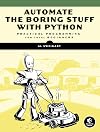
Skimmed the first half as I'm not (quite) a "total beginner". As far as I could tell, it looks like as good an introduction as any.
As for the second half, the author does a good job of presenting several Python modules of immediate practical utility, with a focus on the automation or simplification of everyday tasks. Areas such as GUI automation, web scraping and the management of some popular file formats are covered briefly but effectively. As non-standard modules are rarely covered in show more much depth in beginner-level Python books, it's an interesting approach.
As is always the case with programming, a book alone is not enough to actually learn much, but Automate the Boring Stuff with Python lays out a bunch of interesting tools and offers enough hands-on practice to create a stable ground for further self-study. show less
As for the second half, the author does a good job of presenting several Python modules of immediate practical utility, with a focus on the automation or simplification of everyday tasks. Areas such as GUI automation, web scraping and the management of some popular file formats are covered briefly but effectively. As non-standard modules are rarely covered in show more much depth in beginner-level Python books, it's an interesting approach.
As is always the case with programming, a book alone is not enough to actually learn much, but Automate the Boring Stuff with Python lays out a bunch of interesting tools and offers enough hands-on practice to create a stable ground for further self-study. show less
Very well written. The projects are very creative and exciting.
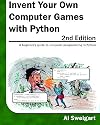
The best introduction available for Python and to computer programming. Few introductory books actually take the time to explain "why" and "how" a program works like this book.
You May Also Like


Statistics
- Works
- 17
- Members
- 1,357
- Popularity
- #18,943
- Rating
- 4.1
- Reviews
- 13
- ISBNs
- 63
- Languages
- 4
- Favorited
- 2
