
Gail Hareven
Author of The Confessions of Noa Weber
About the Author
Image credit: Hareven Gail
Works by Gail Hareven
The Slows 2 copies
Chai Malach 1 copy
Haderech legan eden 1 copy
אגדה חדשה 1 copy
ארוחת צהריים עם אמא 1 copy
מוזה 1 copy
Associated Works
Zion's Fiction: A Treasury of Israeli Speculative Literature (2018) — Contributor — 34 copies, 1 review
Tagged
Common Knowledge
- Birthdate
- 1959
- Gender
- female
- Education
- Ben-Gurion University of the Negev (Behavioral Sciences)
Shalom Hartman Institute (Talmud, Jewish philosophy) - Occupations
- writer
columnist
visiting professor (University of Illinois) - Awards and honors
- Sapir Prize (2002)
- Relationships
- Hareven, Shulamith (mother)
- Nationality
- Israel
- Birthplace
- Jerusalem, Israel
- Places of residence
- Jerusalem, Israel (birth)
- Associated Place (for map)
- Jerusalem, Israel
Members
Discussions
A short story called “The Slows” in Science Fiction Fans (February 2023)
Reviews
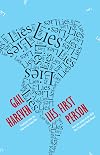
A profoundly amoral book. Also a very good one. Let me take the latter point first SPOILERS AHEAD: while the book is overlong (it could have been cut by at least ten per cent), it gives as accurate a portrayal of trauma and PTSD as I've read anywhere and I read that stuff professionally. The thinking, thinking, thinking about the thing that happened, even when you aren't thinking about it, is deftly portrayed, as is the evil of the perpetrator. There is never any attempt to minimize what he show more did or sympathize with him as a person. He is disgusting.
Hareven's narrator talks a lot about misdirection, how, in a metaphor she uses several times, people like to talk about dust bunnies under the radiator so no one notices the piles of dirty laundry under the bed. And in a way her book is a work of misdirection. "Silence hints at a secret. . . . Is there really a secret that I'm keeping quiet about? (355), she asks. I answer yes, though not in the way she might have intended. "Lies," a story about a woman's childhood memories, also discusses Hitler, Stalin and Pol Pot as it tries to understand what motivates sheer evil -- while taking place in Jerusalem circa 2008 and never mentioning Palestinians. While Hareven was writing this book, in 2006, Israel bombed the only power plant in the Gaza Strip, effectively cutting off power to nearly everyone who lived and worked there. 2006 was also the year Israel began the blockade of Gaza which continues to keep food, medical supplies, and technology from the area. I could barely read the final pages as I realized that Hareven was not going to make that connection. Everything she describes is awful, yes, but it's all dust bunnies. Her omission makes this study of evil and its effects a work of evil itself. Imagine a novel about evil set in 1940s Germany that never mentions Jews or Nazis. It's so abhorrent it's almost ridiculous. And that's what Hareven has given us here.
So, for the depiction of trauma and PTSD: 4 stars. For its profound amorality: 0 stars. Rating: 2 stars
Let me remind readers that being horrified by Israel's human rights abuses does not make one anti-Semitic. Jewishness is not synonymous with the actions of the state of Israel. show less
Hareven's narrator talks a lot about misdirection, how, in a metaphor she uses several times, people like to talk about dust bunnies under the radiator so no one notices the piles of dirty laundry under the bed. And in a way her book is a work of misdirection. "Silence hints at a secret. . . . Is there really a secret that I'm keeping quiet about? (355), she asks. I answer yes, though not in the way she might have intended. "Lies," a story about a woman's childhood memories, also discusses Hitler, Stalin and Pol Pot as it tries to understand what motivates sheer evil -- while taking place in Jerusalem circa 2008 and never mentioning Palestinians. While Hareven was writing this book, in 2006, Israel bombed the only power plant in the Gaza Strip, effectively cutting off power to nearly everyone who lived and worked there. 2006 was also the year Israel began the blockade of Gaza which continues to keep food, medical supplies, and technology from the area. I could barely read the final pages as I realized that Hareven was not going to make that connection. Everything she describes is awful, yes, but it's all dust bunnies. Her omission makes this study of evil and its effects a work of evil itself. Imagine a novel about evil set in 1940s Germany that never mentions Jews or Nazis. It's so abhorrent it's almost ridiculous. And that's what Hareven has given us here.
So, for the depiction of trauma and PTSD: 4 stars. For its profound amorality: 0 stars. Rating: 2 stars
Let me remind readers that being horrified by Israel's human rights abuses does not make one anti-Semitic. Jewishness is not synonymous with the actions of the state of Israel. show less
Putting down this book I couldn't shake a sense that I had been deceived. In the same way Elinor feels her mind taken over by the cancerous evil of "The First Person, The Not-Man," I felt that I had been spun in circles and forced to give up my own moral code, almost without realizing. I forgave a murder, but not just that, I didn't question it -- I had been so convinced by the narrator's pounding reinforcement of Aaron's evil, and by my desire to see a quite likable character made well, show more that I, like her husband, found myself cheering on the killing of an old, realistically almost harmless man, and wanting it to be sped up, made even more final. Unlike the central event of The Stranger, this killing felt chillingly explicable -- as though, had I been there, I would have been complicit.
As this reaction shows, Gail Hereven has created a wonderfully detailed book meant to provoke questions about all sorts of thin lines -- between good and evil, choice and necessity, author and subject, reader and participant -- but it does so in a way that feels fresh and in no way "tricky." That Hereven was able to find a new take on this admittedly worn out subjects is a testament to her inventiveness and dedication. That said, while I felt the impact this book had on me personally was enormous (disclaimer: I happen to live in the exact part of Illinois in which the middle of the book takes place), I did leave feeling that certain ideas could have been reinforced, and that certain aspects of the style could have been tied better in with the plot. It felt as though a few ideas just made it, but I'm not sure if I got every bit of what Hereven was going for. Maybe my next reading -- which I will hopefully find time to begin soon -- will help make everything clear for me. show less
As this reaction shows, Gail Hereven has created a wonderfully detailed book meant to provoke questions about all sorts of thin lines -- between good and evil, choice and necessity, author and subject, reader and participant -- but it does so in a way that feels fresh and in no way "tricky." That Hereven was able to find a new take on this admittedly worn out subjects is a testament to her inventiveness and dedication. That said, while I felt the impact this book had on me personally was enormous (disclaimer: I happen to live in the exact part of Illinois in which the middle of the book takes place), I did leave feeling that certain ideas could have been reinforced, and that certain aspects of the style could have been tied better in with the plot. It felt as though a few ideas just made it, but I'm not sure if I got every bit of what Hereven was going for. Maybe my next reading -- which I will hopefully find time to begin soon -- will help make everything clear for me. show less
(Reprinted from the Chicago Center for Literature and Photography [cclapcenter.com]. I am the original author of this essay, as well as the owner of CCLaP; it is not being reprinted illegally.)
In a universe where I'm now reading and reviewing several hundred novels every single year, it's always a portentous occasion when one of them slows me down to a crawl merely because I don't want to miss anything that's being said; and that's what's made me realize what a special thing I've had on my show more hands for the last month with Gail Hareven's Lies, First Person, originally published in her native Hebrew in 2008 but with an English version only coming out late last year, thanks to the tireless Open Letter Books which exists only to publish such complicated literature in translation.
At its heart, it's a domestic thriller with a killer hook: the feisty middle-aged heroine, who grew up Jewish in Israel, once had an uncle who was a respected academe, until he published an instantly controversial biography of Hitler in which he tried to "humanize" the dictator by writing it first-person, and who as part of his "journey to understanding evil" ended up raping and intellectually torturing the heroine's mentally challenged sister while she was a pre-teen, a fact that never came out publicly but that tore her family apart in differing ways for each person. Now it's thirty years later and this long-lost monster is back out on a high-profile "apology tour," renouncing the book that once made his career, and has asked our narrator if she'd be willing to meet with him when he's scheduled to lecture in Jerusalem in a few months. (That's about the minimum you need to know in order to understand the book's main thrust, although be aware that the story goes off in several other interesting directions besides just this.)
This would be fascinating enough, but then Hareven writes the actual novel in what I like to call a "Judaic style of literature," based on how I saw CCLaP author Kevin Haworth write his essay collection for us a few years ago, Famous Drownings in Literary History; not quite a straight narrative, not quite memoir, partly self-aware and partly getting lost in the story, with humor and drama flip-flopping on a page-by-page basis. That's what makes the book such a linguistic delight, apart from the very sober but fascinating plot being unwound (and it's a very rewarding plot, make no mistake, one that would make for a fine adaptation into an indie film); it's not told in a straightforward style at all, but rather a wry, metafictional, self-knowing one, a style that relies on symbolism and metaphor, fable-telling and postmodernist revisionist fable-telling, and no wonder that it took a really special publisher like Open Letter to get the subtle translation from Hebrew right. (For those who don't know, Open Letter is much like the Criterion Collection from the film world -- dedicated nerdy professionals who are obsessively devoted to technical quality within the arts, in this case with doing artistically faithful translations of books that are notoriously difficult to translate.)
A book with something for everyone, it will be a real treat for those who like their literature dense, European-flavored, and culturally significant; but it's a hell of a beach-style page-turner too, and you're never quite sure what the exciting ending of this story is going to be until you actually get to it. It comes strongly recommended today for one and all, and will undoubtedly be making our best-of lists at the end of the year.
Out of 10: 9.7 show less
In a universe where I'm now reading and reviewing several hundred novels every single year, it's always a portentous occasion when one of them slows me down to a crawl merely because I don't want to miss anything that's being said; and that's what's made me realize what a special thing I've had on my show more hands for the last month with Gail Hareven's Lies, First Person, originally published in her native Hebrew in 2008 but with an English version only coming out late last year, thanks to the tireless Open Letter Books which exists only to publish such complicated literature in translation.
At its heart, it's a domestic thriller with a killer hook: the feisty middle-aged heroine, who grew up Jewish in Israel, once had an uncle who was a respected academe, until he published an instantly controversial biography of Hitler in which he tried to "humanize" the dictator by writing it first-person, and who as part of his "journey to understanding evil" ended up raping and intellectually torturing the heroine's mentally challenged sister while she was a pre-teen, a fact that never came out publicly but that tore her family apart in differing ways for each person. Now it's thirty years later and this long-lost monster is back out on a high-profile "apology tour," renouncing the book that once made his career, and has asked our narrator if she'd be willing to meet with him when he's scheduled to lecture in Jerusalem in a few months. (That's about the minimum you need to know in order to understand the book's main thrust, although be aware that the story goes off in several other interesting directions besides just this.)
This would be fascinating enough, but then Hareven writes the actual novel in what I like to call a "Judaic style of literature," based on how I saw CCLaP author Kevin Haworth write his essay collection for us a few years ago, Famous Drownings in Literary History; not quite a straight narrative, not quite memoir, partly self-aware and partly getting lost in the story, with humor and drama flip-flopping on a page-by-page basis. That's what makes the book such a linguistic delight, apart from the very sober but fascinating plot being unwound (and it's a very rewarding plot, make no mistake, one that would make for a fine adaptation into an indie film); it's not told in a straightforward style at all, but rather a wry, metafictional, self-knowing one, a style that relies on symbolism and metaphor, fable-telling and postmodernist revisionist fable-telling, and no wonder that it took a really special publisher like Open Letter to get the subtle translation from Hebrew right. (For those who don't know, Open Letter is much like the Criterion Collection from the film world -- dedicated nerdy professionals who are obsessively devoted to technical quality within the arts, in this case with doing artistically faithful translations of books that are notoriously difficult to translate.)
A book with something for everyone, it will be a real treat for those who like their literature dense, European-flavored, and culturally significant; but it's a hell of a beach-style page-turner too, and you're never quite sure what the exciting ending of this story is going to be until you actually get to it. It comes strongly recommended today for one and all, and will undoubtedly be making our best-of lists at the end of the year.
Out of 10: 9.7 show less
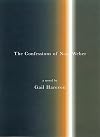
Noa Weber is a wealthy, single woman who late in life decides to write her memoirs. She’s been a single mother and a successful novelist, but her life is most marked by her obsession with a Russian Jew named Alek. Their relationship is filled with complications and at many times is completely one sided on her part: Alek has a full life without her. Noa’s life experience is more complex than most. Her attempt to recall her past motivations and experiences is problematic: “There’s a show more kind of lie in this linear writing which does not encompass all the details” she explains.
The novel reverses from her past to present in varying chunks, not always in chronological order. The events of her life are complicated by the social and political situation in Israel, and events in Russia as well. She is an atheist while her daughter is an observing Jew. Her mysterious relationship with her daughter is a sideline that adds to her complications and also makes the reader ask questions if this, in fact, is part of her “confession”.
The novel is beautifully written in an unanticipated way. She focuses only on relevant details to her story, so it proceeds at a quick clip that makes her seem self-absorbed. At times I found myself disliking Noa entirely, as she seemed so obsessively involved with Alek that she was completely heartless with everyone else, even to the point of neglect. She knows that too. His emotional and physical distancing from her doesn’t shake her: she is hooked: “Perhaps it is not him whom my soul loves that I am seeking, but simply my soul.” Yet her candor exposes more of her than might be shown if she presented herself as a more likable figure. In other words, her honesty is painful and risky. It’s as if she truly is in a confessional booth, stating her sins and but refusing absolution. And that dichotomy is what makes the novel so fascinating.
For example, she is remembering Alek and points to the weather as being the trigger for her memories: the smell of the rain, the warm wind, the “sight of the softened light refracted from the stone”. But she catches herself in her recounting, and in an aside, remarks “what did I just say? The warm wind and the softened light refracted from the stone in my longing? In the last analysis that’s romantic bullshit too. Setting the feeling in the ‘softened light of refracted from the stone’ to make it more photogenic. I loved Alek under the ugly neon of the hospital too, and in all kinds of other lights that can’t be poeticized.” She counters her memories in other reflections that alternate with humor and bitterness.
Thus the novel is unique and compelling because of Noa’s narrative voice. Never predictable and never easy, but worthy of the time and patience to find the truth between her memories and her reality.
This fiction novel was translated from Hebrew by Dalya Bilu. show less
The novel reverses from her past to present in varying chunks, not always in chronological order. The events of her life are complicated by the social and political situation in Israel, and events in Russia as well. She is an atheist while her daughter is an observing Jew. Her mysterious relationship with her daughter is a sideline that adds to her complications and also makes the reader ask questions if this, in fact, is part of her “confession”.
The novel is beautifully written in an unanticipated way. She focuses only on relevant details to her story, so it proceeds at a quick clip that makes her seem self-absorbed. At times I found myself disliking Noa entirely, as she seemed so obsessively involved with Alek that she was completely heartless with everyone else, even to the point of neglect. She knows that too. His emotional and physical distancing from her doesn’t shake her: she is hooked: “Perhaps it is not him whom my soul loves that I am seeking, but simply my soul.” Yet her candor exposes more of her than might be shown if she presented herself as a more likable figure. In other words, her honesty is painful and risky. It’s as if she truly is in a confessional booth, stating her sins and but refusing absolution. And that dichotomy is what makes the novel so fascinating.
For example, she is remembering Alek and points to the weather as being the trigger for her memories: the smell of the rain, the warm wind, the “sight of the softened light refracted from the stone”. But she catches herself in her recounting, and in an aside, remarks “what did I just say? The warm wind and the softened light refracted from the stone in my longing? In the last analysis that’s romantic bullshit too. Setting the feeling in the ‘softened light of refracted from the stone’ to make it more photogenic. I loved Alek under the ugly neon of the hospital too, and in all kinds of other lights that can’t be poeticized.” She counters her memories in other reflections that alternate with humor and bitterness.
Thus the novel is unique and compelling because of Noa’s narrative voice. Never predictable and never easy, but worthy of the time and patience to find the truth between her memories and her reality.
This fiction novel was translated from Hebrew by Dalya Bilu. show less
Lists
Awards


You May Also Like
Associated Authors
Statistics
- Works
- 15
- Also by
- 2
- Members
- 135
- Popularity
- #150,830
- Rating
- 3.3
- Reviews
- 8
- ISBNs
- 13
- Languages
- 1