
Sophie Lewis
Author of Abolish the Family: A Manifesto for Care and Liberation
Works by Sophie Lewis
Associated Works
A Brief History of Feminism (The MIT Press) (2017) — Translator, some editions — 83 copies, 2 reviews
This Tilting World (2019) — Translator, some editions; Translator, some editions — 31 copies, 1 review
Tagged
Common Knowledge
- Gender
- female
- Education
- University of Oxford (BA, MSc)
New School for Social Research (MA)
Manchester University (PhD) - Birthplace
- Wien, Österreich
- Places of residence
- Philadelphia, Pennsylvania, USA
Members
Reviews

Rating: 4* of five
The Publisher Says: From the author of Abolish the Family, a provocative compendium of the feminisms we love to dismiss and making the case for the bold, liberatory feminist politics we’ll need to stand against fascism, nationalism, femmephobia, and cisness.
In recent years, “white feminism” and girlboss feminism have taken a justified beating. We know that leaning in won’t make our jobs any more tolerable and that white women have proven to be, at best, unreliable show more allies. But in a time of rising fascism, ceaseless attacks on reproductive justice, and violent transphobia, we need to reckon with what Western feminism has wrought if we have any hope of building the feminist world we need.
Sophie Lewis offers an unflinching tour of enemy feminisms, from 19th century imperial feminists and police officers to 20th century KKK feminists and pornophobes to today’s anti-abortion and TERF feminists. Enemy feminisms exist. Feminism is not an inherent political good. Only when we acknowledge that can we finally reckon with the ways these feminisms have pushed us toward counterproductive and even violent ends. And only then can we finally engage in feminist strategizing that is truly antifascist.
At once a left transfeminist battlecry against cisness, a decolonial takedown of nationalist womanhoods, and a sex-radical retort to femmephobia in all its guises, Enemy Feminisms is above all a fierce, brilliant love letter to feminism.
I RECEIVED A DRC FROM THE PUBLISHER VIA EDELWEISS+. THANK YOU.
My Review: Oh dear. Another excellent, necessary message to everyone in the US lost to a wide audience. I'm in the choir and I still felt hectored, lectured at, and blamed personally by the author's tone.
I did not enjoy the experience.
I can't fault Author Lewis's collection of facts or her citations. Capitalist feminism is indeed a huge existential threat to women's rights. I'd say, however, that the Cult of Mother needed a much, much more savage pounding than capitalism receives. Apparently not one of the author's targets, though, in spite of being so ready to condemn the woman-controlling bodily autonomy denial of abortion restriction.
I question how effective the chapter against "girl-boss" glamorization really is. It's gendered, but is this not a case where celebrating the still-rare sight of women in control of their economic future, and the economy in general, not worth it? I don't think this is the threat to female equality it's presented as, but it's certainly made me consider the issue in a new light. Which, come down to it, is the great strength of this book and books like it, as well as the reason I give it four stars.
So it's style, not substance, that I find unwelcoming and unpleasant. That does not mean I didn't take a lot of positive information, and a hefty amount of psychic homework, away from the read. I found her challenging the hidden enemy in us all bracing and grounds for a lot of self-reflection. Ironic given my whinging about her tone, I know, but in a review for readers I'm not aiming for critical standards of an essay but information, and I hope a shove to get it and read it, for the laity. show less
The Publisher Says: From the author of Abolish the Family, a provocative compendium of the feminisms we love to dismiss and making the case for the bold, liberatory feminist politics we’ll need to stand against fascism, nationalism, femmephobia, and cisness.
In recent years, “white feminism” and girlboss feminism have taken a justified beating. We know that leaning in won’t make our jobs any more tolerable and that white women have proven to be, at best, unreliable show more allies. But in a time of rising fascism, ceaseless attacks on reproductive justice, and violent transphobia, we need to reckon with what Western feminism has wrought if we have any hope of building the feminist world we need.
Sophie Lewis offers an unflinching tour of enemy feminisms, from 19th century imperial feminists and police officers to 20th century KKK feminists and pornophobes to today’s anti-abortion and TERF feminists. Enemy feminisms exist. Feminism is not an inherent political good. Only when we acknowledge that can we finally reckon with the ways these feminisms have pushed us toward counterproductive and even violent ends. And only then can we finally engage in feminist strategizing that is truly antifascist.
At once a left transfeminist battlecry against cisness, a decolonial takedown of nationalist womanhoods, and a sex-radical retort to femmephobia in all its guises, Enemy Feminisms is above all a fierce, brilliant love letter to feminism.
I RECEIVED A DRC FROM THE PUBLISHER VIA EDELWEISS+. THANK YOU.
My Review: Oh dear. Another excellent, necessary message to everyone in the US lost to a wide audience. I'm in the choir and I still felt hectored, lectured at, and blamed personally by the author's tone.
I did not enjoy the experience.
I can't fault Author Lewis's collection of facts or her citations. Capitalist feminism is indeed a huge existential threat to women's rights. I'd say, however, that the Cult of Mother needed a much, much more savage pounding than capitalism receives. Apparently not one of the author's targets, though, in spite of being so ready to condemn the woman-controlling bodily autonomy denial of abortion restriction.
I question how effective the chapter against "girl-boss" glamorization really is. It's gendered, but is this not a case where celebrating the still-rare sight of women in control of their economic future, and the economy in general, not worth it? I don't think this is the threat to female equality it's presented as, but it's certainly made me consider the issue in a new light. Which, come down to it, is the great strength of this book and books like it, as well as the reason I give it four stars.
So it's style, not substance, that I find unwelcoming and unpleasant. That does not mean I didn't take a lot of positive information, and a hefty amount of psychic homework, away from the read. I found her challenging the hidden enemy in us all bracing and grounds for a lot of self-reflection. Ironic given my whinging about her tone, I know, but in a review for readers I'm not aiming for critical standards of an essay but information, and I hope a shove to get it and read it, for the laity. show less
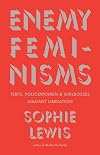
Enemy Feminisms by Sophie Lewis is an engaging book that will bring many contradictions, in how we think and whom we praise, into stark contrast.
You can approach this book in several ways, and I will highlight how I did. I read this as a history which is written to speak to our current environment. In other words, taking the past, and how we have used and sometimes misused it, to illustrate how we might best approach our present and future. As such, I didn't have to fully agree with every show more point Lewis makes as long as I do my best to understand as well as I can. Bracket my own ideas so I might better grasp theirs, then bring them into conversation with each other.
One takeaway, among many, is the need to identify our enemies, even when those enemies happen, at times, to be allies. Or even perhaps even ourselves, we're all capable of working against the very things we profess to be supporting. Whether historic figures who were instrumental in some areas but despicable in others or contemporary figures who use their fame to spew ignorant hate rather than write their next novel, we need to be able to assess these people, and ourselves, more honestly and with more nuance.
This isn't "hard feminism," whatever the heck that is, this is critical feminism. Critical of external and internal inconsistencies. If being forced to acknowledge some of your own shortcomings upsets you, this may not be the book for you. If you understand that none of us are perfect and we must always be considering and reconsidering paths forward, then this will be a valuable addition to your library.
Reviewed from a copy made available by the publisher via NetGalley. show less
You can approach this book in several ways, and I will highlight how I did. I read this as a history which is written to speak to our current environment. In other words, taking the past, and how we have used and sometimes misused it, to illustrate how we might best approach our present and future. As such, I didn't have to fully agree with every show more point Lewis makes as long as I do my best to understand as well as I can. Bracket my own ideas so I might better grasp theirs, then bring them into conversation with each other.
One takeaway, among many, is the need to identify our enemies, even when those enemies happen, at times, to be allies. Or even perhaps even ourselves, we're all capable of working against the very things we profess to be supporting. Whether historic figures who were instrumental in some areas but despicable in others or contemporary figures who use their fame to spew ignorant hate rather than write their next novel, we need to be able to assess these people, and ourselves, more honestly and with more nuance.
This isn't "hard feminism," whatever the heck that is, this is critical feminism. Critical of external and internal inconsistencies. If being forced to acknowledge some of your own shortcomings upsets you, this may not be the book for you. If you understand that none of us are perfect and we must always be considering and reconsidering paths forward, then this will be a valuable addition to your library.
Reviewed from a copy made available by the publisher via NetGalley. show less
I appreciate the author's firm stance against racism and colonialism in feminism. I disagree with her stances on prostitution and porn and she might see me as her enemy, it's possible. I am bewildered by some of her takes on sexuality (she claims it'd be utopian to have no taboo on incest).
I would recommend this book for some interesting facts and perspectives. This is not a Feminism 101 so I believe folks who will reads this are informed enough to analyze what they agree with and what they show more disagree with. show less
I would recommend this book for some interesting facts and perspectives. This is not a Feminism 101 so I believe folks who will reads this are informed enough to analyze what they agree with and what they show more disagree with. show less

Abolish the family. A manifesto for care and liberation seems to be a reiteration of a blip, or a phantom flash of an idea that died a while ago. Although the book is not mainly about gay and lesbian people, the book's main idea is profoundly based in ideas from the gay and lesbian movement, as it existed in from the 1960s to the middle 1990s. Particularly in the 1980s, the gay and lesbian movement fought for equal rights, and as liberalism favoured their cause, they achieved more than they show more had strived for. That is to say, as their movement gained momentum they reached beyond their call for equal rights, and won the battle for the gay marriage.
In the early days, gay marriage had not been the goal. Rather, progressively minded gay and lesbians envisaged an alternative form of partnership, and entirely different type of matrimonial bond: a different form and a different name. They lost their cause to the mainstream that wanted gay marriage.
Sophie Lewis draws this argument one more, expanding it to other groups of people, and for different purposes. Instead of attacking matrimony, Lewis wants to abolish the family. Her book is not particularly woke. It's ideological base is that preceding wokeism. Abolish the family. A manifesto for care and liberation is, as it says, a manifesto, harking back to that other influential manifesto: Marx and Engels' The Communist Manifesto. Abolish the family. A manifesto for care and liberation is a neo-Marxist pamphlet.
Feminist writers throughout this period have pointed at the significance of Engels's Der Ursprung der Familie, des Privateigenthums und des Staats (The Origin of the Family, Private Property and the State: in the Light of the Researches of Lewis H. Morgan). Abolish the family. A manifesto for care and liberation seems to be a bit too inconsequential on the idea to abolish the family altogether.
Superficially, in the light of eroding gender stereotypes toward a more open society, and large, looming issues such as care for the aging population in a world where fewer people can rely on their family, it seems the book has a valid point. However, for all fierce and revolutionary gusto with which the book presents its argument, it is mum on alternatives that could fill the gap left after the abilition of the family. show less
In the early days, gay marriage had not been the goal. Rather, progressively minded gay and lesbians envisaged an alternative form of partnership, and entirely different type of matrimonial bond: a different form and a different name. They lost their cause to the mainstream that wanted gay marriage.
Sophie Lewis draws this argument one more, expanding it to other groups of people, and for different purposes. Instead of attacking matrimony, Lewis wants to abolish the family. Her book is not particularly woke. It's ideological base is that preceding wokeism. Abolish the family. A manifesto for care and liberation is, as it says, a manifesto, harking back to that other influential manifesto: Marx and Engels' The Communist Manifesto. Abolish the family. A manifesto for care and liberation is a neo-Marxist pamphlet.
Feminist writers throughout this period have pointed at the significance of Engels's Der Ursprung der Familie, des Privateigenthums und des Staats (The Origin of the Family, Private Property and the State: in the Light of the Researches of Lewis H. Morgan). Abolish the family. A manifesto for care and liberation seems to be a bit too inconsequential on the idea to abolish the family altogether.
Superficially, in the light of eroding gender stereotypes toward a more open society, and large, looming issues such as care for the aging population in a world where fewer people can rely on their family, it seems the book has a valid point. However, for all fierce and revolutionary gusto with which the book presents its argument, it is mum on alternatives that could fill the gap left after the abilition of the family. show less
Lists
You May Also Like
Associated Authors
Statistics
- Works
- 7
- Also by
- 19
- Members
- 433
- Popularity
- #56,453
- Rating
- 3.6
- Reviews
- 8
- ISBNs
- 15
- Languages
- 4