
Julie Birmant
Author of Pablo: Art Masters Series
About the Author
Series
Works by Julie Birmant
Isadora - Isadora 1 copy
Tagged
Common Knowledge
- Canonical name
- Birmant, Julie
- Legal name
- Birmant, Julie
- Birthdate
- 1974-01-08
- Gender
- female
- Nationality
- Belgium
- Associated Place (for map)
- Belgium
Members
Reviews
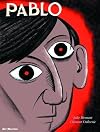
Beautifully illustrated graphic novel that covers the years 1900-1908 in Picasso’s life, from when he was a struggling 19-year-old artist in Paris, to when he began to break through, and with works such as Les Demoiselles d'Avignon (1907), set the foundations for cubism and modern art. The novel is told from the perspective of Fernande Olivier, his beautiful muse, lover, and model, and we learn of her life story in this period as well. The novel brings out the bohemian lifestyle and show more personalities of the artists of the day – Braque, Derain, and of course Matisse, who he had an intense rivalry with. The social gatherings, Gertrude Stein and her crowd, and then Picasso’s legendary dinner party for Henri Rousseau, are fascinating.
Max Jacob, a poet and critic who recognized Picasso’s genius early on and supported him, comes across as a real hero, and I suppose artists need these types of people to survive. He introduced Picasso to writer Guillaume Apollinaire, and the scenes of the three of them walking around at night shooting off a pistol while shouting ‘Down with Laforgue! Viva Rimbaud!’ are memorable. While discussing the future on the final pages, the book somewhat strangely doesn’t mention that Apollinaire would die in the influenza pandemic in 1918 at the age of 38, and Jacob would die on his way to Auschwitz in 1944 – how terribly sad.
Some may criticize the book for focusing on a narrow window of Picasso’s life, or want more out of it, but I think it’s stronger as a result, as it allows more detail into these people’s lives, their feelings and motivations, and there is certainly enough here to keep it captivating. This was a book that was hard to put down, and I devoured it. show less
Max Jacob, a poet and critic who recognized Picasso’s genius early on and supported him, comes across as a real hero, and I suppose artists need these types of people to survive. He introduced Picasso to writer Guillaume Apollinaire, and the scenes of the three of them walking around at night shooting off a pistol while shouting ‘Down with Laforgue! Viva Rimbaud!’ are memorable. While discussing the future on the final pages, the book somewhat strangely doesn’t mention that Apollinaire would die in the influenza pandemic in 1918 at the age of 38, and Jacob would die on his way to Auschwitz in 1944 – how terribly sad.
Some may criticize the book for focusing on a narrow window of Picasso’s life, or want more out of it, but I think it’s stronger as a result, as it allows more detail into these people’s lives, their feelings and motivations, and there is certainly enough here to keep it captivating. This was a book that was hard to put down, and I devoured it. show less

The summary on this one sounded exciting: a female mystery novelist in 1930s Ethiopia finds herself caught up in a real murder and archaeological mysteries? Sign me up! Unfortunately, the description was far more exciting than the actual book and I was left confused as to why the series is named for Renée Stone as she's such a minor character. At least the art was good.
Received via NetGalley.
Received via NetGalley.
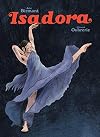
Another of those lame sort of graphic biographies that assume a lot of knowledge about the subject, up to and including how she died. It dully skims through Duncan's adult life, spending most of its time on her love affairs and the Greek mythology that inspired her style of dance. She seems to be an empty-headed bohemian artist for most of the book, taking a stand for communism later in life.
The history seems sloppy or even wrong in places. For instance, the concluding chapter moves her show more death up two years and misnames the driver of the vehicle, though it just might be a bad attempt at artistic foreshadowing. show less
The history seems sloppy or even wrong in places. For instance, the concluding chapter moves her show more death up two years and misnames the driver of the vehicle, though it just might be a bad attempt at artistic foreshadowing. show less
Another interesting story of an important woman in the early 20th century - and I am sure Isidora Duncan was very influential for dance, but this one did not get me as involved as previous graphic autobigraphies I have read.
Lists
Awards


You May Also Like
Associated Authors
Statistics
- Works
- 16
- Members
- 172
- Popularity
- #124,307
- Rating
- 3.3
- Reviews
- 9
- ISBNs
- 25
- Languages
- 4