

Brooke Berman
Author of No Place Like Home: A Memoir in 39 Apartments
Works by Brooke Berman
Defusion 1 copy
Playing House 1 copy
Associated Works
Tagged
Common Knowledge
- Birthdate
- 1969
- Gender
- female
- Education
- Barnard College
- Short biography
- Brooke Berman is an American playwright, screenwriter, memoirist, and educator who trained as an actor and solo performer in experimental theater circles before graduating from the Juilliard School's Playwriting Program. Widely recognized for her sharp, witty examinations of urban transience, home, and modern dating architecture, her breakthrough play Hunting and Gathering premiered Off-Broadway at Primary Stages and was named one of the Ten Best Plays of 2008 by New York Magazine. Her extensive career accolades include a Berilla Kerr Award, a MacDowell Fellowship, and residencies with the Eugene O'Neill Theater Center and New Dramatists. She has taught dramatic writing at NYU's Tisch School of the Arts and Fordham University, and authored the memoir No Place Like Home.
- Nationality
- USA
- Associated Place (for map)
- USA
Members
Reviews
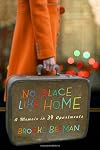
Finally exactly the right time for this.
I'm really happy that this exists. Brooke was a teacher of mine in college, my last year of playwriting, and I still think about things she said. Or sometimes just the way she says them. I also really enjoy her plays and the way she tells stories on her blog. Her language is just good for me and when I got this I felt like I needed to save it.
The book is about New York, and the gimmick is the apartments (and/or the symbolism is the moving). But the show more real subject is piecing together what you are able to do, and it's no small thing that the book takes place over 20 years and these pieces are hard at work the entire time. The long, longness of the long-term work. It's a meaningful way to look at goals you've set. What else has lasted for 20 years? If you're lost for a handful of those can you turn back onto the road? Do you ever decide to give up? Is it really your decision? Brooke's work in the theater is a good glass for these questions because that's the nature of that work, but the feeling clearly affects lots of us.
Personality is part of it, and what prevents this story from being outright advice (for me) is that hers is really different from mine. Reading this we hear about a lot of personal solutions from spiritual and New Age sources, which probably for most readers is more about her telling us that it works for her, than understanding that it could work for us. But sometimes her translation itself works, and is cute in its foreignness, and made me wonder decent things myself. There's a lot of nostalgia in the book, but you can tell how much she still cares for those paths that brought her out of crises.
I guess for me the forms of those crises are what was most significant and relatable. It's often a crisis of choice, a lot of times when she needs to choose what she does, to try something and then choose to go back. Or choosing to say no to something, like her family. And of course, choosing places -- when your chosen homes supercede your given ones. We've all got to think about it. Her periods of transition are often articulated with a lot of grace and/or funniness that makes them just help. The most important to me was her extended problem in 2002, her Cordelia complex and deep sadness, shedding and change. "If only I could release more and judge the pain less." "The lie of isolation."
I started corner-folding pages like crazy in the middle.
In some parts there's a lot more recollection than reflection, and sometimes time moves too quickly and it wasn't super smooth. Maybe it was a problem of trying to skip through less important periods, but her memory and timeline is so prevalent she doesn't really let go of it. Also, Noah is clearly such a crappy dude that it's sort of hard to read about their long relationship. And I got a little uncomfortable the more upwardly mobile and dissatisfied she became, which is ironic in her story but present nonetheless. (Some people are really glad to get $20 an hour in 2010, let alone 2001.) And btw, whoever titled this book, come on for real.
An extra star for my sentiment, perhaps. But it just never hurts to think these things through. Especially when you need to hear them.
Sidebar on that*: One thing is that reading this inspired me to make a list of every address I've lived in. Because I was impressed that she can do that and I knew that one day if I couldn't remember someplace I would be upset about it. I made it up to 12. 7 in NYC. I can't remember every apartment number. I can remember all the buildings except one or two from childhood, and I'm missing about three from infancy altogether. Also, I found that the house I lived in longest as a kid now seems to have a pool in the backyard. That backyard is sloped, how does that even work. And there were four trees back there.
I mean, what the heck.
* (Learned that from Brooke.) show less
I'm really happy that this exists. Brooke was a teacher of mine in college, my last year of playwriting, and I still think about things she said. Or sometimes just the way she says them. I also really enjoy her plays and the way she tells stories on her blog. Her language is just good for me and when I got this I felt like I needed to save it.
The book is about New York, and the gimmick is the apartments (and/or the symbolism is the moving). But the show more real subject is piecing together what you are able to do, and it's no small thing that the book takes place over 20 years and these pieces are hard at work the entire time. The long, longness of the long-term work. It's a meaningful way to look at goals you've set. What else has lasted for 20 years? If you're lost for a handful of those can you turn back onto the road? Do you ever decide to give up? Is it really your decision? Brooke's work in the theater is a good glass for these questions because that's the nature of that work, but the feeling clearly affects lots of us.
Personality is part of it, and what prevents this story from being outright advice (for me) is that hers is really different from mine. Reading this we hear about a lot of personal solutions from spiritual and New Age sources, which probably for most readers is more about her telling us that it works for her, than understanding that it could work for us. But sometimes her translation itself works, and is cute in its foreignness, and made me wonder decent things myself. There's a lot of nostalgia in the book, but you can tell how much she still cares for those paths that brought her out of crises.
I guess for me the forms of those crises are what was most significant and relatable. It's often a crisis of choice, a lot of times when she needs to choose what she does, to try something and then choose to go back. Or choosing to say no to something, like her family. And of course, choosing places -- when your chosen homes supercede your given ones. We've all got to think about it. Her periods of transition are often articulated with a lot of grace and/or funniness that makes them just help. The most important to me was her extended problem in 2002, her Cordelia complex and deep sadness, shedding and change. "If only I could release more and judge the pain less." "The lie of isolation."
I started corner-folding pages like crazy in the middle.
In some parts there's a lot more recollection than reflection, and sometimes time moves too quickly and it wasn't super smooth. Maybe it was a problem of trying to skip through less important periods, but her memory and timeline is so prevalent she doesn't really let go of it. Also, Noah is clearly such a crappy dude that it's sort of hard to read about their long relationship. And I got a little uncomfortable the more upwardly mobile and dissatisfied she became, which is ironic in her story but present nonetheless. (Some people are really glad to get $20 an hour in 2010, let alone 2001.) And btw, whoever titled this book, come on for real.
An extra star for my sentiment, perhaps. But it just never hurts to think these things through. Especially when you need to hear them.
Sidebar on that*: One thing is that reading this inspired me to make a list of every address I've lived in. Because I was impressed that she can do that and I knew that one day if I couldn't remember someplace I would be upset about it. I made it up to 12. 7 in NYC. I can't remember every apartment number. I can remember all the buildings except one or two from childhood, and I'm missing about three from infancy altogether. Also, I found that the house I lived in longest as a kid now seems to have a pool in the backyard. That backyard is sloped, how does that even work. And there were four trees back there.
I mean, what the heck.
* (Learned that from Brooke.) show less
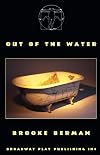
Graham (the Odysseus character): You want kids?
Polly (the Calypso character): I don't know.
Graham: You're too old to not know. You get like, how old are you? Thirty-four? Thirty-five? I mean, not to be a dick or anything, but it's harder after forty. On you, on the kid. There are all these statistics. So if you don't know - and you don't have any prospects - you've got like a few good years left to figure that out.
Polly: Thanks, Graham. But I'm not so convinced about family. I know you say show more it matters, and maybe it does, but I think family is what gets us into trouble. Family, tribe, country. Anything that keeps us loyal to the pack -
Graham: What "pack"?
Polly: - like animals, like wolves. Or cows. We're better off alone. (Small beat) I could adopt.
pp. 5-6
Cat (the Telemachus character, talking about her mother, the Penelope character): She's doing that thing again where she stays up all night watching Home Shopping Network and playing online bingo. Which is not only gambling, but it is the Internet, which you know Mom has issues with. ... But people are starting to ask. So I just think you should come home. Don't you get it? How you have to come home now? We all think you've like left us for good or something and our otherwise happy family is entirely destroyed like people on TV, like those amoral dysfunctional family TV shows the left wing conspiracy likes to put out so they can sell music or whatever.
pp 30-31 show less
Polly (the Calypso character): I don't know.
Graham: You're too old to not know. You get like, how old are you? Thirty-four? Thirty-five? I mean, not to be a dick or anything, but it's harder after forty. On you, on the kid. There are all these statistics. So if you don't know - and you don't have any prospects - you've got like a few good years left to figure that out.
Polly: Thanks, Graham. But I'm not so convinced about family. I know you say show more it matters, and maybe it does, but I think family is what gets us into trouble. Family, tribe, country. Anything that keeps us loyal to the pack -
Graham: What "pack"?
Polly: - like animals, like wolves. Or cows. We're better off alone. (Small beat) I could adopt.
pp. 5-6
Cat (the Telemachus character, talking about her mother, the Penelope character): She's doing that thing again where she stays up all night watching Home Shopping Network and playing online bingo. Which is not only gambling, but it is the Internet, which you know Mom has issues with. ... But people are starting to ask. So I just think you should come home. Don't you get it? How you have to come home now? We all think you've like left us for good or something and our otherwise happy family is entirely destroyed like people on TV, like those amoral dysfunctional family TV shows the left wing conspiracy likes to put out so they can sell music or whatever.
pp 30-31 show less
Statistics
- Works
- 10
- Also by
- 1
- Members
- 55
- Popularity
- #295,339
- Rating
- 3.8
- Reviews
- 2
- ISBNs
- 10