
Annie Murphy Paul
Author of The Extended Mind: The Power of Thinking Outside the Brain
About the Author
Annie Murphy Paul is an acclaimed science writer whose work has appeared in the New York Times Magazine, Scientific American, and The Best American Science Writing, among many other publications. Her TED Talk has been viewed more than 2.6 million times. She lives in New Haven.
Image credit: Photographed by Ali Price
Works by Annie Murphy Paul
Associated Works
Tagged
Common Knowledge
- Birthdate
- 1973
- Gender
- female
- Education
- Yale University (BA)
Columbia University Graduate School of Journalism - Occupations
- Editor, Psychology Today
freelance writer
senior advisor, Yale University Poorvu Center for Teaching and Learning - Organizations
- Time, Inc.
CNN - Nationality
- USA
- Birthplace
- Philadelphia, Pennsylvania, USA
- Map Location
- USA
Members
Reviews

Based on the "Thinking Outside the Brain" subtitle alone this could've easily been some schlocky corporate fad book. Thankfully, I heard about The Extended Mind via a recommendation so I was prepared for its thesis to be so much more. And it was.
To my delight, I learned that I naturally developed some of these "thinking" habits over the course of my adult life. One of my preferred methods, also outlined here and much to the annoyance of my wife, is that when I disagree with someone I don't show more try to win the argument but instead try to understand the logic of their argument. I do this by asking question after question after question. If this hypothetical person does not enjoy debate, then my method may not be ideal. But it's a remarkable way to see the argument from a different point of view.
The book also employs a subtle push towards embracing the realities of our interconnected digital world. We no longer live in small communities isolated by distance. Our ability to connect with one another around the world, instantly, has contributed to all manner of good and bad outcomes that wouldn't have been possible in our pre-connected world. Given this reality, and given the rise of smarter machines invading our lives, it's become more imperative than ever to supplement how we think using methods outside of our minds. show less
To my delight, I learned that I naturally developed some of these "thinking" habits over the course of my adult life. One of my preferred methods, also outlined here and much to the annoyance of my wife, is that when I disagree with someone I don't show more try to win the argument but instead try to understand the logic of their argument. I do this by asking question after question after question. If this hypothetical person does not enjoy debate, then my method may not be ideal. But it's a remarkable way to see the argument from a different point of view.
The book also employs a subtle push towards embracing the realities of our interconnected digital world. We no longer live in small communities isolated by distance. Our ability to connect with one another around the world, instantly, has contributed to all manner of good and bad outcomes that wouldn't have been possible in our pre-connected world. Given this reality, and given the rise of smarter machines invading our lives, it's become more imperative than ever to supplement how we think using methods outside of our minds. show less
The Cult of Personality Testing: How Personality Tests Are Leading Us to Miseducate Our Children, Mismanage Our Companies, and Misunderstand Ourselves by Annie Murphy Paul
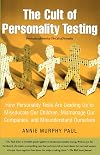
This book looks at various supposedly scientific tests used to describe and categorize human personalities, from phrenology (which was taken quite seriously in its day), to inkblots, to the 504-question MMPI, to Meyers-Briggs, and beyond.
From the title, you might expect this to be one long, heated anti-personality-test rant, but it's not. Most of the book is spent looking at the history of the various tests, the philosophy behind them, and the often quite colorful people who created them. show more All of which is interesting in its own right, but it does become very clear from those histories that none of these approaches is exactly resting on a rock-solid scientific foundation, and that even the ones with some empirical basis are of rather limited value. Which is a problem, because these tests are often used by courts and corporations, and their results can have profound impacts on people's lives, from losing a job to losing custody of a child. Paul is particularly critical of the corporate use of personality tests (which are often not even the already dubious tests developed by psychologists, but produced-for-profit knockoffs with even less scientific credibility), which she sees as tools for companies to pigeonhole and manipulate their employees. We're much better off, she contends, not trying to reduce something as complex as human personality to neatly labeled and over-simplified types. And it seems very hard to disagree. show less
From the title, you might expect this to be one long, heated anti-personality-test rant, but it's not. Most of the book is spent looking at the history of the various tests, the philosophy behind them, and the often quite colorful people who created them. show more All of which is interesting in its own right, but it does become very clear from those histories that none of these approaches is exactly resting on a rock-solid scientific foundation, and that even the ones with some empirical basis are of rather limited value. Which is a problem, because these tests are often used by courts and corporations, and their results can have profound impacts on people's lives, from losing a job to losing custody of a child. Paul is particularly critical of the corporate use of personality tests (which are often not even the already dubious tests developed by psychologists, but produced-for-profit knockoffs with even less scientific credibility), which she sees as tools for companies to pigeonhole and manipulate their employees. We're much better off, she contends, not trying to reduce something as complex as human personality to neatly labeled and over-simplified types. And it seems very hard to disagree. show less
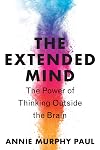
This is a lovely synthesis of the many ways in which "thinking" emerges from the verbal and non-verbal interactions between and among thinkers and their worlds. The author's insistence that this view of thought and the brain is "radical" or "revolutionary" made me nuts, which perhaps says more about me than the work. She is 100% correct, though, that thinking of thinking and the brain as only happening within the individual's skull creates less fluent thinkers and less robust ideas.
The Cult of Personality Testing: How Personality Tests Are Leading Us to Miseducate Our Children, Mismanage Our Companies, and Misunderstand Ourselves by Annie Murphy Paul
The truth about personality testing. Ms. Paul takes us through the history of each of several types of personality tests: who developed them and for what purpose, how they are now used, who else has created similar tests. She then points out the failures of these tests, based on studies and common sense.
The upshot is that personality tests try to place each of us into confined boxes and we will not fit. It is impossible to simplify a personality because we are all a combination of many show more influences.
Yet these tests are used to make crucial decisions about us, from where we work and what we do to whether or not we receive custody of our children in divorce cases. In the end, Ms. Paul suggests that if we do not choose to refuse to take these tests when requested that we investigate the test itself before taking it, and proceed informed. The situation is analogous to the use of lie detectors, although lie detectors may actually be more accurate. In either case, it is unwise to allow decisions to be made based on either.
The book is loaded with examples and is backed up by many pages of notes and references. More people need to read this book, not least the psychologists who routinely rely on such tests. show less
The upshot is that personality tests try to place each of us into confined boxes and we will not fit. It is impossible to simplify a personality because we are all a combination of many show more influences.
Yet these tests are used to make crucial decisions about us, from where we work and what we do to whether or not we receive custody of our children in divorce cases. In the end, Ms. Paul suggests that if we do not choose to refuse to take these tests when requested that we investigate the test itself before taking it, and proceed informed. The situation is analogous to the use of lie detectors, although lie detectors may actually be more accurate. In either case, it is unwise to allow decisions to be made based on either.
The book is loaded with examples and is backed up by many pages of notes and references. More people need to read this book, not least the psychologists who routinely rely on such tests. show less
Lists
Awards


You May Also Like


Associated Authors
Statistics
- Works
- 4
- Also by
- 1
- Members
- 682
- Popularity
- #37,082
- Rating
- 3.7
- Reviews
- 25
- ISBNs
- 20
- Languages
- 2