
Margaret Dilloway
Author of How to Be an American Housewife
About the Author
Series
Works by Margaret Dilloway
Associated Works
Author in Progress: A No-Holds-Barred Guide to What It Really Takes to Get Published (2016) — Contributor — 72 copies, 1 review
Tagged
Common Knowledge
- Birthdate
- 1974
- Gender
- female
- Education
- Scripps College
- Awards and honors
- John Gardner Fiction Award Finalist, 2011
Indie NEXT List Pick, 2010 - Nationality
- USA
- Birthplace
- San Diego, California, USA
- Places of residence
- San Diego, California, USA
Hawaii, USA - Associated Place (for map)
- USA
Members
Reviews
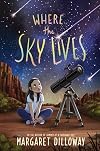
Tuesday Beals lives with her mother Dana, an archaeologist, in Zion National Park; they are both grieving the death of Tuesday's uncle and Dana's brother Ezra, an astronomer. When Tuesday discovers that Hedges ranch, next door to Zion, has been bought by developers, she is desperate to find a way to save it; Hedges is pristine, and having buildings there will create light pollution, so Zion couldn't get the Dark Sky designation. Tuesday enlists her best friend Carter, a rock climber, and show more artist-in-residence Silas to help with her mission: finding an unknown archaeological site so construction will have to stop.
Quotes
Uncle Ezra says it's fine to try things on your own, but you should probably do research to see if someone else already did it first, to make it easier on yourself. (65-66)
"We're always looking for the things we wish were there instead of the things that actually are there. You have to be careful." (Ezra to Tuesday, 94)
I know why the school history books don't say anything about it. They don't want people to feel bad about what their ancestors did. But just because someone doesn't want to know a fact, or doesn't like a fact, doesn't mean the fact doesn't exist anymore....Not knowing facts always leads to trouble. (98)
I guess you have to want to be paying attention before you see things sometimes. (115)
"Grief is a funny thing. It's not an event with a beginning and an end. It can pop up again." (Danielle to Tuesday, 119)
Why does it feel like people are using the word smart as an insult against me? (215)
"You have to learn to be okay with uncertainty. That's all life is. Nobody is guaranteed anything." (230)
Maybe we're all caught up in our own stories, and we don't even know it. (249)
It suddenly occurs to me that my mother is a totally separate person from me, who has thoughts I will never know, and it feels strange. (253)
You have to be lucky sometimes and be in the right place at the right time. (269)
Maybe it shows you have to be open to changing what you're looking for, when you get new information. (314) show less
Quotes
Uncle Ezra says it's fine to try things on your own, but you should probably do research to see if someone else already did it first, to make it easier on yourself. (65-66)
"We're always looking for the things we wish were there instead of the things that actually are there. You have to be careful." (Ezra to Tuesday, 94)
I know why the school history books don't say anything about it. They don't want people to feel bad about what their ancestors did. But just because someone doesn't want to know a fact, or doesn't like a fact, doesn't mean the fact doesn't exist anymore....Not knowing facts always leads to trouble. (98)
I guess you have to want to be paying attention before you see things sometimes. (115)
"Grief is a funny thing. It's not an event with a beginning and an end. It can pop up again." (Danielle to Tuesday, 119)
Why does it feel like people are using the word smart as an insult against me? (215)
"You have to learn to be okay with uncertainty. That's all life is. Nobody is guaranteed anything." (230)
Maybe we're all caught up in our own stories, and we don't even know it. (249)
It suddenly occurs to me that my mother is a totally separate person from me, who has thoughts I will never know, and it feels strange. (253)
You have to be lucky sometimes and be in the right place at the right time. (269)
Maybe it shows you have to be open to changing what you're looking for, when you get new information. (314) show less
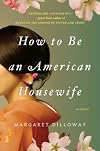
I started Margaret Dilloway’s How To Be An American Housewife just before bed last week, distracted by my busy day and unable to calm my worried mind enough to sleep. From the opening sentence, I was surprised at how quickly I sunk into this beautiful, lyrical story — and how enchanted with Dilloway’s world I became. I didn’t put the book down again until 2 a.m. — and only when my eyes were literally shutting.
In this novel centering around identity, growth, healing and motherhood, show more our protagonists are Shoko and Suiko, or “Sue.” The Japanese wife of a former American GI, Shoko has become American through assimilation. She chose to marry Charlie, a shy redheaded military man, and left her native Japan after the bombings of Nagasaki and Hiroshima left her culture, land and family devastated. Sue is Shoko and Charlie’s divorced American daughter, a lovely woman with a 12-year-old daughter, Helena, who understands her mother little and their Japanese heritage even less.
Now aging and facing serious surgery, Shoko is looking back at the life she left in the Japanese countryside — and the family that disowned her when she married an American. Taro, Shoko’s brother, was particularly venomous and couldn’t — or wouldn’t — see the way out Shoko was forced to take. After her father chose her future husband out of a photo line-up of American suitors, Shoko said goodbye to her native country . . . and hello to a world even more foreign than the frightening one she abandoned. But toward the end of her life, did Shoko make the right choices? Could she have changed things for herself, for Charlie, for their son Mike — or for Sue?
From the novel’s first words to its rapid conclusion, I was enchanted with everything about Dilloway’s story. In the cover blurb, author Jamie Ford calls the story “tender and captivating” — a description I second whole-heartedly. I can think of little I disliked about Housewife, except that, for me, it ended far too soon.
Alternating between Shoko’s memories of her early life and teenage years across the Pacific and the present in California, Dilloway seamlessly moves us from time to the next. Shoko herself tells us her story, providing background and details in flawless language. We know that Shoko has faced discrimination in forms: especially after she arrived in the U.S. We know, too, that her English language skills are limited and her accent hard to understand. But as a narrator, Shoko is intelligent, witty, deft; she’s wonderful. The details Dilloway shares strike the impeccably perfect balance between telling and showing.
Oh, there’s so much to discuss in this fabulous book: the nature of Charlie and Shoko’s marriage; Mike’s difficulties and the nature of his reticence; the Japanese caste system that forced Shoko to shy away from a man she once loved; the effects of the atomic bombs on Japanese society, and the way the war changed everything. But I don’t want to give away the story or overshare, because I went into this novel mostly blind — and I loved that. What appealed to me most, from reading a description on Goodreads, was the cover. I’m obsessed with cherry blossoms — or sakura – and usually savor stories of immigrants and foreign cultures.
This novel was exquisite — one of the finest I’ve read this year — and I highly, highly recommend it to lovers of literary fiction, historical fiction and plain ol’ fine storytelling.
Read my (shockingly longer!) full review at write meg! show less
In this novel centering around identity, growth, healing and motherhood, show more our protagonists are Shoko and Suiko, or “Sue.” The Japanese wife of a former American GI, Shoko has become American through assimilation. She chose to marry Charlie, a shy redheaded military man, and left her native Japan after the bombings of Nagasaki and Hiroshima left her culture, land and family devastated. Sue is Shoko and Charlie’s divorced American daughter, a lovely woman with a 12-year-old daughter, Helena, who understands her mother little and their Japanese heritage even less.
Now aging and facing serious surgery, Shoko is looking back at the life she left in the Japanese countryside — and the family that disowned her when she married an American. Taro, Shoko’s brother, was particularly venomous and couldn’t — or wouldn’t — see the way out Shoko was forced to take. After her father chose her future husband out of a photo line-up of American suitors, Shoko said goodbye to her native country . . . and hello to a world even more foreign than the frightening one she abandoned. But toward the end of her life, did Shoko make the right choices? Could she have changed things for herself, for Charlie, for their son Mike — or for Sue?
From the novel’s first words to its rapid conclusion, I was enchanted with everything about Dilloway’s story. In the cover blurb, author Jamie Ford calls the story “tender and captivating” — a description I second whole-heartedly. I can think of little I disliked about Housewife, except that, for me, it ended far too soon.
Alternating between Shoko’s memories of her early life and teenage years across the Pacific and the present in California, Dilloway seamlessly moves us from time to the next. Shoko herself tells us her story, providing background and details in flawless language. We know that Shoko has faced discrimination in forms: especially after she arrived in the U.S. We know, too, that her English language skills are limited and her accent hard to understand. But as a narrator, Shoko is intelligent, witty, deft; she’s wonderful. The details Dilloway shares strike the impeccably perfect balance between telling and showing.
Oh, there’s so much to discuss in this fabulous book: the nature of Charlie and Shoko’s marriage; Mike’s difficulties and the nature of his reticence; the Japanese caste system that forced Shoko to shy away from a man she once loved; the effects of the atomic bombs on Japanese society, and the way the war changed everything. But I don’t want to give away the story or overshare, because I went into this novel mostly blind — and I loved that. What appealed to me most, from reading a description on Goodreads, was the cover. I’m obsessed with cherry blossoms — or sakura – and usually savor stories of immigrants and foreign cultures.
This novel was exquisite — one of the finest I’ve read this year — and I highly, highly recommend it to lovers of literary fiction, historical fiction and plain ol’ fine storytelling.
Read my (shockingly longer!) full review at write meg! show less
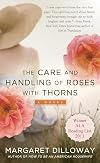
"Difficult and obstinate. Thriving under a set of specific and limited conditions. That pretty much describes me. Maybe that's why I like these roses so much."
Gal has struggled all her life with a kidney failure, going to dialysis several times a week, hoping upon hope that she'll get a transplant soon. While she waits, she teaches biology very strictly at the local Catholic high school, and cultivates roses. As an amateur breeder, she tries to create a unique new strain of the Hulthemia show more rose. When her niece Riley turns up unannounced, she turns Gal's well-ordered life inside out... and breathes fresh life in.
Gal is a bit of an odd fish - but to me, a fairly understandable one. She sees everything very much in black and white, is ambitious and scientific and colours very much within the lines. She's so keen to be considered a legitimate rose competitor, to be validated, while she copes with the devastating reality of her kidney issues. Dilloway includes in Gal the depression of a chronic illness sufferer, the logistical difficulties of dialysis and rose-tending, and the elation, jealousy and heartbreak of watching other patients on the same transplant list.
Like all these types of books (Looking for Me, Sisterland, Meet Me At the Cupcake Cafe, Love Anthony), the writing is easy and munchable without impediment, but equally not unappetising. Extra characters are as developed as necessary (i.e. often, not very), and certain conflicts and romances are easily foretold. The drama of the kidney failure is in a sense secondary to the main suspense of the Riley-Gal relationship.
Riley, the unexpected teenager, is the unsung heroine of this story. It would have been easy to cast the teenager as the disruption, the troublemaker, but Riley is actually a cleverly constructed character, full of surprises and gentle actions rather than trouble. She's honest but sullen, open and secretive in turns.
Not difficult to read at all - but quite good fun. show less
Gal has struggled all her life with a kidney failure, going to dialysis several times a week, hoping upon hope that she'll get a transplant soon. While she waits, she teaches biology very strictly at the local Catholic high school, and cultivates roses. As an amateur breeder, she tries to create a unique new strain of the Hulthemia show more rose. When her niece Riley turns up unannounced, she turns Gal's well-ordered life inside out... and breathes fresh life in.
Gal is a bit of an odd fish - but to me, a fairly understandable one. She sees everything very much in black and white, is ambitious and scientific and colours very much within the lines. She's so keen to be considered a legitimate rose competitor, to be validated, while she copes with the devastating reality of her kidney issues. Dilloway includes in Gal the depression of a chronic illness sufferer, the logistical difficulties of dialysis and rose-tending, and the elation, jealousy and heartbreak of watching other patients on the same transplant list.
Like all these types of books (Looking for Me, Sisterland, Meet Me At the Cupcake Cafe, Love Anthony), the writing is easy and munchable without impediment, but equally not unappetising. Extra characters are as developed as necessary (i.e. often, not very), and certain conflicts and romances are easily foretold. The drama of the kidney failure is in a sense secondary to the main suspense of the Riley-Gal relationship.
Riley, the unexpected teenager, is the unsung heroine of this story. It would have been easy to cast the teenager as the disruption, the troublemaker, but Riley is actually a cleverly constructed character, full of surprises and gentle actions rather than trouble. She's honest but sullen, open and secretive in turns.
Not difficult to read at all - but quite good fun. show less
How to Be an American Housewife was one of the final books that I read in 2011 and also one of my favorites. It is the story of Shoko, a Japanese woman who marries an American soldier after World War II, and her daughter, Sue, who is raising her daughter as a single mom. The book explores their memories, their relationship, and the bonds of family as Shoko's heart condition prevents her from traveling to Japan to reconcile with her brother.
Books involving memories, traveling between the show more present and the past, are delicate things to write. If not done well, they can be very confusing or jarring for the reader as the transition takes place. Dilloway handled this potential pitfall wonderfully in How to Be an American Housewife, capturing just how something from the present can catapult one into memories of the past or another instance can bring one out of those memories. Shoko's memories of Japan are powerful as she experienced so much during World War II and in the aftermath. Her experiences are those of an individual but also of a proud nation trying to find its way in a new world order. The traditional roles that define men and women and the rigid structure of society are examined in the way that they provide a solid framework for expectation and action but also prevent individuals and society from moving forward and transitioning into a more global society. Shoko brings these expectations with her to America, although she attempts to convert them from the Japanese expectations to the American ones. Her life remains ordered and structured even though she has entered a new society with different rules.
Sue grows up learning little about her Japanese heritage but fully understanding that her mother is very different than American mothers. The house runs on routines and rules even if they are American rules in her mother's eyes. With parents who have high expectations and strict rules, Sue naturally rebels and relationships are strained further as she marries young, has a daughter, and gets a divorce. Without a solid family foundation to ground her, Sue floats through life barely making ends meet and giving up on the dreams she once had.
Shoko's illness brings together her memories of Japan with her desire to reconnect with her brother. She is not strong enough to travel to Japan herself so she asks Sue to go in her place. While she fears her brother's reaction to the unexpected visit by relatives he has never met, she desires that Sue see where she comes from and learn about her family heritage. Sue and her daughter undertake the journey and come home with a larger sense of self and family. Shoko's brother, Taro, does not tell the story that Shoko fears he will but instead leaves that for her to share if she wishes. While the reunion is rocky, Taro does eventually come to terms with his rejection of Shoko when she married an American and develops a relationship with his American family.
How to Be an American Housewife captured me from the very first sentence and I just wanted to keep reading. The language used by Dilloway in Shoko's memories and to describe Japan is beautiful. She has a keen understanding of the culture through her mother and this shines through in the essential elements of the story. All of the characters have depth and each memory is constructed for a specific purpose in the story. There is no extra padding here but only words to fill the soul with an understanding of the importance of family.
It is very rare that I give a book a 5 star rating but How to Be an American Housewife definitely deserves one. show less
Books involving memories, traveling between the show more present and the past, are delicate things to write. If not done well, they can be very confusing or jarring for the reader as the transition takes place. Dilloway handled this potential pitfall wonderfully in How to Be an American Housewife, capturing just how something from the present can catapult one into memories of the past or another instance can bring one out of those memories. Shoko's memories of Japan are powerful as she experienced so much during World War II and in the aftermath. Her experiences are those of an individual but also of a proud nation trying to find its way in a new world order. The traditional roles that define men and women and the rigid structure of society are examined in the way that they provide a solid framework for expectation and action but also prevent individuals and society from moving forward and transitioning into a more global society. Shoko brings these expectations with her to America, although she attempts to convert them from the Japanese expectations to the American ones. Her life remains ordered and structured even though she has entered a new society with different rules.
Sue grows up learning little about her Japanese heritage but fully understanding that her mother is very different than American mothers. The house runs on routines and rules even if they are American rules in her mother's eyes. With parents who have high expectations and strict rules, Sue naturally rebels and relationships are strained further as she marries young, has a daughter, and gets a divorce. Without a solid family foundation to ground her, Sue floats through life barely making ends meet and giving up on the dreams she once had.
Shoko's illness brings together her memories of Japan with her desire to reconnect with her brother. She is not strong enough to travel to Japan herself so she asks Sue to go in her place. While she fears her brother's reaction to the unexpected visit by relatives he has never met, she desires that Sue see where she comes from and learn about her family heritage. Sue and her daughter undertake the journey and come home with a larger sense of self and family. Shoko's brother, Taro, does not tell the story that Shoko fears he will but instead leaves that for her to share if she wishes. While the reunion is rocky, Taro does eventually come to terms with his rejection of Shoko when she married an American and develops a relationship with his American family.
How to Be an American Housewife captured me from the very first sentence and I just wanted to keep reading. The language used by Dilloway in Shoko's memories and to describe Japan is beautiful. She has a keen understanding of the culture through her mother and this shines through in the essential elements of the story. All of the characters have depth and each memory is constructed for a specific purpose in the story. There is no extra padding here but only words to fill the soul with an understanding of the importance of family.
It is very rare that I give a book a 5 star rating but How to Be an American Housewife definitely deserves one. show less
Lists
Awards


You May Also Like


Associated Authors
Statistics
- Works
- 9
- Also by
- 2
- Members
- 1,403
- Popularity
- #18,301
- Rating
- 3.8
- Reviews
- 127
- ISBNs
- 76
- Languages
- 1
- Favorited
- 1
