
Benno van den Toren
Author of Finding Ourselves after Darwin: Conversations on the Image of God, Original Sin, and the Problem of Evil
Works by Benno van den Toren
Finding Ourselves after Darwin: Conversations on the Image of God, Original Sin, and the Problem of Evil (2018) — Editor — 40 copies
Het geloofsleven van de theoloog : in tekst en toelichting : voor predikanten en studenten (1995) 3 copies
Doordenken over de mens 2 copies
Breuk en brug : in gesprek met Karl Barth en postmoderne theologie over geloofsverantwoording 1 copy
La Doctrine Chretienne Dans Un Monde Multiculturel: Introduction à la tâche théologique (French Edition) (2014) 1 copy
Doordenken over God 1 copy
Associated Works
Tagged
Common Knowledge
There is no Common Knowledge data for this author yet. You can help.
Members
Reviews
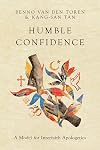
Summary: A model of dialogical apologetics for a multi-faith world committed to accountable and embodied witness that is culturally sensitive, holistic, and yet centered in Christ.
The world in which Christian witness and the work of the apologist has changed. Once it could be assumed that both the apologist and the person or people he or she was engaged with shared a common, Western outlook. Today, even in the West, let alone other contexts, that assumption no longer holds. The Christian show more witness finds oneself in a multi-faith, pluralistic context of Eastern religions, primal religions, Islam, secularism, and cobbled-together spiritualities.
In place of the foundationalist apologetics once assumed, the authors propose a model of apologetic dialogue that takes the multi-faith, multi-cultural realities of mission in today’s world seriously, exercising a posture both of humility as learners understanding the outlook of those with whom they engage and confidence centered around the person and work of Christ and its universal relevance to the human condition.
The co-authors, who have lived and worked in missional contexts in various parts of the world contend that such apologetic witness must be embodied in the witnessing community. Theoretical discussions must reflect the lived realities of the witnessing community. This witness also must reflect awareness that truth is embedded in cultural contexts, both of the witness and the listener, but that we are not imprisoned by those cultural realities.
They grapple with how we ought see other religions, refusing to see them merely as idolatrous falsehoods on the one hand, nor their adherents as simply fellow pilgrims on the other. Rather, they employ multiple perspectives undergirded by seeking to discern the work of the triune God in the particular context. This also leads to an understanding of apologetic dialogue as a witness to the God who came to us in the person of the Son and remains present in the world through his Spirit. Apologetics cannot be separated from our witness to the work of the Triune God.
At the same time, just as this entry of God into the world was culturally embedded in Israel and the Greco-Roman empire, apologetic dialogue respectfully listens and learns about the cultural embeddedness of other beliefs while gesturing to a reality beyond both partners in the dialogue against which we reckon our understanding. This includes both tensions between beliefs and realities and also with the desires and will of our dialogue partners.
Along the way the authors address issues such as the trustworthiness of the biblical witness to Christ, the uniqueness of Christ amid cultural relativism, and the critique against the use of Christianity as a cloak for Western imperialism.
The second half of the book applies this framework to case studies of apologetic dialogue with a variety of faith perspectives: primal religions, Hinduism, Buddhism, Islam, secularism, and what they call “late-modern spiritualities.” We explore ways Christ may subvert some forms of the Hindu quest, tensions in Buddhism between the oneness of all things and the significance of persons, and the dismissal of evil and suffering as illusion that inadequately address lived experience. and the integrity of Christian faith, including the idea of the Trinity in dialogue with Islam.
The case studies are helpful in seeing how they apply their ideas of apologetic dialogue. In particular, I appreciate the focus on attentive listening and understanding of cultures, of embodied and accountable witness, centered in scripture’s witness to the work of the Triune God in the person of his Son and the continuing ministry of the Spirit. Rather than a “we’re right/you’re wrong approach” on one hand and a “let’s all just walk in pilgrimage together” approach on the other, this assumes that while we witness to Christ from within our cultural contexts and others similarly live and believe from theirs, there is truth beyond to which we witness yet do not own, but to which we, and all, must give account.
The book also includes a study guide with recommendations for further reading. It answers a significant need for a resource speaking to how we engage in witness and even apologetic persuasion, yet with humility rather than arrogance, with cultural sensitivity and respect rather than imperialistic blindness to the other.
_______________
Disclosure of Material Connection: I received a complimentary review copy of this book from the publisher. show less
The world in which Christian witness and the work of the apologist has changed. Once it could be assumed that both the apologist and the person or people he or she was engaged with shared a common, Western outlook. Today, even in the West, let alone other contexts, that assumption no longer holds. The Christian show more witness finds oneself in a multi-faith, pluralistic context of Eastern religions, primal religions, Islam, secularism, and cobbled-together spiritualities.
In place of the foundationalist apologetics once assumed, the authors propose a model of apologetic dialogue that takes the multi-faith, multi-cultural realities of mission in today’s world seriously, exercising a posture both of humility as learners understanding the outlook of those with whom they engage and confidence centered around the person and work of Christ and its universal relevance to the human condition.
The co-authors, who have lived and worked in missional contexts in various parts of the world contend that such apologetic witness must be embodied in the witnessing community. Theoretical discussions must reflect the lived realities of the witnessing community. This witness also must reflect awareness that truth is embedded in cultural contexts, both of the witness and the listener, but that we are not imprisoned by those cultural realities.
They grapple with how we ought see other religions, refusing to see them merely as idolatrous falsehoods on the one hand, nor their adherents as simply fellow pilgrims on the other. Rather, they employ multiple perspectives undergirded by seeking to discern the work of the triune God in the particular context. This also leads to an understanding of apologetic dialogue as a witness to the God who came to us in the person of the Son and remains present in the world through his Spirit. Apologetics cannot be separated from our witness to the work of the Triune God.
At the same time, just as this entry of God into the world was culturally embedded in Israel and the Greco-Roman empire, apologetic dialogue respectfully listens and learns about the cultural embeddedness of other beliefs while gesturing to a reality beyond both partners in the dialogue against which we reckon our understanding. This includes both tensions between beliefs and realities and also with the desires and will of our dialogue partners.
Along the way the authors address issues such as the trustworthiness of the biblical witness to Christ, the uniqueness of Christ amid cultural relativism, and the critique against the use of Christianity as a cloak for Western imperialism.
The second half of the book applies this framework to case studies of apologetic dialogue with a variety of faith perspectives: primal religions, Hinduism, Buddhism, Islam, secularism, and what they call “late-modern spiritualities.” We explore ways Christ may subvert some forms of the Hindu quest, tensions in Buddhism between the oneness of all things and the significance of persons, and the dismissal of evil and suffering as illusion that inadequately address lived experience. and the integrity of Christian faith, including the idea of the Trinity in dialogue with Islam.
The case studies are helpful in seeing how they apply their ideas of apologetic dialogue. In particular, I appreciate the focus on attentive listening and understanding of cultures, of embodied and accountable witness, centered in scripture’s witness to the work of the Triune God in the person of his Son and the continuing ministry of the Spirit. Rather than a “we’re right/you’re wrong approach” on one hand and a “let’s all just walk in pilgrimage together” approach on the other, this assumes that while we witness to Christ from within our cultural contexts and others similarly live and believe from theirs, there is truth beyond to which we witness yet do not own, but to which we, and all, must give account.
The book also includes a study guide with recommendations for further reading. It answers a significant need for a resource speaking to how we engage in witness and even apologetic persuasion, yet with humility rather than arrogance, with cultural sensitivity and respect rather than imperialistic blindness to the other.
_______________
Disclosure of Material Connection: I received a complimentary review copy of this book from the publisher. show less

NCLA Review: Designed to help Christians have answers to the questions often asked by non-Christians, the author uses a conversational situation to illustrate how to respond and share positive reasons for our faith in Jesus Christ. Some of the topical issues he deals with are: Suffering, Relativism, Are all religions the same?, and Why Jesus? Insight as to why the person may be asking the question and Biblical truths that may clarify the reader’s understanding of the topic are given in show more order to give a better response. It is important to understand though, that these questions are general and may not always be the exact question that is asked. The author’s goal is “to help the reader build their lives more solidly on the foundation of their faith, Jesus Christ, and in that process discover what we will be able to share with others.” Each chapter ends with questions for groups and personal reflection. The author is Extraordinary Professor of Theology of Charismatic Renewal at the Free University in Amsterdam having taught Christian doctrine since 1997, first in Africa and then at Wycliffe Hall, Oxford. Rating: 4 —ARG show less
You May Also Like
Associated Authors
Statistics
- Works
- 10
- Also by
- 1
- Members
- 114
- Popularity
- #171,984
- Rating
- 3.8
- Reviews
- 2
- ISBNs
- 15
- Languages
- 2