

Liliana Heker
Author of The End of the Story
About the Author
Works by Liliana Heker
The Stolen Party [short story] 2 copies
Associated Works
Tagged
Common Knowledge
- Birthdate
- 1943-02-09
- Gender
- female
- Occupations
- novelist
short story writer
editor - Nationality
- Argentina
- Birthplace
- Buenos Aires, Argentina
- Associated Place (for map)
- Buenos Aires, Argentina
Members
Reviews

Sooo actually I didn't read the whole book, not by any means, managing merely a single story, in short, which upon reflection, is about the amount of effort I felt it deserved, perusing this particular story as a mundane modicum of the Short Story club. I actually made the effort to read, and I kid you not, Bishop Berkeley or Mariana of the Universe, and no, I'm not confused as to which story I read, that's actually the moniker attached to this postulate repository. There's some didactic show more dabbling amongst Sybil siblings that borders uncivil. The old I think therefore I am (or am I really someone else who only thinks they're me) spiel is falteringly countered by a shared perception ratification, that shortly folds in the confounding countenance of the senior senorita. Alas, absence of mom, time, and space equates to agonizing anxiety in the face of the abyss. All of this is which to say being only red herrings, whereas the story within the story is not a mere prop but buttresses the entirety. Referring to Mediocre Man of course. In a made-up universe, which it logically is, one way or another, unless one defers to nihilism, there are idols and ideals. But to flush out the scenario requires the mundane, mere ideas, and the tortuous effort to merely maintain the same, as poor Mariana feels herself becoming indelibly induced (duped?). To the rescue, the everyday (hu)man. We may not all be great, indeed, logically we cannot be so, but we can be so-so, which can be so, so useful. Who else to imagine what occurs down the cul-de-sac, in living, to take away the trash, and fix the plumbing, and imagine all the minute workings of the world, thus saving "higher" man to concentrate on his ideals.
Thus, when I rate this tale a mere 3-stars, I am merely embodying it into the great work ethos. show less
Thus, when I rate this tale a mere 3-stars, I am merely embodying it into the great work ethos. show less
Review of Bishop Berkeley or Mariana of the Universe from this collection:
This is a strange one, but it starts in a very mundane and relatable way:
“'How much longer till Mum comes home?’
It's the fourth time Mariana has asked that same question. The first time her sister Lucia answered that she'd be back real soon; the second that how the heck was she to know when Mum would be back; the third she didn't answer — she just raised her eyebrows and stared at Mariana.”
The little girl goes show more off on a reverie, and we are party to her thoughts. She thinks of Lucia as a guardian angel, hovering above her, and I wondered if Lucia was dead or imaginary.
Lucia is engrossed in a book, The Mediocre Man: El Hombre Mediocre, and the sisters bicker, with smatterings of anxiety (will Mum ever return?) met with philosophy about nothing existing beyond what’s in one’s own mind
Image: Grant Snider’s comic, cogito, ergo sum (Source)
Philosophy lesson
• When he anthologised this story, Manguel omitted “Bishop” from the title. Perhaps he thought it a spoiler because it explores the ideas of the 18th century Anglo-Irish philosopher and bishop, George Berkeley, without otherwise mentioning him.
• At its most reductive, the story examines solipsism - the idea that the only existence we can be certain of is our own mind.
• Another side of that is Descartes’ cogito, ergo sum (I think, therefore, I am).
• What about Mariana of the Universe?
I just thought of the Mariana trench in the Atlantic, where one tectonic plate is subducted beneath another
Short story club
I read this in Black Water 2: More Tales of the Fantastic, by Alberto Manguel, from which I’m reading one story a week with The Short Story Club, starting 24 March 2025.
You can read this story HERE.
You can join the group here. show less
This is a strange one, but it starts in a very mundane and relatable way:
“'How much longer till Mum comes home?’
It's the fourth time Mariana has asked that same question. The first time her sister Lucia answered that she'd be back real soon; the second that how the heck was she to know when Mum would be back; the third she didn't answer — she just raised her eyebrows and stared at Mariana.”
The little girl goes show more off on a reverie, and we are party to her thoughts. She thinks of Lucia as a guardian angel, hovering above her, and I wondered if Lucia was dead or imaginary.
Lucia is engrossed in a book, The Mediocre Man: El Hombre Mediocre, and the sisters bicker, with smatterings of anxiety (will Mum ever return?) met with philosophy about nothing existing beyond what’s in one’s own mind
Image: Grant Snider’s comic, cogito, ergo sum (Source)
Philosophy lesson
• When he anthologised this story, Manguel omitted “Bishop” from the title. Perhaps he thought it a spoiler because it explores the ideas of the 18th century Anglo-Irish philosopher and bishop, George Berkeley, without otherwise mentioning him.
• At its most reductive, the story examines solipsism - the idea that the only existence we can be certain of is our own mind.
• Another side of that is Descartes’ cogito, ergo sum (I think, therefore, I am).
• What about Mariana of the Universe?
I just thought of the Mariana trench in the Atlantic, where one tectonic plate is subducted beneath another
Short story club
I read this in Black Water 2: More Tales of the Fantastic, by Alberto Manguel, from which I’m reading one story a week with The Short Story Club, starting 24 March 2025.
You can read this story HERE.
You can join the group here. show less
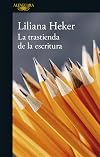
¿Es posible enseñarle a otro a escribir? Tal parece ser la pregunta rectora que atraviesa este libro. Cuestión a la que la misma autora responde en clave confesional: “Creo que nadie le puede enseñar a otro a escribir. Más ceñidamente, creo que nadie le puede enseñar a otro como ser escritor. Pero también creo que todo escritor, por caminos complejos y diversos, aprende su oficio”. La trastienda de la escritura, compacta en sus casi trescientas páginas, muchos de esos trayectos show more y recorridos que, tal como la propia Liliana Heker menciona, llevan a una persona con inquietudes literarias a desarrollar su pasión.
La inspiración, los temores, la elección del tema, los estilos, la corrección como acto creativo, los objetos rituales que conforman el ambiente a la hora de escribir, y hasta lo que muchos llaman prestigio, se convierten en motivo de reflexión. Reflexión que, dicho sea de paso, más que encontrar una respuesta abre unos cuantos interrogantes.
Es que la autora, además de haber construido una sólida carrera como cuentista (a partir de la publicación de su primer libro Los que vieron la zarza en 1966) trabaja coordinando talleres literarios desde el año 1978. Mucha de esa experiencia se encuentra reflejada en este volumen que, de manera amena, ofrece un amplio abanico de anécdotas, consejos, sugerencias y temas caros a quien guste enfrentarse ante una hoja de papel o una pantalla para contar una historia. En tal caso, este libro se constituye en una herramienta útil y necesaria.
A modo de epílogo, una perlita: Heker propone un decálogo al que denomina “Mi credo”, en el que está comprimida gran parte de su sabiduría. Esa que comienza diciendo: “Las ganas de escribir vienen escribiendo. Es inútil esperar el instante perfecto, aquel en que todos los problemas del mundo exterior han desaparecido y sólo existe el deseo compulsivo de sentarse y escribir: ese instante de perfección es altamente improbable”.
(Gito Minore) show less
La inspiración, los temores, la elección del tema, los estilos, la corrección como acto creativo, los objetos rituales que conforman el ambiente a la hora de escribir, y hasta lo que muchos llaman prestigio, se convierten en motivo de reflexión. Reflexión que, dicho sea de paso, más que encontrar una respuesta abre unos cuantos interrogantes.
Es que la autora, además de haber construido una sólida carrera como cuentista (a partir de la publicación de su primer libro Los que vieron la zarza en 1966) trabaja coordinando talleres literarios desde el año 1978. Mucha de esa experiencia se encuentra reflejada en este volumen que, de manera amena, ofrece un amplio abanico de anécdotas, consejos, sugerencias y temas caros a quien guste enfrentarse ante una hoja de papel o una pantalla para contar una historia. En tal caso, este libro se constituye en una herramienta útil y necesaria.
A modo de epílogo, una perlita: Heker propone un decálogo al que denomina “Mi credo”, en el que está comprimida gran parte de su sabiduría. Esa que comienza diciendo: “Las ganas de escribir vienen escribiendo. Es inútil esperar el instante perfecto, aquel en que todos los problemas del mundo exterior han desaparecido y sólo existe el deseo compulsivo de sentarse y escribir: ese instante de perfección es altamente improbable”.
(Gito Minore) show less
Dec 23, 2019Spanish
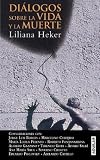
Conversaciones con Jorge Luis Borges, Abelardo Castillo, Ana María Shua y otros
Jun 3, 2025Spanish
Awards

You May Also Like
Associated Authors
Statistics
- Works
- 24
- Also by
- 7
- Members
- 141
- Popularity
- #145,670
- Rating
- 3.7
- Reviews
- 4
- ISBNs
- 30
- Languages
- 2