
Laura L. Sullivan
Author of The Cat I Never Named: A True Story of Love, War, and Survival
About the Author
Laura L. Sullivan is a former newspaper editor, biologist, social worker, and deputy sheriff. She has written several books including Delusion, Ladies in Waiting, Under the Green Hill, and Love by the Morning Star. (Bowker Author Biography)
Series
Works by Laura L. Sullivan
Tagged
Common Knowledge
- Birthdate
- 20th century
- Occupations
- newspaper editor
biologist
social worker
deputy sheriff
novelist
writer of children's books - Places of residence
- Florida, USA
- Associated Place (for map)
- Florida, USA
Members
Reviews
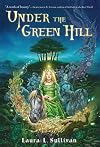
I'm a bit partial to books about kids in unfamiliar old houses who stumble upon magical worlds. Extra points if that old house is in the English countryside. Extra, extra points if the kids get caught up in an epic war requiring brave heroics. There was never any doubt in my mind that I would love Under the Green Hill.
I want to be so very grown-up and objective and say that what I found so attractive in this book was its own sense of place in and reverence to the tradition of books about show more kids in unfamiliar old houses, so on and so forth. Or that I loved the allusions to other fairy/faerie stories that I caught but will probably fly over the heads of young readers. Or that I was excited about a middle grade book featuring a position of power passed down through the maternal line, with almost inconsequential (but loved!) husbands marrying into the family to help produce the all important female heir and spare. Or even that I was enchanted by Sullivan's use of language. For example:
Dickie could tell it was extraordinary just from the smell. An odor of knowledge permeated the air, ghosts of arcane secrets wafted about by the breeze the children made when they opened the door. Here were books more rare than any first editions. ... The air seemed stale, as though no one had visited that room in decades. But, oddly, though there was dust on all visible surfaces, the library didn't make Dickie sneeze. Books have their own peculiar kind of dustiness, which didn't catch in his nose the same way cat's hair or thistle pollen might.
p.119
I could say all of that, and it would all be true (especially that last one). But what really made me fall in love with Under the Green Hill was the story, pure and simple. I'm a sucker for a good fantasy adventure, and this one is full of that goodness: a beautiful setting that is recognizable but still full of fantastical elements, betrayal, swamp monsters, life and death stakes, war-training, a wise benefactress who one can only hope will make everything okay, an enemy that isn't so evil that anyone really wants to kill him, a sensible sister who tries to be the voice of reason, and a brother hell-bent on grand acts of heroism. Plus an added bonus (that I'm also a sucker for): a selkie!
So Finn, Dickie, and even youngest brother James are a bit underdeveloped. That's okay; they each serve their purpose in the story, hindering or helping the rest of the Morgans along. There's also a little ambiguity in the beginning about when this story is set. It feels like it should be set in the past, between World Wars perhaps, what with the incurable fever ravaging America's children and names like Finn, Rowan and Dickie, but Finn despairs about the DVDs and video games he brought with him to England but can't use since the Rookery has no electricity. It's also possible that I projected a former time on a book whose time period should be last week. Regardless, time period ceased to matter once all the children reached the Rookery and the real story started.
In case you missed it the first two times I said it, I loved this book and I think you all should read it! More professionally, I think other fantasy adventure readers are sure to enjoy it, and it will be an immediate hit with readers looking for something to read once they've run out of Narnia books.
Book source: Review copy provided by the publisher. show less
I want to be so very grown-up and objective and say that what I found so attractive in this book was its own sense of place in and reverence to the tradition of books about show more kids in unfamiliar old houses, so on and so forth. Or that I loved the allusions to other fairy/faerie stories that I caught but will probably fly over the heads of young readers. Or that I was excited about a middle grade book featuring a position of power passed down through the maternal line, with almost inconsequential (but loved!) husbands marrying into the family to help produce the all important female heir and spare. Or even that I was enchanted by Sullivan's use of language. For example:
Dickie could tell it was extraordinary just from the smell. An odor of knowledge permeated the air, ghosts of arcane secrets wafted about by the breeze the children made when they opened the door. Here were books more rare than any first editions. ... The air seemed stale, as though no one had visited that room in decades. But, oddly, though there was dust on all visible surfaces, the library didn't make Dickie sneeze. Books have their own peculiar kind of dustiness, which didn't catch in his nose the same way cat's hair or thistle pollen might.
p.119
I could say all of that, and it would all be true (especially that last one). But what really made me fall in love with Under the Green Hill was the story, pure and simple. I'm a sucker for a good fantasy adventure, and this one is full of that goodness: a beautiful setting that is recognizable but still full of fantastical elements, betrayal, swamp monsters, life and death stakes, war-training, a wise benefactress who one can only hope will make everything okay, an enemy that isn't so evil that anyone really wants to kill him, a sensible sister who tries to be the voice of reason, and a brother hell-bent on grand acts of heroism. Plus an added bonus (that I'm also a sucker for): a selkie!
So Finn, Dickie, and even youngest brother James are a bit underdeveloped. That's okay; they each serve their purpose in the story, hindering or helping the rest of the Morgans along. There's also a little ambiguity in the beginning about when this story is set. It feels like it should be set in the past, between World Wars perhaps, what with the incurable fever ravaging America's children and names like Finn, Rowan and Dickie, but Finn despairs about the DVDs and video games he brought with him to England but can't use since the Rookery has no electricity. It's also possible that I projected a former time on a book whose time period should be last week. Regardless, time period ceased to matter once all the children reached the Rookery and the real story started.
In case you missed it the first two times I said it, I loved this book and I think you all should read it! More professionally, I think other fantasy adventure readers are sure to enjoy it, and it will be an immediate hit with readers looking for something to read once they've run out of Narnia books.
Book source: Review copy provided by the publisher. show less
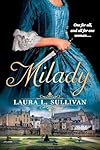
Dare I say I found this retelling of the Three Musketeers tale far more compelling than the original? As fun as the original was, there was always something not quite right in the story (like why do these men keep getting involved in duels?). This take on the story from the perspective of Milady is just as swashbuckling, but also just better. While it does seem to test the limits of belief with just how interconnected Milady's world is, this novel weaves a tale of Milady's past - how she was show more raised in England, her adventures at the royal court in London, a stint at a French convent, and then choosing to become a spy - interspersed with more familiar portions of Dumas's tale. Overall, this makes for fun reading (there's rarely a dull moment) and a fresh twist on a familiar story. show less
Milady by Laura L. Sullivan is one of those books that the reader has a hard time putting down. I like many others have watched the Three Musketeer movies. I always thought that they were awesome, three friends going around and taking care of the bad guys. I don't remember anything about a woman assassin who takes on the Musketeers.
As the story goes one, it starts in 1628 In Paris. The first sentence "The things a woman has to do to make her way in this world" Clarice, a young widow finds show more herself in a whorehouse as part of a house of prostitutes run by Mrs.Fox. Thus starts the story of the life of Milady de Winter. We learn in alternating chapters the beginning of Milady's spy life. Spying for Cardinal Richelieu puts her in danger over and over. How did she become the most feared female assassin? What was her role with The Three Musketeers? She was taken from her father for his own gains. Sent to a woman who teaches her the things she needs to know to become a successful assassin for the Cardinal.
Written beautifully, in different times of her life, her loves and hopes and also her losses. It is a historical adventure of a strong, beautiful woman who is fearless and who was treated badly by D’Artagnan. This story is told in two different timelines, 10 years apart, with her doing things that were more often than not dangerous. The book is true to the time. Very well researched. The only thing I can say is that the author has made The Three Musketeers to be villainous and all-around bad boys. I remember them to be more for the downtrodden and very romantic. Didn't find that here. Does it matter? Not to me. I thoroughly enjoyed this book and highly recommend it! show less
As the story goes one, it starts in 1628 In Paris. The first sentence "The things a woman has to do to make her way in this world" Clarice, a young widow finds show more herself in a whorehouse as part of a house of prostitutes run by Mrs.Fox. Thus starts the story of the life of Milady de Winter. We learn in alternating chapters the beginning of Milady's spy life. Spying for Cardinal Richelieu puts her in danger over and over. How did she become the most feared female assassin? What was her role with The Three Musketeers? She was taken from her father for his own gains. Sent to a woman who teaches her the things she needs to know to become a successful assassin for the Cardinal.
Written beautifully, in different times of her life, her loves and hopes and also her losses. It is a historical adventure of a strong, beautiful woman who is fearless and who was treated badly by D’Artagnan. This story is told in two different timelines, 10 years apart, with her doing things that were more often than not dangerous. The book is true to the time. Very well researched. The only thing I can say is that the author has made The Three Musketeers to be villainous and all-around bad boys. I remember them to be more for the downtrodden and very romantic. Didn't find that here. Does it matter? Not to me. I thoroughly enjoyed this book and highly recommend it! show less
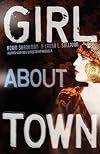
Good Premise, Bad Execution I thought that this would be a book to challenge my apathy toward the YA genre. It almost was. But unfortunately it had a few too many flaws.
I hated Lulu. She was good for the first section, but once she'd been in Hollywood for a year she was shallow and self-absorbed. And the authors' attempt to paint her as a compassionate person by giving a poor man who had attempted to sexually assault her was a fail. Her willingness to do just about anything (short of show more attempted murder or risking suicide) to get fame and money and keep fame and money was nauseating. She and Sal really would have been a good match. They would have been a good powerhouse villain couple. Too bad Lulu (and the authors) didn't get the memo. I kept waiting for Lulu to have some character growth, but she never did. I don't know what Freddie saw in her.
Freddie was fantastic. Recently disillusioned with his father's ill-gotten wealth, he's been living as a hobo for a year, and he is sweet, sincere, brave, strong and kind. He isn't bitter with his situation (unlike Lulu) and he's willing to sacrifice his own wants to help her, even though she's extremely selfish. I honestly don't know what he saw in her that made him want to stay with her after he got her name cleared. I mean, she's beautiful and headstrong, but she seems to have more bad characteristics then good ones, and Freddie doesn't seem like he would be shallow enough to stick with her just because she's pretty. I wish that this book would have been about Freddie only, without Lulu.
Vasily's story seemed to me to be a way for the author to show his anti-Catholicism. Homosexuality was not accepted by any religion, and was still largely condemned by atheists and agnostics in the thirties, but of course the Catholic Polish parents are completely evil who would do force one son into the priesthood and the other into their meatpacking business. Ugh. If it hadn't been for his story being used as a conduit for anti-Catholic propaganda, I would have really liked Vasily, even though I don't agree with homosexual actions.
The ending was terrible. After Lulu spent most of the book being a weak and whiney character, the authors decided to wave flags that said 'feminist' on them by making her break up with Freddie because she doesn't want people to think her success was because he was rich (if she had really loved him then she would have been willing to put up with people's idiocy in attributing her successes to him,) but then he comes groveling to her because he doesn't mind being a 'kept man,' and he doesn't care if people attribute his successes to her. This makes her look like a selfish brat (which, granted, she is,)but it also makes him look like a weak fool who is willing to love someone who doesn't love him back. He left his father with all his wealth, he left his beautiful fiancé who he had just realized was shallow, but he's willing to put up with Lulu's unreasonable behavior? I don't buy it. In addition to being unfair to Freddie, and making Lulu look even worse than she had the entire book, this also gives an unreasonable and unrealistic representation of a relationship. Essentially Lulu isn't willing to give anything to Freddie, but Freddie is more than willing to do extra work to keep their relationship from failing. That is not how real relationships work. If one person has to do all the work to keep the relationship going, then it's not really a relationship. Relationships are supposed to be partnerships, where the two parties are more-or-less equal. Sometimes one person is doing more work, and sometimes the other is, but overall the amount of work must come to about half-and-half, and that is not what this book showed. One other point about this books flop of an ending. One way to see whether you aren't being sexist toward men, is to reverse the scenario; if Freddie had told Lulu that he wanted to break up with her because he was afraid that people would attribute his successes to her and she came back, grovelingly telling him that she didn't mind being a 'kept woman;' would you find that offensive? I would, and so I also found the treatment of Freddie's character offensive.
This could have been a really good book. It was different from most YA books, it was interesting, and I was in the mood to listen to 20s-50s big band music, which was part of the reason why I picked up this book when I did, but there were a few too many problems, and the ending destroyed the bit of respect I had still had before I finished it. show less
I hated Lulu. She was good for the first section, but once she'd been in Hollywood for a year she was shallow and self-absorbed. And the authors' attempt to paint her as a compassionate person by giving a poor man who had attempted to sexually assault her was a fail. Her willingness to do just about anything (short of show more attempted murder or risking suicide) to get fame and money and keep fame and money was nauseating. She and Sal really would have been a good match. They would have been a good powerhouse villain couple. Too bad Lulu (and the authors) didn't get the memo. I kept waiting for Lulu to have some character growth, but she never did. I don't know what Freddie saw in her.
Freddie was fantastic. Recently disillusioned with his father's ill-gotten wealth, he's been living as a hobo for a year, and he is sweet, sincere, brave, strong and kind. He isn't bitter with his situation (unlike Lulu) and he's willing to sacrifice his own wants to help her, even though she's extremely selfish. I honestly don't know what he saw in her that made him want to stay with her after he got her name cleared. I mean, she's beautiful and headstrong, but she seems to have more bad characteristics then good ones, and Freddie doesn't seem like he would be shallow enough to stick with her just because she's pretty. I wish that this book would have been about Freddie only, without Lulu.
Vasily's story seemed to me to be a way for the author to show his anti-Catholicism. Homosexuality was not accepted by any religion, and was still largely condemned by atheists and agnostics in the thirties, but of course the Catholic Polish parents are completely evil who would do force one son into the priesthood and the other into their meatpacking business. Ugh. If it hadn't been for his story being used as a conduit for anti-Catholic propaganda, I would have really liked Vasily, even though I don't agree with homosexual actions.
The ending was terrible. After Lulu spent most of the book being a weak and whiney character, the authors decided to wave flags that said 'feminist' on them by making her break up with Freddie because she doesn't want people to think her success was because he was rich (if she had really loved him then she would have been willing to put up with people's idiocy in attributing her successes to him,) but then he comes groveling to her because he doesn't mind being a 'kept man,' and he doesn't care if people attribute his successes to her. This makes her look like a selfish brat (which, granted, she is,)but it also makes him look like a weak fool who is willing to love someone who doesn't love him back. He left his father with all his wealth, he left his beautiful fiancé who he had just realized was shallow, but he's willing to put up with Lulu's unreasonable behavior? I don't buy it. In addition to being unfair to Freddie, and making Lulu look even worse than she had the entire book, this also gives an unreasonable and unrealistic representation of a relationship. Essentially Lulu isn't willing to give anything to Freddie, but Freddie is more than willing to do extra work to keep their relationship from failing. That is not how real relationships work. If one person has to do all the work to keep the relationship going, then it's not really a relationship. Relationships are supposed to be partnerships, where the two parties are more-or-less equal. Sometimes one person is doing more work, and sometimes the other is, but overall the amount of work must come to about half-and-half, and that is not what this book showed. One other point about this books flop of an ending. One way to see whether you aren't being sexist toward men, is to reverse the scenario; if Freddie had told Lulu that he wanted to break up with her because he was afraid that people would attribute his successes to her and she came back, grovelingly telling him that she didn't mind being a 'kept woman;' would you find that offensive? I would, and so I also found the treatment of Freddie's character offensive.
This could have been a really good book. It was different from most YA books, it was interesting, and I was in the mood to listen to 20s-50s big band music, which was part of the reason why I picked up this book when I did, but there were a few too many problems, and the ending destroyed the bit of respect I had still had before I finished it. show less
Lists
Awards


You May Also Like


Associated Authors
Statistics
- Works
- 47
- Members
- 730
- Popularity
- #34,782
- Rating
- 3.5
- Reviews
- 42
- ISBNs
- 149