
Lee Upton
Author of Swallowing the Sea: On Writing & Ambition, Boredom, Purity & Secrecy
About the Author
Lee Upton is a professor of English and the Writer in Residence at Lafayette College.
Works by Lee Upton
Beer Garden 1 copy
Associated Works
The Poets' Grimm: 20th Century Poems from Grimm Fairy Tales (2003) — Contributor — 70 copies, 1 review
Fairy Tale Review: The Grey Issue — Contributor — 2 copies
Tagged
Common Knowledge
- Gender
- female
- Occupations
- English professor
writer-in-residence - Organizations
- Lafayette College
- Short biography
- Lee Upton is the author of twelve books, including five collections of poetry, a novella, and four books of literary criticism. Her short stories have also appeared widely. Her awards include a Pushcart Prize, the National Poetry Series Award, two awards from the Poetry Society of America, and the Miami University Novella Award. She is Writer-in-Residence and a professor of English at Lafayette College.
Members
Reviews
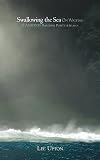
If you’re looking for a book on ‘craft’, Lee Upton’s Swallowing the Sea: On Writing won’t be what you’re looking for, but if you are curious about the hidden pleasures and torments of the writing life, you will find it refreshing. While to all appearances the titles of the essays: Ambition, Failure, Boredom, Purity, Bigamy and Secrecy, seem straightforward, the essays are wily, funny and provocative. Upton examines ambition from many angles, from the most crude to the subtle, show more making the point (among others) that without ambition not only would the books not get written, but the characters in the books wouldn’t have much to offer either. In “Failure” Upton examines the close relationship between ambition and failure, and the inevitability, in the long run, of failure. What’s more important is to grasp that it is not failing, but the quality of the failure that matters, a hard concept to accept in real life, but one that writers often choose as a subject of study. A new concept for me: Fail better. I like it. And then there is “Boredom” not only that inherent in being a writer (it’s true) but the ennui (fancy for boredom) that is often the catapult into catastrophe- think Emma Bovary think Anna K -- (citing, along the way how masterfully Jane Austen can make a boring character interesting and still so recognizable after all this time.) I was much taken, in this essay, by the apparently limitless number of books people appear to have written about boredom - here are the titles she mentions, the tip of the iceberg, no doubt: On Waiting Harold Schweitzer,Boredom: A Literary History of a State of Mind Patricia Meyer Spacks,Experience Without Qualities: Boredom and Modernity Elizabeth S. Goodstein, Boredom: A Lively History Peter Toohey, A Philosopy of Boredom Lars Svendsen. That is just one tidbit, for it would be spoiling to mention any more of the delightful points Upton makes here, in this my favorite of all the essays. “Purity” and “Bigamy” did not resonate particularly with me, seeming to be almost silly, self-conscious, hair-splitting nonsense, although I have no doubt those issues may matter to others for reasons I can’t fathom, particularly poets. Novelists are, in the eyes of poets, lazy and a bit sloppy, you know; I don’t ever think about being pure, and although I don’t ‘cross-genre’ that much I can’t imagine why anyone would care if I did. I play several musical instruments, some better than others, and the fact is, they all make me a better musician, combined. The last essay on “Secrecy” may be the best of all, it sneaks up on you and ends with in a shocking revelation that gives one of the best reasons art and story-telling are essential for human well-being. Tangentially it also contains the best explanation for the existence of vampire fiction that I’ve encountered. A last takeaway is that writers, in every generation, uncover ‘new’ secrets, new things we are ‘ready’ to hear and learn about ourselves, formerly buried. This is also one of those sly books that mentions so many other books that you find yourself grabbing a pen. You won’t learn how to write anything here, but your booklist will get longer and you will learn about what makes writers go and why you read. ***** show less

Lee Upton’s Swallowing the Sea: On Writing & Ambition Boredom Purity & Secrecy attempts to be many things. It’s partly a memoir of the writer’s experience with language and writing. It tries to address the nouns that make up the subtitle, but primarily it’s a collection of quotes that are thrown onto the page. The publisher information accompanying the book provides a blurb by David Lehman, who describes Upton’s book as a “chrestomathy,” a selection of literary quotations. That show more description is an accurate one.
It’s apparent that the writer is trying to define certain subjects about writing. “It’s Such a Filthy Word,” for example, attempts to define purity as it relates to poetry. The opening sentence of each paragraph shows this attempt to pin down the term. It isn’t until the seventeenth paragraph, after having provided quotes by Sylvia Plath, Homer, Thomas Hardy, Pablo Neruda, Wallace Stevens, William Blake, Charles Lamb, and James Fenton, that Upton informs her audience that “purity is both a necessary impulse and a dangerous aspiration.” It isn’t until the final paragraph, twenty-five paragraphs later, after quotes from ten more writers and an artist, that Upton reaches the conclusion that purity can neither be obtained in “art [n]or in life.”
I think the book is intended for students in advanced creative writing classes. This book serves to introduce writers that these students may not have been aware of and allows them to delve more deeply into their own conception of such terms as ambition, boredom, purity, and secrecy because these ideas are ones that they will have to address as they grow as writers.
As a reader, I would have preferred a memoir and would have found a detailed examination of the writer’s own struggle with ambition or boredom, for example, more enlightening than to be caught up in a cascade of quotes.
As a writing teacher, I find an abundance of quotes to be neither convincing nor endearing. Instead, these quotes, after a while, clutter up the text and make it difficult to decipher what exactly the writer is trying to say. If it takes an abundance of quotes for the writer to make a point, I would suggest that the writer pare down the prose and re-examine what it is that he or she wants to say.
It is particularly aggravating when one quote follows another without the writer having explained the reason for borrowing these words from someone else.
The book shows the writer’s knowledge of literature and writing. I would have preferred more of a narrative as the writer explores such subjects as ambition, boredom, purity, and secrecy as they relate to her life as a writer. show less
It’s apparent that the writer is trying to define certain subjects about writing. “It’s Such a Filthy Word,” for example, attempts to define purity as it relates to poetry. The opening sentence of each paragraph shows this attempt to pin down the term. It isn’t until the seventeenth paragraph, after having provided quotes by Sylvia Plath, Homer, Thomas Hardy, Pablo Neruda, Wallace Stevens, William Blake, Charles Lamb, and James Fenton, that Upton informs her audience that “purity is both a necessary impulse and a dangerous aspiration.” It isn’t until the final paragraph, twenty-five paragraphs later, after quotes from ten more writers and an artist, that Upton reaches the conclusion that purity can neither be obtained in “art [n]or in life.”
I think the book is intended for students in advanced creative writing classes. This book serves to introduce writers that these students may not have been aware of and allows them to delve more deeply into their own conception of such terms as ambition, boredom, purity, and secrecy because these ideas are ones that they will have to address as they grow as writers.
As a reader, I would have preferred a memoir and would have found a detailed examination of the writer’s own struggle with ambition or boredom, for example, more enlightening than to be caught up in a cascade of quotes.
As a writing teacher, I find an abundance of quotes to be neither convincing nor endearing. Instead, these quotes, after a while, clutter up the text and make it difficult to decipher what exactly the writer is trying to say. If it takes an abundance of quotes for the writer to make a point, I would suggest that the writer pare down the prose and re-examine what it is that he or she wants to say.
It is particularly aggravating when one quote follows another without the writer having explained the reason for borrowing these words from someone else.
The book shows the writer’s knowledge of literature and writing. I would have preferred more of a narrative as the writer explores such subjects as ambition, boredom, purity, and secrecy as they relate to her life as a writer. show less
 This review was written for LibraryThing Early Reviewers.
Lee Upton’s Swallowing the Sea engulfs the reader in an ocean bursting with inspiration and literary delights. For the writer, this book stimulates, tweaks and spurs an overwhelming urge to write. It immerses the reader in a sea of literary allusion and gives insight into the process of writing.
Upton divides Swallowing the Sea into six chapters that examine aspects of a writer’s emotions that are rarely discussed in standard volumes on writing. The first chapter, ambition, confronts what show more drives a writer to sit down and put pen to paper or fingers to a keyboard. Whether recognized or not, ambition lurks behind every novel, essay, or poem that eventually sees the light of day or languishes in the desk drawer.
The other chapters, Failure, Boredom, Purity, Bigamy for Beginners, and Secrecy address dilemmas that writers frequently confront. The chapters suggest not only solutions, but provide different prisms through which to view the light. The prose is exquisite, the pace relentless and when the reader has finished, he will feel that he has indeed swallowed the sea. Nevertheless, both writer and reader will be inspired to write more and read more as a result of this fantastic small book.
A treasure! show less
Upton divides Swallowing the Sea into six chapters that examine aspects of a writer’s emotions that are rarely discussed in standard volumes on writing. The first chapter, ambition, confronts what show more drives a writer to sit down and put pen to paper or fingers to a keyboard. Whether recognized or not, ambition lurks behind every novel, essay, or poem that eventually sees the light of day or languishes in the desk drawer.
The other chapters, Failure, Boredom, Purity, Bigamy for Beginners, and Secrecy address dilemmas that writers frequently confront. The chapters suggest not only solutions, but provide different prisms through which to view the light. The prose is exquisite, the pace relentless and when the reader has finished, he will feel that he has indeed swallowed the sea. Nevertheless, both writer and reader will be inspired to write more and read more as a result of this fantastic small book.
A treasure! show less
This review was written for LibraryThing Early Reviewers.
I savored Lee Upton's Swallowing the Sea, a collection of refreshingly candid and nuanced musings on writing and the faculties demanded of writers—ambition and discipline, intimacy and distance, convention and transgression, secrecy and revelation, obsession, imagination, willingness to fail. This is a book for passionate readers. Upton's fine critical faculties are inseparable from her relationship to writing and reading. She is committed to "what might be called the inner life," at home show more in an ongoing internal discourse with a great variety of writers.
Her frank and easy tone makes her a wonderful host. She considers ambition as being "in service to a conception of enhanced possibilities...extraordinarily alive," and boredom as "a stalled form of ambition: ambition to be elsewhere, and to be otherwise." Flashing through these essays are pithy and perceptive observations: "For many of us, writing is a spectacular form of gambling"; "We are vast to ourselves, but miniature to others."
Upton also generously invites the reader under the hood of her own writing process—particularly interesting when she is discussing her different approaches to writing poetry and prose. I was perhaps most taken with the section called "Bigamy for Beginners," in which she considers writing across genres—not a topic I've found much approached.
(And by the way, the book as object, with its crisp typography and velvety cover, gives as much pleasure to read and hold as a paperback can. Thank you, Tupulo Press, for making such fine books.) show less
Her frank and easy tone makes her a wonderful host. She considers ambition as being "in service to a conception of enhanced possibilities...extraordinarily alive," and boredom as "a stalled form of ambition: ambition to be elsewhere, and to be otherwise." Flashing through these essays are pithy and perceptive observations: "For many of us, writing is a spectacular form of gambling"; "We are vast to ourselves, but miniature to others."
Upton also generously invites the reader under the hood of her own writing process—particularly interesting when she is discussing her different approaches to writing poetry and prose. I was perhaps most taken with the section called "Bigamy for Beginners," in which she considers writing across genres—not a topic I've found much approached.
(And by the way, the book as object, with its crisp typography and velvety cover, gives as much pleasure to read and hold as a paperback can. Thank you, Tupulo Press, for making such fine books.) show less
This review was written for LibraryThing Early Reviewers.Lists
Awards


You May Also Like
Associated Authors
Statistics
- Works
- 21
- Also by
- 10
- Members
- 111
- Popularity
- #175,483
- Rating
- 3.7
- Reviews
- 12
- ISBNs
- 26
