

Jane Borden
Author of Cults Like Us: Why Doomsday Thinking Drives America
Works by Jane Borden
Associated Works
Tagged
Common Knowledge
- Gender
- female
- Education
- University of North Carolina
- Occupations
- arts-and-entertainment journalist
comedic performer
author
editor - Organizations
- Time Out New York
- Agent
- Sloan Harris (ICM Partners)
- Nationality
- USA
- Associated Place (for map)
- USA
Members
Reviews
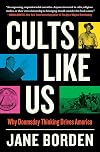
It’s all the fault of the Puritans.
A lot of Americans feel like they can say that regarding many aspects of American life and culture. In Cults Like Us: Why Doomsday Thinking Drives America (galley received as part of an early review program), Jane Borden persuasively argues the tendency toward apocalyptic thinking and behavior was thoroughly enmeshed in the “DNA” of American culture and society thanks to them.
The author begins with an introduction to the theme and a consideration of show more how apocalyptic expectations and thinking were major aspects and drivers of Puritan faith and practice.
The author then considered how these themes and trends pervade the stories of American cults, no matter how “religious” or “secular.” She considered the impulse to look to strongmen and the “law and order” punishment mentality in terms of Elizabeth Clare Prophet and Church Universal and Triumphant (CUT), as well as the violence even inherent in the apocalyptic parts of the Bible; she considered the desire or belief in the possibility of perfection in terms of John Humphrey Noyes and the Oneida Bible Communities; she grappled with the impetus toward rebellion and the pervasive anti-intellectualism in American thinking, often leading to conspiracy theories, in terms of Arthur Bell and Mankind United; she described the seemingly ever-present search for liberation that often ends in becoming the servant of a charismatic leader in terms of John-Roger and the Movement of Spiritual Inner Awareness (M.S.I.A); she exposed Amway yet again for the multi-level marketing scheme it is, and how it cloaked itself in the pretense of building one’s own successful business, and how most MLMs have followed that same path; she addressed the impulse toward tribalism, exploiting the divisions in American society as seen in Dwight York and his many schemes, most prominent in terms of his United Nuwaubian Nation of Moors; and she considered how such a group can take on a life of its own and end up becoming the worst version of itself, as manifest recently in the Love Has Won group.
The author well considered her work an apocalypse: a revelation of the kinds of ways Americans are easily seduced into thinking in apocalyptic, cataclysmic terms, in ways not seen to the same degree anywhere else. The author encourages empathy, compassion, and to avoid proving overtly judgmental about those who get caught up in such things. And she confessed how this kind of thinking remains attractive for all of us because of how deeply embedded many of these themes prove in our culture and society.
I could have done without the inane attempts at jokes and attempts at breaking the fourth wall, so to speak, throughout the book. Nevertheless, a very thought provoking read regarding the tendency for Americans to fall into cultic groups, how we all might fall prey to them, and how we should consider our way forward. show less
A lot of Americans feel like they can say that regarding many aspects of American life and culture. In Cults Like Us: Why Doomsday Thinking Drives America (galley received as part of an early review program), Jane Borden persuasively argues the tendency toward apocalyptic thinking and behavior was thoroughly enmeshed in the “DNA” of American culture and society thanks to them.
The author begins with an introduction to the theme and a consideration of show more how apocalyptic expectations and thinking were major aspects and drivers of Puritan faith and practice.
The author then considered how these themes and trends pervade the stories of American cults, no matter how “religious” or “secular.” She considered the impulse to look to strongmen and the “law and order” punishment mentality in terms of Elizabeth Clare Prophet and Church Universal and Triumphant (CUT), as well as the violence even inherent in the apocalyptic parts of the Bible; she considered the desire or belief in the possibility of perfection in terms of John Humphrey Noyes and the Oneida Bible Communities; she grappled with the impetus toward rebellion and the pervasive anti-intellectualism in American thinking, often leading to conspiracy theories, in terms of Arthur Bell and Mankind United; she described the seemingly ever-present search for liberation that often ends in becoming the servant of a charismatic leader in terms of John-Roger and the Movement of Spiritual Inner Awareness (M.S.I.A); she exposed Amway yet again for the multi-level marketing scheme it is, and how it cloaked itself in the pretense of building one’s own successful business, and how most MLMs have followed that same path; she addressed the impulse toward tribalism, exploiting the divisions in American society as seen in Dwight York and his many schemes, most prominent in terms of his United Nuwaubian Nation of Moors; and she considered how such a group can take on a life of its own and end up becoming the worst version of itself, as manifest recently in the Love Has Won group.
The author well considered her work an apocalypse: a revelation of the kinds of ways Americans are easily seduced into thinking in apocalyptic, cataclysmic terms, in ways not seen to the same degree anywhere else. The author encourages empathy, compassion, and to avoid proving overtly judgmental about those who get caught up in such things. And she confessed how this kind of thinking remains attractive for all of us because of how deeply embedded many of these themes prove in our culture and society.
I could have done without the inane attempts at jokes and attempts at breaking the fourth wall, so to speak, throughout the book. Nevertheless, a very thought provoking read regarding the tendency for Americans to fall into cultic groups, how we all might fall prey to them, and how we should consider our way forward. show less
Listened to this while driving cross country. There were definitely very interesting things in it and I agree that Americans have a pension for doomsday thinking, but I would have loved to see a bigger emphasis about the internet piece because I think that many left-leaning spaces online could be classified as cults or cult-like. So I didn't necessarily agree with her assertion that cults are kind of only a thing on the right.
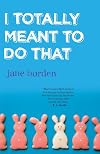
Perfectly fine read. Moderately amusing. Probably best enjoyed by transplants from the South to New York City who love the City and yet inexplicably feel homesick for good manners and seersucker.
Awards


You May Also Like
Associated Authors
Statistics
- Works
- 2
- Also by
- 1
- Members
- 194
- Popularity
- #112,876
- Rating
- 3.3
- Reviews
- 4
- ISBNs
- 8