
Paul N. Siegel (1916–2004)
Author of The Meek and the Militant: Religion and Power Across the World
About the Author
Works by Paul N. Siegel
Associated Works
Tagged
Common Knowledge
- Legal name
- Siegel, Paul Noah
- Birthdate
- 1916
- Date of death
- 2004
- Gender
- male
- Education
- City College of New York (BS|1936)
Harvard University (MA|1939, PhD|1941) - Occupations
- activist
- Organizations
- Solidarity
American Trotskyist movement
Ripon College
Long Island University
Socialist Action - Nationality
- USA
- Birthplace
- Paterson, New Jersey, USA
- Place of death
- New York, New York, USA
- Associated Place (for map)
- USA
Members
Reviews
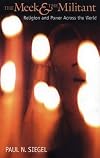
[(The Meek & the Militant: Religion and Power Across the World)] [Author: Paul N. Siegel] published on (September, 2013) by Paul N. Siegel
The picture painted by the capitalist media and education system of the relationship between Marxism and religion generally goes something like this:
(1) Marxists are atheists.
(2) Religion was/is suppressed under “Marxist” regimes such as the USSR, China etc.
(3) Marxists see religion as a tool used by the ruling class to brainwash the masses into accepting their exploitation.
(4) Marx described religion as “the opium of the people”.
In this excellent book, Paul Siegel sets the record show more straight on these matters.
The first of the above propositions is generally true. Marxists do indeed look for materialist explanations of natural and social phenomena. But on the second point, genuine Marxists, including Marx, Engels and Lenin, did not and do not seek to ban religion. The suppression of religion in Russia, Eastern Europe, China etc was carried out by Stalinist regimes which called themselves Marxist, but were/are actually bureaucratic state capitalist tyrannies which had nothing to do with genuine Marxism.
Marxists aim to achieve a democratic workers’ state, leading ultimately to a classless society. Siegel shows that Marxists argue for the separation of church and state, and for people to be free to follow whatever religion they choose. But Marxists also believe that in a classless society religion will wither away, because people will not feel the need for it any more. (I always think of John Lennon’s “Imagine” in relation to this.)
On the third point, it is certainly true that religion has often been a useful ideological tool for ruling classes, as is the case, for example, with the doctrine of the “Divine Right of Kings”. Obey the King or you’ll go to hell! And the great American rebel Joe Hill pointed out that religion conned people into believing that you’ll get “pie in the sky when you die”.
But Siegel also shows that Marxists understand that on some occasions religion can inspire the oppressed to rebel. In the English Civil War King Charles believed that he ruled by divine right, but on the other side the revolutionary parliamentarians were also inspired by their different version of Christianity. And it is obvious that the Christianity of Martin Luther King was a very different thing from the “Christianity” of Donald Trump. In fact, Marxists often work alongside progressive religious people in campaigns against racism, Islamophobia etc.
In relation to the fourth point above, the quotation actually goes like this:
“Religious suffering is at one and the same time the expression of real suffering and a protest against real suffering. Religion is the sigh of the oppressed creature, the heart of a heartless world and the soul of soulless conditions. It is the opium of the people.”
Here, Marx is saying that it is not just a case of the oppressed being brainwashed by the ruling class. It is also the case that people understandably turn to religion as a comfort. This reinforces the Marxist argument that religion cannot and should not be banned. The solution is to create a just society in which people will no longer feel the need for a false comfort.
From Enlightenment philosophers to present-day atheists of the Richard Dawkins type, many anti-religious people have spent their time directly attacking religion for being unscientific, irrational and reactionary. Marxists agree with many of these criticisms of religion. But they do not waste much time directly attacking religion. Instead they fight to achieve a better society and thus remove the root cause of people’s need for religion. (The other function of religion - as an “explanation” of things that humans do not understand - is already in retreat as scientific knowledge advances.)
Siegel also shows that:
(a) Morality is a social product. That which is called morally “good” is actually what is good for society, or, in a class society, what is good for a particular social class.
(b) Religious belief is a form of alienation, which means that people are dominated by their own creations. As Marx wrote in “Capital”, “As, in religion, man is governed by the products of his own brain, so in capitalist production, he is governed by the products of his own hand.”
Finally, as well as discussing all these general points with great clarity, Siegel also gives us a run through the social history of the world’s major religions, using the Marxist method of analysis.
I thoroughly recommend this book. show less
(1) Marxists are atheists.
(2) Religion was/is suppressed under “Marxist” regimes such as the USSR, China etc.
(3) Marxists see religion as a tool used by the ruling class to brainwash the masses into accepting their exploitation.
(4) Marx described religion as “the opium of the people”.
In this excellent book, Paul Siegel sets the record show more straight on these matters.
The first of the above propositions is generally true. Marxists do indeed look for materialist explanations of natural and social phenomena. But on the second point, genuine Marxists, including Marx, Engels and Lenin, did not and do not seek to ban religion. The suppression of religion in Russia, Eastern Europe, China etc was carried out by Stalinist regimes which called themselves Marxist, but were/are actually bureaucratic state capitalist tyrannies which had nothing to do with genuine Marxism.
Marxists aim to achieve a democratic workers’ state, leading ultimately to a classless society. Siegel shows that Marxists argue for the separation of church and state, and for people to be free to follow whatever religion they choose. But Marxists also believe that in a classless society religion will wither away, because people will not feel the need for it any more. (I always think of John Lennon’s “Imagine” in relation to this.)
On the third point, it is certainly true that religion has often been a useful ideological tool for ruling classes, as is the case, for example, with the doctrine of the “Divine Right of Kings”. Obey the King or you’ll go to hell! And the great American rebel Joe Hill pointed out that religion conned people into believing that you’ll get “pie in the sky when you die”.
But Siegel also shows that Marxists understand that on some occasions religion can inspire the oppressed to rebel. In the English Civil War King Charles believed that he ruled by divine right, but on the other side the revolutionary parliamentarians were also inspired by their different version of Christianity. And it is obvious that the Christianity of Martin Luther King was a very different thing from the “Christianity” of Donald Trump. In fact, Marxists often work alongside progressive religious people in campaigns against racism, Islamophobia etc.
In relation to the fourth point above, the quotation actually goes like this:
“Religious suffering is at one and the same time the expression of real suffering and a protest against real suffering. Religion is the sigh of the oppressed creature, the heart of a heartless world and the soul of soulless conditions. It is the opium of the people.”
Here, Marx is saying that it is not just a case of the oppressed being brainwashed by the ruling class. It is also the case that people understandably turn to religion as a comfort. This reinforces the Marxist argument that religion cannot and should not be banned. The solution is to create a just society in which people will no longer feel the need for a false comfort.
From Enlightenment philosophers to present-day atheists of the Richard Dawkins type, many anti-religious people have spent their time directly attacking religion for being unscientific, irrational and reactionary. Marxists agree with many of these criticisms of religion. But they do not waste much time directly attacking religion. Instead they fight to achieve a better society and thus remove the root cause of people’s need for religion. (The other function of religion - as an “explanation” of things that humans do not understand - is already in retreat as scientific knowledge advances.)
Siegel also shows that:
(a) Morality is a social product. That which is called morally “good” is actually what is good for society, or, in a class society, what is good for a particular social class.
(b) Religious belief is a form of alienation, which means that people are dominated by their own creations. As Marx wrote in “Capital”, “As, in religion, man is governed by the products of his own brain, so in capitalist production, he is governed by the products of his own hand.”
Finally, as well as discussing all these general points with great clarity, Siegel also gives us a run through the social history of the world’s major religions, using the Marxist method of analysis.
I thoroughly recommend this book. show less

You May Also Like
Associated Authors
Statistics
- Works
- 18
- Also by
- 1
- Members
- 131
- Popularity
- #154,466
- Rating
- 4.2
- Reviews
- 2
- ISBNs
- 21
- Languages
- 1