
Jean Richepin (1849–1926)
Author of Les morts bizarres
About the Author
Image credit: Courtesy of the NYPL Digital Gallery
(image use requires permission from the New York Public Library)
(image use requires permission from the New York Public Library)
Works by Jean Richepin
Don Quichotte 2 copies
La légende de Napoléon 1 copy
TARINA TOISESTA MAAILMASTA 1 copy
Braves Gens 1 copy
Contes extrangers, Volum XIV 1 copy
Associated Works
Weird Fiction in France: A Showcase Anthology of Its Origins and Development (2020) — Contributor — 3 copies
Tagged
Common Knowledge
- Birthdate
- 1849-02-04
- Date of death
- 1926-12-12
- Gender
- male
- Education
- École Normale Supérieure, Paris, France
- Occupations
- poet
novelist
playwright - Organizations
- Académie française (1908)
- Nationality
- France
- Places of residence
- Médéa, Algeria (birthplace)
- Associated Place (for map)
- Médéa, Algeria
Members
Reviews

Tall, broad-shouldered, with a head of curly black hair and full curly black beard framing large, blazing gold-blue eyes, dressed in velvet jacket, scarlet sash and pants and boots of a Hussar soldier, French poet, dramatist, novelist, short-story writer Jean Richepin (1839-1926) cut quite the dashing figure. And I have to admit – I love his cruel, horrible tales and that’s cruel as in tales with nasty climatic twists, usually the result of obsession – oh, those dark horrors of the show more mind!
As by way of example of tales cruel, dark and horrific, an old doctor, judged imbecilic, turns out to be quite handy with inflicting deadly microbes; a murderer is compelled to share his secret crimes with a prosecuting judge; a young man pursues the full story of a brutal slaying he witnessed as a boy only to discover he has a sinister split-personality; a hideously ugly wife strips naked and dances erotically to arouse her husband, the ultraconservative village parson; an art-lover detects seething obsessive hatred in the eyes of portraits painted of a long dead aristocratic couple, enough hatred to lash out at one another through the paint.
Jean Richepin did not simply want to be a romantic, he wanted to be the ultimate romantic; he not only claimed he was a descendent of mysterious tribes in Central Asia but fashioned himself a rebel most heroic as he moved through the world as a flamboyant eccentric: in his mid-20s he published a collection of poems judged obscene and was fined and sentenced to a month in prison; while in prison he wrote his first collection of classic short stories entitled “Bizarre Deaths”; at times he traveled extensively and wrote colorful newspaper articles about his hair-raising adventurers; at other times he woke early, cycled energetically for two hours, enjoyed a vigorous rubdown and spent the remainder of the day and evening at his desk writing furiously; and once he even appeared on the stage with Sarah Bernhardt, who admired Richepin since, in her own words, “He is even a bigger ham actor then I am.” You have to love our larger-than-life French artiste.
Again, his short stories are filled with characters living at the extremes, highly unusual characters - for instance, an extraordinary parrot described as old, ugly, thin, bald, scrawny, featherless, bleak, dull, colorless, misshapen, pitiful, wretched, shabby, dilapidated, lamentable, implausible, asthmatic, phantasmal, emaciated and problematic. That’s twenty qualities – for a parrot!
Lastly, here are a few brief strokes from one vintage Jean Richepin tale entitled “The Gaze”: A doctor leads the narrator down a hallway to the room of a patient he describes as a lackluster case, a sufferer of paralysis and delusions of grandeur. When the door opens, the narrator observes the man standing motionless, arms spread wide, his eyes fixed on the blackest point in the darkest corner of the room and his entire being radiating ecstasy. As it turns out, according to the doctor, the patient’s madness was caused by becoming transfixed by the gaze of eyes painted in a portrait he was shown in an antique ship, the portrait of a sea captain whose eyes revealed the very soul of gold, an entire city of gold contained in those eyes. As we read further, the narrator discovers the doctor is also under the spell of gold and then the narrator is given occasion to gaze at those gold filled sailor eyes himself and is moved to wonder if the ecstatic patent he observed earlier is, in fact, truly mad.
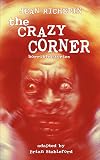
Final word: it appears this edition is hard to locate. The tales I noted above are also part of “Crazy Corner” published by Black Coat Press and available through Amazon.
show less
Tall, broad-shouldered, with a head of curly black hair and full curly black beard framing large, blazing gold-blue eyes, dressed in velvet jacket, scarlet sash and pants and boots of a Hussar soldier, French poet, dramatist, novelist, short-story writer Jean Richepin (1839-1926) cut quite the dashing figure. And I have to admit – I love his cruel, horrible tales and that’s cruel as in tales with nasty climatic twists, usually the result of obsession – oh, those dark horrors of the show more mind!
As by way of example of tales cruel, dark and horrific, an old doctor, judged imbecilic, turns out to be quite handy with inflicting deadly microbes; a murderer is compelled to share his secret crimes with a prosecuting judge; a young man pursues the full story of a brutal slaying he witnessed as a boy only to discover he has a sinister split-personality; a hideously ugly wife strips naked and dances erotically to arouse her husband, the ultraconservative village parson; an art-lover detects seething obsessive hatred in the eyes of portraits painted of a long dead aristocratic couple, enough hatred to lash out at one another through the paint.
Jean Richepin did not simply want to be a romantic, he wanted to be the ultimate romantic; he not only claimed he was a descendent of mysterious tribes in Central Asia but fashioned himself a rebel most heroic as he moved through the world as a flamboyant eccentric: in his mid-20s he published a collection of poems judged obscene and was fined and sentenced to a month in prison; while in prison he wrote his first collection of classic short stories entitled “Bizarre Deaths”; at times he traveled extensively and wrote colorful newspaper articles about his hair-raising adventurers; at other times he woke early, cycled energetically for two hours, enjoyed a vigorous rubdown and spent the remainder of the day and evening at his desk writing furiously; and once he even appeared on the stage with Sarah Bernhardt, who admired Richepin since, in her own words, “He is even a bigger ham actor then I am.” You have to love our larger-than-life French artiste.
Again, his short stories are filled with characters living at the extremes, highly unusual characters - for instance, an extraordinary parrot described as old, ugly, thin, bald, scrawny, featherless, bleak, dull, colorless, misshapen, pitiful, wretched, shabby, dilapidated, lamentable, implausible, asthmatic, phantasmal, emaciated and problematic. That’s twenty qualities – for a parrot!
Lastly, here are a few brief strokes from one vintage Jean Richepin tale entitled “The Gaze”: A doctor leads the narrator down a hallway to the room of a patient he describes as a lackluster case, a sufferer of paralysis and delusions of grandeur. When the door opens, the narrator observes the man standing motionless, arms spread wide, his eyes fixed on the blackest point in the darkest corner of the room and his entire being radiating ecstasy. As it turns out, according to the doctor, the patient’s madness was caused by becoming transfixed by the gaze of eyes painted in a portrait he was shown in an antique ship, the portrait of a sea captain whose eyes revealed the very soul of gold, an entire city of gold contained in those eyes. As we read further, the narrator discovers the doctor is also under the spell of gold and then the narrator is given occasion to gaze at those gold filled sailor eyes himself and is moved to wonder if the ecstatic patent he observed earlier is, in fact, truly mad.
Final word: it appears this edition is hard to locate. The tales I noted above are also part of “Crazy Corner” published by Black Coat Press and available through Amazon.
show less
Jean Richepin (1849-1926) "It was, in fact, thee most extraordinary parrot, not only that my eyes had ever encountered but that my imagination would ever have been able to dream up, so old, ugly, thin, bald, scrawny, featherless, bleak, dull, colorless, misshapen, pitiful, wretched, shabby, dilapidated, lamentable, implausible, asthmatic, phantasmal, emaciated, and problematic was it." From Richpin's tale, The Parrot.
Each of the forty-five stories translated, annotated and introduced by show more author/French literature expert Brian Stableford makes for fun reading, lots and lots of fun reading, crazy, horrible fun reading – not that common in the world of literary fiction. But then again, Jean Richepin was not a common author -tall, broad-shouldered, with a head of curly black hair and full curly black beard framing large, blazing gold-blue eyes, dressed in velvet jacket, scarlet sash and pants and boots of a Hussar soldier, he was a larger-than-life flamboyant literary artist, an outlandish nineteenth century top-hatted cross between, say, Salvador Dali and Allen Ginsberg who refused to belong to any one literary school. I feel a personal connection to the author – in a way, I see him as my spiritual older brother.
Again, these crazy stories of his defy category; they contain elements of naturalism but he was not a naturalist; they contain qualities of fin-de-siecle decadence but he was not a decadent; they contain a touch of horror but he was not a writer of horror fiction. So what else can we say about his stories? Well, for one thing, the stories collected here are short – with the exception of a forty-pager and a thirteen-pager, all the stories are about five pages. They all have a dab of ghoulishness and cruelty and we can encounter, among other monstrosities, such things as madness, nightmares, fiends and witches. Also, they nearly all contain an unexpected twist at the end. More could be said generally but I will focus on the following Richepin tale to convey a more specific taste of what a reader will find in this collection:
The Enemy
The first-person narrator of this story is a graphologist, that is, a specialist in inferring character from handwriting. We read the opening lines, “The name engraved on the visiting-card did not strike any chord in my memory. On the other hand, the few lines traced after the name in question immediately and irresistibly rendered me sympathetic to the unknown visitor. Those lines, in fact, revealed on graphological analysis, without the slightest possible hesitation, a noble, dolorous and desperate soul. Without a doubt, the man who had written those lines was not lying in affirming that he had come to ask for mental assistance in a matter of life and death.” In a way, all of these Richepin tales are about life and death. Hey, what do you expect from our larger-than-life author?
The narrator/graphologist receives his visitor and sees from his gaze that his is, indeed, noble, dolorous and despairing. The visitor goes on to tell him how he is being persecuted by a most abominable enemy. Through this interchange, the narrator listens to this gentleman’s pleas of not being mad but concludes he is, in truth, definitely dealing with a case of insanity, more specifically a case of insanity involving delusions of persecution.
And why does he conclude thus? Because he sees this gentleman has the wealth to effectively deal with any real flesh and blood persecutor and the good-looks and noble bearing to deal with any female, ergo, his enemy is purely imaginary. The gentleman instantly reads the narrator’s thoughts and not only replies but insists the enemy haunting him is truly human and made of flesh and blood. And when the narrator asks for more specifics, the gentleman relates how his enemy underlines the faults of his verse in pencil; his enemy renders odious the woman he loves; his enemy spits on the food he eats.
Rather than saying anything further and possibly spoiling the ending of this story, let me pause and note how there was one thinker much admired by the French decadent fin-de-siecle writers, a thinker who held the imagination of cultured, educated people of the time in his grip: German pessimistic philosopher Arthur Schopenhauer, hater of ordinary work-a-day life and spoiler of romantic love. It doesn’t take that much to see how the gentleman in this story, who by nature wants to write romantic verse, love women and enjoy the everyday round of life, is haunted and tortured by Schopenhauer’s pessimistic philosophy.
This is but a modest take on one of these amazing, remarkable, wonderful, marvelous, outlandish, mind-blowing, bizarre tales. Should I go on? I think not, as it should be clear I highly, highly recommend this book by one-of-a-kind author, Jean Richepin. show less
I was disappointed by Crazy Corner: I'd expected that at worst it would be enjoyable and that at best that it would be a striking addition to my highly-coveted connoisseur's library of--er no,scratch that, my tiny and vaguely-defined collection of--Quirky Stuff. In the event the writing is of journeyman standard and this edition is a mess.
Quite possibly even if these stories' provenance hadn't been mentioned in the introduction I might have guessed that they had been written for a newspaper. show more I wouldn't, though I'm tempted to, go so far as to say that they seem to have been cranked out, but certainly it's easy to imagine their having been written by someone having in mind x sous per word x stories due each week x number of hours to write them in. I read the book over the course of a week or so, finished it today, and already I've forgotten all but a very few of the stories. Had I lived in Richepin's time and bought the papers he wrote for I wouldn't have gone out of my way to use pages with his contributions to line the canary cage but I wouldn't have preserved them in my treasured album of cuttings either.
I'd read another book from Black Coat translated by Stableford which as I remember it gave no hints of the slapdash quality of this one. This edition seems not to have been proof-read at all at all. And the sloppiness goes far beyond the occasional typo: Theres od d spacing and ]punctuation]; a reader most sometimes stop to discern the mining of a misspelt word and indeed to puzzle out which character's speaking or whether 'any' of them" is, given the occasional randomness of inverted commas. And I'm honestly befuddled by the standard of the translation. Granted, my French is rusty but as I distantly remember sometimes a word may have more than one meaning and sometimes word/phrase order may need in translation to be shifted about. French, the tongue of the monkeys who while devouring the cheese surrender, is of course uniquely weird like that. And there's at least one remarkable example of twisted English idiom as well--something like, if not in fact, 'I can't do that now. I have other cats to skin' (d'autres chats a fouetter). I'm a staunch believer that a translator should be painstakingly faithful to the original but this, like the refusal to translate 'hasard' as anything other than 'hazard' and like the insistence upon preserving French rhythms at the cost of smooth English, seems lazy rather than painstaking. A book to snap up at a jumble sale but not to go out of one's way for. show less
Quite possibly even if these stories' provenance hadn't been mentioned in the introduction I might have guessed that they had been written for a newspaper. show more I wouldn't, though I'm tempted to, go so far as to say that they seem to have been cranked out, but certainly it's easy to imagine their having been written by someone having in mind x sous per word x stories due each week x number of hours to write them in. I read the book over the course of a week or so, finished it today, and already I've forgotten all but a very few of the stories. Had I lived in Richepin's time and bought the papers he wrote for I wouldn't have gone out of my way to use pages with his contributions to line the canary cage but I wouldn't have preserved them in my treasured album of cuttings either.
I'd read another book from Black Coat translated by Stableford which as I remember it gave no hints of the slapdash quality of this one. This edition seems not to have been proof-read at all at all. And the sloppiness goes far beyond the occasional typo: Theres od d spacing and ]punctuation]; a reader most sometimes stop to discern the mining of a misspelt word and indeed to puzzle out which character's speaking or whether 'any' of them" is, given the occasional randomness of inverted commas. And I'm honestly befuddled by the standard of the translation. Granted, my French is rusty but as I distantly remember sometimes a word may have more than one meaning and sometimes word/phrase order may need in translation to be shifted about. French, the tongue of the monkeys who while devouring the cheese surrender, is of course uniquely weird like that. And there's at least one remarkable example of twisted English idiom as well--something like, if not in fact, 'I can't do that now. I have other cats to skin' (d'autres chats a fouetter). I'm a staunch believer that a translator should be painstakingly faithful to the original but this, like the refusal to translate 'hasard' as anything other than 'hazard' and like the insistence upon preserving French rhythms at the cost of smooth English, seems lazy rather than painstaking. A book to snap up at a jumble sale but not to go out of one's way for. show less
Awards

You May Also Like
Associated Authors
Statistics
- Works
- 27
- Also by
- 10
- Members
- 83
- Popularity
- #218,810
- Rating
- 4.2
- Reviews
- 7
- ISBNs
- 27
- Languages
- 4
