
Robin Preiss Glasser
Author of Alexander, Who's Not (Do You Hear Me? I Mean It!) Going to Move
About the Author
Robin Preiss Glasser has illustrated numerous children's books including America: A Patriotic Primer, A is for Abigail, and Our Fifty States by Lynne Cheney, Daddy's Girl by Garrison Keillor, Tea for Ruby by Sarah Ferguson, and the Fancy Nancy picture books by Jane O'Connor. (Bowker Author show more Biography) show less
Works by Robin Preiss Glasser
Alexander, Who's Not (Do You Hear Me? I Mean It!) Going to Move (1995) — Illustrator — 3,186 copies, 75 reviews
Fancy Nancy: Bubbles, Bubbles, and More Bubbles! (I Can Read Level 1) (2018) — Illustrator — 220 copies, 2 reviews
Halloween Or Bust 1 copy
Associated Works
Alexander and the wonderful, marvelous, excellent, terrific ninety days (2007) — Cover artist, some editions — 97 copies, 6 reviews
Tagged
Common Knowledge
- Gender
- female
- Education
- Parsons School of Design (BFA)
- Occupations
- illustrator
ballet dancer
Members
Reviews
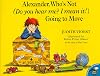
This book perfectly captured a young child's attitude toward moving to a new place when they have grown so familiar with their current home. His repeated mantra, "I'm not - DO YOU HEAR ME? I MEAN IT! - going to move." was Alexander's way of rebelling against the move. His brothers always told him he was being silly and immature, but his parents kept reassuring him that he would find a new soccer team, new sitter, and new friends soon enough. I particularly loved the illustrations, even show more though they were in black and white. I chuckled out loud a few times like when he suggested hiding in the pickle barrel so they wouldn't be able to find him when it was time to move. Alexander is clever, but also felt nostalgic about all the places around town. He had great neighborhood dogs, friends, and lots of memories. This book would be great for a read aloud since there is quite a bit of text. show less

This book was great for children who are going through a hard time in their life that is more or less out of their control. I liked this book a lot. The plot was fantastic in terms of organization, pace and conflict. The book took the reader through Alexander's challenges accepting the fact that his family is moving at a pace that felt natural to how a child his age would get through this. He slowly made peace with it by first refusing then starting the actions of moving but still refusing show more to actually move. Next he agreed to move but said that he would be mad forever and then ended with acceptance and a positive outlook. This was completely believable for this age level. Another thing that was well done in this book was the character. This ties in directly with my other examples. It was very authentic and would resonate in some way to most children this age. This book was written as a source of enjoyment and relatability to children's real lives. show less
This is a great book for kids going through difficult times of transition. Alexander is determined to stay put because there's nowhere else he could find friends like the ones he has.
This was one of my favorite books from my childhood, so I wanted to make sure I added it to my book reviews. This book involves the same character as “Alexander and the Terrible, Horrible, No Good, Very Bad Day,” and chronicles Alexander's opinion on the fact that his family has decided to move. One thing I really like about this book is the illustrations. They are black and white, and appear similar to pencil sketches. This, coupled with the frazzled appearance of Alexander do an show more excellent job of illustrating the disorganized mind of Alexander. Since the book is written in a diary like format, the illustrations go well with the writing style. Another thing I like about this book is the use of repetition. The phrase “I’m not--DO YOU HEAR ME? I MEAN IT!--going to move” is used repeatedly throughout the book and does an excellent job of driving the main idea of the book home- Alexander does not want to move! show less
Awards


You May Also Like
Associated Authors
Statistics
- Works
- 7
- Also by
- 25
- Members
- 3,564
- Popularity
- #7,115
- Rating
- 3.9
- Reviews
- 77
- ISBNs
- 47
- Languages
- 1
- Favorited
- 1