
Erica Chenoweth
Author of Why Civil Resistance Works: The Strategic Logic of Nonviolent Conflict
Works by Erica Chenoweth
Associated Works
Stories from the Field: A Guide to Navigating Fieldwork in Political Science (2020) — Contributor — 3 copies
Tagged
Common Knowledge
- Birthdate
- 1980-04-22
- Gender
- female
- Education
- University of Dayton
University of Colorado Boulder - Nationality
- USA
- Associated Place (for map)
- USA
Members
Reviews
Why Civil Resistance Works: The Strategic Logic of Nonviolent Conflict (Columbia Studies in Terrorism and Irregular Warfare) by Erica Chenoweth
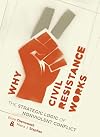
Rigorous, readable, and fascinating political science. The authors offer strong data to demonstrate that nonviolent resistance is more effective than violence, largely because nonviolent campaigns can build broader public participation and destabilize regimes in power.
Civil resistance is also more likely to lead to a democratic social order after regime change. Mass participation in nonviolent movements are a training grounds of sorts for the civil society that is necessary for successful show more democratic governance. On the other hand, in the cases where violent resistance leads to regime change, the new government is likely to use violence to maintain power.
The authors run regression analyses to sort through the good amount of data they have pulled together of examples of resistance movements over the years. More such imaginative yet unsentimental political science is needed to help us understand how nonviolent movements can be even more effective at resisting oppression and building democracy. show less
Civil resistance is also more likely to lead to a democratic social order after regime change. Mass participation in nonviolent movements are a training grounds of sorts for the civil society that is necessary for successful show more democratic governance. On the other hand, in the cases where violent resistance leads to regime change, the new government is likely to use violence to maintain power.
The authors run regression analyses to sort through the good amount of data they have pulled together of examples of resistance movements over the years. More such imaginative yet unsentimental political science is needed to help us understand how nonviolent movements can be even more effective at resisting oppression and building democracy. show less
This is a good, but surface-level intro to civil resistance.
Many of the details are repeated, which made the listening a bit tedious, but it wasn't too bad.
Many of the details are repeated, which made the listening a bit tedious, but it wasn't too bad.
"This is social science at its best. Years of critical study culminate in a book on one dominating issue: how does nonviolent opposition compare with violence in removing a regime or achieving secession (Thomas C. Schelling, from the back cover)." A significant assessment of theory often important to Quaker political activity.
Why Civil Resistance Works: The Strategic Logic of Nonviolent Conflict (Columbia Studies in Terrorism and Irregular Warfare) by Erica Chenoweth
Chenoweth and Stephan argue that nonviolent resistance movements are more likely to succeed than violent resistance movements. They analyze 323 violent and nonviolent resistance campaigns between 1900 and 2006, for regime change, territorial goals such as secession or evicting occupying forces, and other goals such as antiapartheid. They discuss how they sorted campaigns into violent and nonviolent categories, given that some groups may have violent and nonviolent phases or subgroups. They show more discuss how they classify campaigns as successes, failures, or partial successes. "The most striking finding is that between 1900 and 2006, nonviolent resistance campaigns were nearly twice as likely to achieve full or partial success as their violent counterparts."
They argue that nonviolent campaigns are more successful because they attract more, and more diverse, participants, because they have lower barriers to join the campaign. Violent campaigns require physical health, strength, agility, and weapons skills in their participants. Nonviolent campaigns attract more participation by communicating more information about their activities, intentions, and participants. Many potential participants have moral barriers to participation in violent campaigns. Violent campaigns require a much greater degree of commitment from any participant who participates at all.
As well as greater numbers, nonviolent campaigns also benefit from greater diversity of participants, and participants' connections to the rest of the society, including military and police forces and the elite.
"To summarize, rather than effectiveness resulting from a supposed threat of violence, nonviolent campaigns achieve success through sustained pressure derived from mass mobilization that withdraws the regime's economic, political, social, and even military support from domestic populations and third parties. Leverage is achieved when the adversary's most important supporting organizations and institutions are systematically pulled away through mass noncooperation."
"Violent campaigns, we suggest, are more likely to reinforce the adversary's main pillars of support and increase their loyalty and obedience to the regime, as opposed to pulling apart and reducing their loyalties to the regime. A 'rally around the flag' effect is more likely to occur when the adversary is confronted with violent resistance than with a disciplined nonviolent campaign that makes its commitment to nonviolent means known." show less
They argue that nonviolent campaigns are more successful because they attract more, and more diverse, participants, because they have lower barriers to join the campaign. Violent campaigns require physical health, strength, agility, and weapons skills in their participants. Nonviolent campaigns attract more participation by communicating more information about their activities, intentions, and participants. Many potential participants have moral barriers to participation in violent campaigns. Violent campaigns require a much greater degree of commitment from any participant who participates at all.
As well as greater numbers, nonviolent campaigns also benefit from greater diversity of participants, and participants' connections to the rest of the society, including military and police forces and the elite.
"To summarize, rather than effectiveness resulting from a supposed threat of violence, nonviolent campaigns achieve success through sustained pressure derived from mass mobilization that withdraws the regime's economic, political, social, and even military support from domestic populations and third parties. Leverage is achieved when the adversary's most important supporting organizations and institutions are systematically pulled away through mass noncooperation."
"Violent campaigns, we suggest, are more likely to reinforce the adversary's main pillars of support and increase their loyalty and obedience to the regime, as opposed to pulling apart and reducing their loyalties to the regime. A 'rally around the flag' effect is more likely to occur when the adversary is confronted with violent resistance than with a disciplined nonviolent campaign that makes its commitment to nonviolent means known." show less
Lists
Awards


You May Also Like


Associated Authors
Statistics
- Works
- 10
- Also by
- 2
- Members
- 394
- Popularity
- #61,533
- Rating
- 4.0
- Reviews
- 5
- ISBNs
- 28
- Languages
- 2