
Jyouji Hayashi
Author of The Ouroboros Wave
Works by Jyouji Hayashi
Associated Works
Hanzai Japan: Fantastical, Futuristic Stories of Crime From and About Japan (2015) — Contributor — 45 copies
Tagged
Common Knowledge
Members
Reviews

I wasn't really seeking out Japanese authors this year. This, Mardock Scramble and Harmony had been bought by my daughter. Somehow she ended up with two copies of each and donated one copy to the library where she works. She thought I'd like them and pointed them out to me.
This one concerns the conflicts between a colony of humans on the moons of Jupiter and Uranus and the inner human worlds of Earth and Mars. A small black hole has wandered near the solar system and both sides want to show more control it for the unlimited energy it can provide. A pretty good read. show less
This one concerns the conflicts between a colony of humans on the moons of Jupiter and Uranus and the inner human worlds of Earth and Mars. A small black hole has wandered near the solar system and both sides want to show more control it for the unlimited energy it can provide. A pretty good read. show less
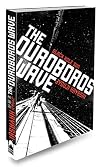
---THIS IS MY REVIEW AS IT APPEARED ON MY BLOG.---
I picked The Ouroboros Wave from the SF bookshop shelf on instinct, partly driven by the idea that I ought to find something else, something not approved of by all and everyone, and so started reading with open eyes and an open mind. Instead of getting rewarded for my intrepidity – ha! – I soon got bogged down in infodumps and diagrams of a magnitude not even Kim Stanley Robinson manages to achieve in his Mars trilogy. And that definitely show more says something.
Add to that dialogue so stilted it felt pasted on afterwards and I was not very keen on reading past, say, page 30 or so.
Why did I continue? What made me slog on?
Well, in part the fact that it is a thin volume. Only 267 pages, and that includes the afterword. But I also felt that, infodumps aside, some of the issues I had with the language might be an artefact of translation, and that I ought to give the author a decent chance.
So on I read.
The story, such as is, is told through a series of interconnected stories – some of them sharing characters but some of them just same-universe tales – telling a tale of a stumbling first contact made not the swashbuckling face to face way but rather by inference, and over long time.
Parallel with this the author paints a familiar scenario were spacers are culturally and societally separated from their earthling cousins, making some of these differences and disagreements fuel for the individual stories.
As the afterword tells it the separate stories were, originally, published just as stories, in a magazine, and not in the order they appear in this volume. I think having known this prior to reading had been valuable because it explains the slight feeling of disconnect between the separate yarns.
The ideas expressed are interesting, the story framework is good, but the execution is lacking – somehow this feels more like an outline than the real deal – and my guess is the author is heavily influenced by the old masters rather than the host of modern SF writers. Definitely not recommended for the SF beginner. Others might find it interesting, if not enjoyable. show less
I picked The Ouroboros Wave from the SF bookshop shelf on instinct, partly driven by the idea that I ought to find something else, something not approved of by all and everyone, and so started reading with open eyes and an open mind. Instead of getting rewarded for my intrepidity – ha! – I soon got bogged down in infodumps and diagrams of a magnitude not even Kim Stanley Robinson manages to achieve in his Mars trilogy. And that definitely show more says something.
Add to that dialogue so stilted it felt pasted on afterwards and I was not very keen on reading past, say, page 30 or so.
Why did I continue? What made me slog on?
Well, in part the fact that it is a thin volume. Only 267 pages, and that includes the afterword. But I also felt that, infodumps aside, some of the issues I had with the language might be an artefact of translation, and that I ought to give the author a decent chance.
So on I read.
The story, such as is, is told through a series of interconnected stories – some of them sharing characters but some of them just same-universe tales – telling a tale of a stumbling first contact made not the swashbuckling face to face way but rather by inference, and over long time.
Parallel with this the author paints a familiar scenario were spacers are culturally and societally separated from their earthling cousins, making some of these differences and disagreements fuel for the individual stories.
As the afterword tells it the separate stories were, originally, published just as stories, in a magazine, and not in the order they appear in this volume. I think having known this prior to reading had been valuable because it explains the slight feeling of disconnect between the separate yarns.
The ideas expressed are interesting, the story framework is good, but the execution is lacking – somehow this feels more like an outline than the real deal – and my guess is the author is heavily influenced by the old masters rather than the host of modern SF writers. Definitely not recommended for the SF beginner. Others might find it interesting, if not enjoyable. show less
Interesting ideas, good Hard SF, developed through linked stories. Lots of room for the author to fill in the gaps with other stories/novellas/novels. The ending is more a jumping-off point than a conclusion, but is somewhat satisfying. Protagonists almost all female. Some of the dialogue is a bit stilted. Might be due to translation from Japanese to English, might simply have been a choice. Didn't catch where the 'Ouroboros' concept implied by the title fits in.
Lists
You May Also Like
Associated Authors
Statistics
- Works
- 1
- Also by
- 1
- Members
- 78
- Popularity
- #229,021
- Rating
- 3.3
- Reviews
- 3
- ISBNs
- 2