
A. J. Kazinski
Author of The Last Good Man
About the Author
A. J. Kazinski is the pseudonym for filmmaker Anders Rønnow Klarlund and novelist Jacob Weinreich.
Disambiguation Notice:
(nor) pseudonym for det danske forfatterparet Anders Rønnow Klarlund og Jacob Weinreich
pseudonym for the Danish author couple Anders Rønnow Klarlund and Jacob Weinreich
Series
Works by A. J. Kazinski
No title 1 copy
Søvnen og døden 1 copy
Tagged
Common Knowledge
- Legal name
- Klarlund, Anders Rønnow
Weinreich, Jacob - Other names
- Ekberg, Anna
- Gender
- n/a
- Awards and honors
- Det Danske Kriminalakademis debutantdiplom (Den sidste gode mand) (2011)
Prix Relay (Den sidste gode mand) (2011) - Nationality
- Denmark
- Disambiguation notice
- pseudonym for the Danish author couple Anders Rønnow Klarlund and Jacob Weinreich
- Associated Place (for map)
- Denmark
Members
Reviews
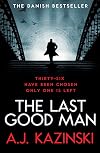
"The correct interpretation of numbers determines whether we live or die. it's life or death That's something that every scientist understands. That was why Tycho Brahe got his nose sliced off in a duel."
"Because of numbers?"
"Because he claimed that so-called complex numbers existed. And his adversary claimed that they didn't."
"Who was right?"
"Tycho Brahe. But he lost his nose."
Venetian policeman Tommaso di Barbara has discovered a trend in killings around the world - every Friday at sunset, show more a good person is murdered. Humanitarian, lawyer, volunteer - they all die with a strange burn-like mark on their back. Niels Bentzon picks up the Interpol report - but can't bear the thought of travel and doesn't speak di Barbara's language. Only once he teams up with Hannah Lund, astrophysicist extraordinaire mourning the premature death of her son, is he able to impose a pattern and find out when the next murders will be. The question is, can he stop them?
Parts of this were really well written - as a police procedural, with all of the distractions from the climate conference and the terrorist threat, it succeeded. I kept reading, engrossed, all the way to the end with no trouble.
Niels and Hannah are both interesting characters - neither is perfect and each is dealing with their own romantic issues - but as a partnership they work very well. In particular, their weaknesses are key - Hannah's inability to deal with normal interpersonal situations, Niels' travel phobia; both are worked slyly into the story but are completely obvious as obstacles when we happen on to them.
Kazinski writes Venice and Copenhagen well - the floods, the abandoned madhouse/hospital, the cold, the ridiculous media interactions with the police at the conference, the conflicts between cyclists and cars in Copenhagen and most of all, the pervasive, penetrating, personal cold that a north European winter brings (I'm writing this with the heating on, socks and slippers, and a blanket over my knees).
However, this gets big negative marks for resorting to a fate-imposed, generational mysticism. I bought it until Niels tried to run away and whatever he did, events conspired to send him back to Copenhagen; similarly the suggested passing of the burden to a new soul at the climax dragged this novel down into Dan Brown land. Except worse because at least there, none of it is magical and spiritual and fate, it's all just bad guys. show less
"Because of numbers?"
"Because he claimed that so-called complex numbers existed. And his adversary claimed that they didn't."
"Who was right?"
"Tycho Brahe. But he lost his nose."
Venetian policeman Tommaso di Barbara has discovered a trend in killings around the world - every Friday at sunset, show more a good person is murdered. Humanitarian, lawyer, volunteer - they all die with a strange burn-like mark on their back. Niels Bentzon picks up the Interpol report - but can't bear the thought of travel and doesn't speak di Barbara's language. Only once he teams up with Hannah Lund, astrophysicist extraordinaire mourning the premature death of her son, is he able to impose a pattern and find out when the next murders will be. The question is, can he stop them?
Parts of this were really well written - as a police procedural, with all of the distractions from the climate conference and the terrorist threat, it succeeded. I kept reading, engrossed, all the way to the end with no trouble.
Niels and Hannah are both interesting characters - neither is perfect and each is dealing with their own romantic issues - but as a partnership they work very well. In particular, their weaknesses are key - Hannah's inability to deal with normal interpersonal situations, Niels' travel phobia; both are worked slyly into the story but are completely obvious as obstacles when we happen on to them.
Kazinski writes Venice and Copenhagen well - the floods, the abandoned madhouse/hospital, the cold, the ridiculous media interactions with the police at the conference, the conflicts between cyclists and cars in Copenhagen and most of all, the pervasive, penetrating, personal cold that a north European winter brings (I'm writing this with the heating on, socks and slippers, and a blanket over my knees).
However, this gets big negative marks for resorting to a fate-imposed, generational mysticism. I bought it until Niels tried to run away and whatever he did, events conspired to send him back to Copenhagen; similarly the suggested passing of the burden to a new soul at the climax dragged this novel down into Dan Brown land. Except worse because at least there, none of it is magical and spiritual and fate, it's all just bad guys. show less
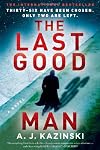
Interesting story and a truly intriguing premise. It did drag in a few places and there were some loose ends left dangling. What really brought it down for me was the obvious flaws in technical knowledge about firearms. In one instance, a gun is “loaded,” but the only action to unload was dropping the magazine - no bullet in the chamber of a semi-auto pistol is not a loaded gun. The other instance involves a bit of a spoiler. Without giving away too much, a gun with no bullet in the show more chamber does not recoil when the trigger is pressed. Basic mistake the author could have avoided with a simple technical review.
Beyond those disappointments, the story, itself, was good. show less
Beyond those disappointments, the story, itself, was good. show less
I selected this book because I found a number of parallels in the structure to a work I'm currently writing. I was interested to see how the author (in this case, two authors working under a single name) handled the information readers need to know to understand the plot points as well as how that information was spread across multiple characters.
The first 100 pages were strong enough. But the middle part bogged down in elements that were repetative and, frankly, the devices used by the show more authors were clunky. I kept reading because I wanted to see how they finished the work and how the devices changed throughout. I can't say I would have kept reading if not for what I might learn about how to handle my own project.
I continued on because this was an "instant" bestseller in the authors' country and has received some press in the U.S. because of that. I was interested to see why this became a bestseller, and was surprised whenever I found another of those clunky devices, unnecessary repetition, and poorly executed scenes.
Then, the end matter told me what was really up. It seems the authors are both filmmakers in their home country. So the book was a bestseller pretty much because of their fame rather than any quality attributed to the book.
Was the plot interesting enough? Yes. But too many of the other elements associated with the book were poorly excuted to support its success. show less
The first 100 pages were strong enough. But the middle part bogged down in elements that were repetative and, frankly, the devices used by the show more authors were clunky. I kept reading because I wanted to see how they finished the work and how the devices changed throughout. I can't say I would have kept reading if not for what I might learn about how to handle my own project.
I continued on because this was an "instant" bestseller in the authors' country and has received some press in the U.S. because of that. I was interested to see why this became a bestseller, and was surprised whenever I found another of those clunky devices, unnecessary repetition, and poorly executed scenes.
Then, the end matter told me what was really up. It seems the authors are both filmmakers in their home country. So the book was a bestseller pretty much because of their fame rather than any quality attributed to the book.
Was the plot interesting enough? Yes. But too many of the other elements associated with the book were poorly excuted to support its success. show less
I won this book from Goodreads first readers giveaways in exchange for an honest review.
The Last Good Man is a thriller about 36 good people who are being eliminated around the world and the two policemen in different countries who are the only ones who believe what's going on: the main protagonist Niels in Copenhagen and Tommaso in Venice.
There are a lot of great things about this book. It's fast paced, well written, and the first half of the book makes mostly the right moves. There are show more secrets that are revealed that I am highly impressed by. Niels is a likeable protagonist and Hannah, the physicist, is also a compelling character that adds a high level of intelligence to the book.
There are some issues, which prevent me from giving this book five stars. The big reveal in the last third of the book was anticlimactic; previous surprises were much more impressive-- this surprise was easily figured out. I also wanted to hear more about Tommaso, who was the first person to believe there was a pattern to all of these deaths. How did he come up with this pattern? We only see glimpses, and then the rest is Niels trying to figure out what Tommaso has already figured out. Also, it seems kind of ridiculous that neither of them answer their cell phones for the first half of the book. And then, from there on, I was expecting... more. The ending just seems a letdown when the opening is so grand, so big. I was really anticipating a big conspiracy to reveal itself.
That said, I blazed through the book in a day. It was a fast, fun read, especially the first half of the book, and had some great characters. show less
The Last Good Man is a thriller about 36 good people who are being eliminated around the world and the two policemen in different countries who are the only ones who believe what's going on: the main protagonist Niels in Copenhagen and Tommaso in Venice.
There are a lot of great things about this book. It's fast paced, well written, and the first half of the book makes mostly the right moves. There are show more secrets that are revealed that I am highly impressed by. Niels is a likeable protagonist and Hannah, the physicist, is also a compelling character that adds a high level of intelligence to the book.
There are some issues, which prevent me from giving this book five stars. The big reveal in the last third of the book was anticlimactic; previous surprises were much more impressive-- this surprise was easily figured out. I also wanted to hear more about Tommaso, who was the first person to believe there was a pattern to all of these deaths. How did he come up with this pattern? We only see glimpses, and then the rest is Niels trying to figure out what Tommaso has already figured out. Also, it seems kind of ridiculous that neither of them answer their cell phones for the first half of the book. And then, from there on, I was expecting... more. The ending just seems a letdown when the opening is so grand, so big. I was really anticipating a big conspiracy to reveal itself.
That said, I blazed through the book in a day. It was a fast, fun read, especially the first half of the book, and had some great characters. show less
Awards


You May Also Like


Associated Authors
Statistics
- Works
- 11
- Members
- 481
- Popularity
- #51,316
- Rating
- 3.5
- Reviews
- 18
- ISBNs
- 110
- Languages
- 13