
Angelo Rinaldi
Author of The Den of the Forever Frost
About the Author
Image credit: By Une_vingtaine_d'académiciens,_au_29_novembre_2007.JPG: Glotzderivative work: Président (talk) - Une_vingtaine_d'académiciens,_au_29_novembre_2007.JPG, CC BY-SA 3.0, https://commons.wikimedia.org/w/index.php?curid=12712144
Works by Angelo Rinaldi
Gli anni di Berlusconi — Author — 3 copies
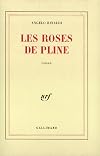
Le rose di Plinio 1 copy
L'éducation de l'oubli 1 copy
Associated Works
Tagged
Common Knowledge
- Birthdate
- 1940-06-17
- Gender
- male
- Occupations
- journalist
novelist - Organizations
- Le Figaro (Paris)
Académie française (2001) - Awards and honors
- Légion d'Honneur ( [2007])
Prix Femina (1972)
Prix Prince Pierre de Monaco - Nationality
- France
- Places of residence
- Bastia, Corsica
Nice, France
Paris, France - Associated Place (for map)
- France
Members
Reviews

Les Dames de France was Rinaldi's fourth novel. The narrator, Antoine, recollects his childhood in a Corsican town (presumably Bastia), where he grew up with his mother Alida - proprietor of the "Dames de France" store - and her young sister Léna, so close to him in age that she was more like a big sister than an aunt. Léna continues to live with him when he moves to Paris to explore its gay underworld and build up a career in real-estate, and she writes an unsuccessful novel about their show more joint childhood called Les Dames de France. In the present of the narrative, Antoine is trying to get over Léna's recent death.
The book uses a recursive, self-consciously Proustian technique to burrow via these three main layers of time into Antoine's memories, which often made it feel rather over-written, but there are some very entertaining and effective bits of description, particularly the extended account of a dinner-party given by the Malaspina sisters, at which the whole of middle-class Corsica's closeted LGBT community seems to be present. I wasn't so happy with the final section, set in a Corsican-run gay sauna in the Marais: Rinaldi is oddly reticent about using sexually-explicit language, and there's something not quite right about a description of a pre-HIV orgy in a steam-room where not one of the participants appears to possess a penis. You might legitimately conclude that what is going on is nothing more than a big group-cuddle. Maybe that was censorship or an attempt to avoid alienating mainstream readers, but with a few decades of hindsight it just looks silly. show less
The book uses a recursive, self-consciously Proustian technique to burrow via these three main layers of time into Antoine's memories, which often made it feel rather over-written, but there are some very entertaining and effective bits of description, particularly the extended account of a dinner-party given by the Malaspina sisters, at which the whole of middle-class Corsica's closeted LGBT community seems to be present. I wasn't so happy with the final section, set in a Corsican-run gay sauna in the Marais: Rinaldi is oddly reticent about using sexually-explicit language, and there's something not quite right about a description of a pre-HIV orgy in a steam-room where not one of the participants appears to possess a penis. You might legitimately conclude that what is going on is nothing more than a big group-cuddle. Maybe that was censorship or an attempt to avoid alienating mainstream readers, but with a few decades of hindsight it just looks silly. show less
Jan 21, 2013French
Awards


You May Also Like
Associated Authors
Statistics
- Works
- 25
- Also by
- 7
- Members
- 311
- Popularity
- #75,819
- Rating
- 4.1
- Reviews
- 2
- ISBNs
- 47
- Languages
- 5