
Aamer Hussein
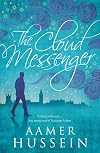
Author of The Cloud Messenger
About the Author
Aamer Hussein was born and brought up in Karachi, Pakistan. A graduate of the School of Oriental and African Studies in London, he teaches Urdu at its Language Centre. At present a lecturer in South Asian studies at the London branch of Pepperdine University, he has also taught graduate and show more postgraduate courses at the English and drama department of Queen Mary and Westfield College. show less
Works by Aamer Hussein
Cactus Tree 1 copy
The Swan's Wife 1 copy
Associated Works
Tagged
Common Knowledge
- Birthdate
- 1955-04-08
- Gender
- male
- Education
- SOAS, University of London
- Nationality
- Pakistan
- Places of residence
- Karachi, Pakistan
- Map Location
- Pakistan
Members
Reviews
What do you do when a book is so beautifully written that it makes you want to cry -- but the story is almost absent?? You read it twice before sitting down to write a review that tries to do justice to the prose and to your disappointment at the absence of a plot to support the kinds of themes that engaged you enough to request the book under the Early Reviewer program. At least, that's what I did.
Aamer Hussein is an accomplished author who has produced a few volumes of short stories; his show more sentences sound like poetry (suitably, since the main character's fascination with Urdu and Persian poesy is partly at the heart of the narrative). Sadly, the "novel" that is formed from these sentences ends up feeling like a series of poetic vignettes stapled together. If you want to feel erudite by osmosis; if you only read to relish the caliber of the prose; if you cherish books by uber-literary authors outside the mainstream, you might love it. But reading through it twice had one useful and lasting effect: not delight in a well-told tale, but some thoughts about what turns a work of prose into a novel.
This is the story of Mehran's life, told in fits and starts, moving rapidly from one experience and encounter to another and drawing on themes but never really making Mehran feel real or very compelling. (He's the kind of character to whom things happen; a strangely lackluster figure.) Those observations range from the pedantic ("He teaches for 15, sometimes 02 hours a week -- he is, again, teaching large groups on Mondays and Thursdays, and also an Indian History module to undergraduates. He's often too tired to do anything but read a few pages of a novel in the evenings. ... His job at the university, though he's a dutiful and conscientious teacher, is only a job, and he would have been as diligent at any other...") to the eloquent internal monologues as Mehran ponders an emotion, a woman, an experience, a sight, sound or smell. That, and a few vignettes that depict the main relationships in his life (or at least what the reader can only suppose to be the main relationships) don't add up to a novel, even one with an unconventional structure. It's like looking at a piece of knitting designed to be art, and trying to figure out how one would wear it.
The narrator coyly refers in the book to Mehran's efforts at autobiographical writings -- Hussein himself notes in an afterward that this is "the story of some of the paths I might have taken" and reflects his own fascination with Urdu literature. Ultimately, I ended up wanting to read some of the poets he quotes liberally in the book, but remained feeling very distanced from Mehran and unimpressed with his creator's effort to build a narrative out of emotions and fleeting events and encounters, however beautifully observed. Fabulous writing needs a structure and the very loosely interwoven tale of Mehran's encounters with Riccarda, Marvi and Marco never add up to a convincing narrative. This is a work of art, perhaps, but not a story. 3 stars, mostly awarded for the writing and the poetic insights.
Perhaps I'm misjudging it and it's a prose poem??? Even so, I don't care enough to go back and revisit it a third time to test that hypothesis. show less
Aamer Hussein is an accomplished author who has produced a few volumes of short stories; his show more sentences sound like poetry (suitably, since the main character's fascination with Urdu and Persian poesy is partly at the heart of the narrative). Sadly, the "novel" that is formed from these sentences ends up feeling like a series of poetic vignettes stapled together. If you want to feel erudite by osmosis; if you only read to relish the caliber of the prose; if you cherish books by uber-literary authors outside the mainstream, you might love it. But reading through it twice had one useful and lasting effect: not delight in a well-told tale, but some thoughts about what turns a work of prose into a novel.
This is the story of Mehran's life, told in fits and starts, moving rapidly from one experience and encounter to another and drawing on themes but never really making Mehran feel real or very compelling. (He's the kind of character to whom things happen; a strangely lackluster figure.) Those observations range from the pedantic ("He teaches for 15, sometimes 02 hours a week -- he is, again, teaching large groups on Mondays and Thursdays, and also an Indian History module to undergraduates. He's often too tired to do anything but read a few pages of a novel in the evenings. ... His job at the university, though he's a dutiful and conscientious teacher, is only a job, and he would have been as diligent at any other...") to the eloquent internal monologues as Mehran ponders an emotion, a woman, an experience, a sight, sound or smell. That, and a few vignettes that depict the main relationships in his life (or at least what the reader can only suppose to be the main relationships) don't add up to a novel, even one with an unconventional structure. It's like looking at a piece of knitting designed to be art, and trying to figure out how one would wear it.
The narrator coyly refers in the book to Mehran's efforts at autobiographical writings -- Hussein himself notes in an afterward that this is "the story of some of the paths I might have taken" and reflects his own fascination with Urdu literature. Ultimately, I ended up wanting to read some of the poets he quotes liberally in the book, but remained feeling very distanced from Mehran and unimpressed with his creator's effort to build a narrative out of emotions and fleeting events and encounters, however beautifully observed. Fabulous writing needs a structure and the very loosely interwoven tale of Mehran's encounters with Riccarda, Marvi and Marco never add up to a convincing narrative. This is a work of art, perhaps, but not a story. 3 stars, mostly awarded for the writing and the poetic insights.
Perhaps I'm misjudging it and it's a prose poem??? Even so, I don't care enough to go back and revisit it a third time to test that hypothesis. show less
 This review was written for LibraryThing Early Reviewers.
In this nostalgic, meandering book about what might have been, we follow the life of Mehran from Karachi, Pakistan, to London, living through the '70s, '80s, and '90s. It's a relatively short novel, with chapter sometimes as small as half a page. But it took me a while to read, because it's a book that's easily put down (and easily picked back up again, but certainly not a page-turner.)
I loved the constant reference to Persian and Urdu poetry, the honest exploration of what it means to be show more place-less, the tangled mix of British and South Asian cultures. But I also found the back-and-forth between first and third person to be unsettling, and I found none of the characters sympthetic.
In short, there are a number of elements in this book that I liked, but it's lacking some polish. The book did leave me intrigued about Hussein as an author, though, and I would probably pick up another book of his in the future. show less
I loved the constant reference to Persian and Urdu poetry, the honest exploration of what it means to be show more place-less, the tangled mix of British and South Asian cultures. But I also found the back-and-forth between first and third person to be unsettling, and I found none of the characters sympthetic.
In short, there are a number of elements in this book that I liked, but it's lacking some polish. The book did leave me intrigued about Hussein as an author, though, and I would probably pick up another book of his in the future. show less
This review was written for LibraryThing Early Reviewers.This was a dreary and bland, but thankfully short, novel narrated by a Mehran, a Pakistani man from a privileged family who grows up in Karachi, travels to Delhi, Bombay and Rome after his education in the United Kingdom, and spends most of his life in London, as a professor of Urdu literature. He is a citizen of the world, in a sense, but he is a rootless and nomadic man whose life is characterized by his failed relationships with two flawed and unlovable women and a friend who claims to show more care for him but continually takes advantage of him. The novel shares the same title as a famous Sanksrit poem by Kālidāsa, in which an exiled man uses clouds to convey messages to his wife; in the same fashion, Hussein's narrator writes letters to his first love, but these are largely brief and dispassionate chronological accounts of his work and relationships.
Despite its brevity, this was a difficult book to read, as the four main characters were largely inscrutable and held little interest for this reader. I had a somewhat similar impression of his book of short stories "Another Gulmohar Tree", so I will not be reading any of this author's work in the future. show less
Despite its brevity, this was a difficult book to read, as the four main characters were largely inscrutable and held little interest for this reader. I had a somewhat similar impression of his book of short stories "Another Gulmohar Tree", so I will not be reading any of this author's work in the future. show less
This review was written for LibraryThing Early Reviewers.This novel starts with a lovely, lyrical, 2 1/2 page, dream-like prose poem in which the narrator speaks to two others. One asks him "to write a story that's rain-coloured: rain-grey, rain-blue." I was intrigued, eager for more. Once into the body of the book, however, my interest quickly waned. This book is heavy on exposition. Some writers, Virginia Woolf, for instance, can write exposition so beautifully you never wish for anything else. Here it's just boring, the prose unremarkable, the show more things it describes mundane. I began to long for quotation marks. On page 57 we get one of the first pieces of dialogue, 6 lines then a parenthesis containing 12 lines of exposition. The book continued like that, constantly telling rather than showing things about characters who never became at all interesting. It was a tedious read. show less
This review was written for LibraryThing Early Reviewers.Awards

You May Also Like
Associated Authors
Statistics
- Works
- 14
- Also by
- 7
- Members
- 139
- Popularity
- #147,350
- Rating
- 3.4
- Reviews
- 14
- ISBNs
- 28
- Languages
- 1
