

Antoinette Portis
Author of Not a Box
About the Author
Series
Works by Antoinette Portis
Tagged
Common Knowledge
- Gender
- female
- Education
- University of California. School of Fine Arts (BFA|Fine Arts)
- Occupations
- artist
illustrator
children's book author - Awards and honors
- Sendak Fellowship (2010)
- Agent
- Deborah Warren (East/West Literary)
- Short biography
- Antoinette made her picture-book debut with the New York Times best-selling Not A Box, an American Library Association Seuss Geisel Honor book, and one of the New York Times Ten Best Illustrated Books of the Year. She was a recipient of the 2010 Sendak Fellowship.
Antoinette got a BFA at the UCLA School of Fine Arts and then spent years in the world of design and advertising. She was a creative director, then a VP, at Disney before she took a flying leap to pursue her sixth-grade dream of writing and illustrating picture books.
Dreams she did not achieve: ballerina (who knew you had to be able to touch your toes?); astronomer (Math! Not a strong suit); and organic farmer (there’s still dirt and there’s still time.)
Antoinette lives in Southern California and reads and draws with kids in local school classrooms. She has been known to grow monster-sized zucchinis. [from author website, 1/5/2020] - Nationality
- USA
- Places of residence
- Studio City, California, USA
- Associated Place (for map)
- California, USA
Members
Reviews

The title of this picture-book for very young children reminds me of Magritte's famous painting, La trahison des images (The Treachery of Images), in which an image of a pipe is labeled: "Ceci n'est pas une pipe" ("This is not a pipe"). Rather than calling into question the distinctions between image and reality, however, Not a Box is a charming juxtaposition of the prosaic (and one presumes, adult) perspective, when confronted with a cardboard box, and the creative response of the child, show more when confronted with the same. As the rabbit-like child keeps informing the off-screen questioner, this is NOT a box. It is a mountain, a burning building, a robot suit, and much, much more! It is, in short, whatever the child wants and needs it to be, in the course of her imaginative play.
I enjoyed Not a Box enough that I'm considering tracking down the follow-up, Not a Stick, but I have to wonder whether the very young children who make up the ideal audience for it, visually speaking, will really appreciate the story. It's not a question of understanding, so much, but of interest. Will young readers be as entertained by the juxtaposition of perspective, mentioned above, as adults? I suspect that this one plays more to the adult fascination with, and nostalgia for, the make-believe of youth, than to a genuinely childlike appreciation for play. Then again, perhaps I am (like so many other reviewers that I myself have criticized) underestimating the young reader...? show less
I enjoyed Not a Box enough that I'm considering tracking down the follow-up, Not a Stick, but I have to wonder whether the very young children who make up the ideal audience for it, visually speaking, will really appreciate the story. It's not a question of understanding, so much, but of interest. Will young readers be as entertained by the juxtaposition of perspective, mentioned above, as adults? I suspect that this one plays more to the adult fascination with, and nostalgia for, the make-believe of youth, than to a genuinely childlike appreciation for play. Then again, perhaps I am (like so many other reviewers that I myself have criticized) underestimating the young reader...? show less

Quem nunca brincou dentro de uma caixa de papelão? É exatamente isto que faz o protagonista de Não é uma caixa: solta a criatividade e embarca em infinitas aventuras a bordo deste objeto “banal” – assim pensam as pessoas pouco inventivas. Num jogo divertido, ele é indagado a cada página sobre o que está fazendo com certa caixa de papelão. E, claro,sempre responde: "não é uma caixa". É quando a ilustração revela o que na verdade a caixa representa para ele. Aqui, a show more brincadeira começa na capa, com o sinal de “este lado para cima” e outros símbolos comuns em caixas de papelão, além de orelhas que envolvem o próprio livro. Paulo Tatit, músico e autor de canções do selo Palavra Cantada, comenta no texto de quarta capa o contraste entre o mundo infantil e o mundo sério da maturidade. Porque “à medida que crescemos, uma caixa vai se tornando apenas uma caixa. Mas nunca perdemos a capacidade de voltar a sentir, ainda que por alguns minutinhos, aquele delicioso faz de conta”. Para crianças e adultos pensarem – e viverem –além da caixa. show less

Author/illustrator Portis has designed this book to appear as if readers are looking through a spaceship portal window from the outside at two creatures inside, Zrk and Blrg.
Zrk and Blrg are shocked to see someone. Blrg says to Zrk: “Zrk, do you know what this means? ALIENS ARE REAL!!!!”
Zrk and Blrg then try to communicate with the alien, finding out it is from “Planeturth” (i.e., Planet Earth).
They decide it even might be safe to befriend the alien, who after all, “has tiny show more teeth.”
Other aliens from inside the ship gather around to see what all the excitement is about. Then the portal starts to power down, so the window is closing. Zrk and Blrg sadly call out to the alien to “Come back soon!” They also ask the alien to “say hi to all the planeturthlings and give them this message: SKF FLRBL GRNK!”
Bright colorful illustrations with thick black outlining (perfect for story time visibility) are framed as if through a window against the black background of outer space.
Evaluation: This is a very fun, silly book that kids should love, but especially those with an interest in space or who just have an offbeat sense of humor. Adults could also point out the outside-of-the-box approach that asks who is really the alien? What does “normal" mean? Isn’t it all a matter of perspective? show less
Zrk and Blrg are shocked to see someone. Blrg says to Zrk: “Zrk, do you know what this means? ALIENS ARE REAL!!!!”
Zrk and Blrg then try to communicate with the alien, finding out it is from “Planeturth” (i.e., Planet Earth).
They decide it even might be safe to befriend the alien, who after all, “has tiny show more teeth.”
Other aliens from inside the ship gather around to see what all the excitement is about. Then the portal starts to power down, so the window is closing. Zrk and Blrg sadly call out to the alien to “Come back soon!” They also ask the alien to “say hi to all the planeturthlings and give them this message: SKF FLRBL GRNK!”
Bright colorful illustrations with thick black outlining (perfect for story time visibility) are framed as if through a window against the black background of outer space.
Evaluation: This is a very fun, silly book that kids should love, but especially those with an interest in space or who just have an offbeat sense of humor. Adults could also point out the outside-of-the-box approach that asks who is really the alien? What does “normal" mean? Isn’t it all a matter of perspective? show less
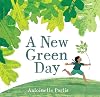
This day isn't just green: it's every color. On the first page, text rests inside a pale yellow square: "Morning lays me on your pillow, an invitation, square and warm, Come out and play!" A page turn reveals the speaker - sunlight. The pattern continues, with text on the recto and a reveal on the verso. An intimate celebration of the natural world in summer - snails, leaves, pebbles, lightning and thunder, crickets. The square format and smallish trim size make the book feel inviting and show more cozy.
*
Re-read April 2025
These short personification poems are also a guessing game of sorts (at least on the first read-through). show less
*
Re-read April 2025
These short personification poems are also a guessing game of sorts (at least on the first read-through). show less
Lists
Awards


You May Also Like


Statistics
- Works
- 22
- Members
- 5,866
- Popularity
- #4,207
- Rating
- 4.0
- Reviews
- 309
- ISBNs
- 103
- Languages
- 7
- Favorited
- 2