
Niko Henrichon
Author of Pride of Baghdad
About the Author
Image credit: via Zagreb Comic Con
Series
Works by Niko Henrichon
Associated Works
Bad Doings & Big Ideas: A Bill Willingham Deluxe Edition (2011) — Illustrator — 48 copies, 3 reviews
Sandman Presents: Everything You Always Wanted to Know About Dreams... But Were Afraid to Ask #1 (2001) — Illustrator — 20 copies, 2 reviews
Tagged
Common Knowledge
- Canonical name
- Henrichon, Niko
- Gender
- male
- Occupations
- artist
illustrator - Nationality
- Canada
- Associated Place (for map)
- Canada
Members
Reviews

Tomando como punto de partida un hecho real (el bombardeo de Bagdad y la huída de varios animales del zoológico) la obra de Vaughan dota de rasgos humanos e inteligencia a los animales para hacernos cómplices de sus emociones, de sus relaciones como manada y su estupor a todo lo que sucede a su alrededor. Porque pese a ser un grupo no demasiado bien avenido, en la adversidad deben cooperar entre ellos.
Que los leones hablen no convierte esta obra en algo infantil, al contrario: comprender show more sus sentimientos hace que todavía sea más desgarrador para el lector comprobar como en el fondo, el cómic es una crítica a la guerra de Irak desde el punto de vista de estos leones, que ven bombardeado su habitat y se ven libres, pero, ¿a qué precio?
'Los leones de Bagdad' nos muestra la guerra desde el punto de vista de los que han tenido simplemente la mala suerte de haber nacido en un territorio que se convierte en hostil a causa de unos dirigentes que no calculan el impacto sobre la población que puede tener un conflicto armado. Muy recomendable. show less
Que los leones hablen no convierte esta obra en algo infantil, al contrario: comprender show more sus sentimientos hace que todavía sea más desgarrador para el lector comprobar como en el fondo, el cómic es una crítica a la guerra de Irak desde el punto de vista de estos leones, que ven bombardeado su habitat y se ven libres, pero, ¿a qué precio?
'Los leones de Bagdad' nos muestra la guerra desde el punto de vista de los que han tenido simplemente la mala suerte de haber nacido en un territorio que se convierte en hostil a causa de unos dirigentes que no calculan el impacto sobre la población que puede tener un conflicto armado. Muy recomendable. show less
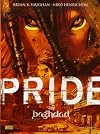
There's a big billboard on the wall of the art museum at my university showing two voluptuous minarets, gold and sky blue against a blue sky, with the legend "Because there was and there wasn't a city of Baghdad ...." It is massive and, especially on the backdrop of Vancouver's own skies of heavy impending grey, riveting. A cheap ambiguity and a stock photo, and it conjures up the full-blooded presence of a world that was very different from ours, but no less real, and when the artist was show more working must have appeared to have been gone forever. And I was just looking at Baghdad pictures in the effort to identify the mosque in question, and--although I have to say that a triumphalist retort to the piece (paid for by the Rumsfeld Foundation and the Project for a New American Century) could easily enough slap the words "Because there is and always will be a city of Baghdad" on a picture of the city's new $7 billion international airport, with the unexpected swooping light fixtures that evoke medieval vaulted ceilings--it wouldn't convince, because in the eyes of the world the old Baghdad is dead. The New York of the Middle Ages, the prosperous and cultivated yet suffering and scared capital of despots from the enlightened founder, al-Mansur, who tragically named it Madinat as-Salaam, the City of Peace, down to the (we'll say with what may be distressing understatement) unenlightened Saddam, is separated from the post-2003 world, much much more than America is from the pre-2001 world, by a traumatic break. An act--an age--of abject violence that, in our narrative, cuts Baghdadis (and Iraqis) off from who they though they were, leaves them shellshocked and paralyzed.
In our narrative, and I don't know how I feel about that. Either the Iraq war and the attendant crimes were a singular, irreducible obscenity that broke a people, dissociated a nation from itself. This is the West telling Iraqis that they can't maintain any continuity with their past, that all they can do is begin a new climb out of barbarism because we we we did something so evil. The other option, of course, is an optimism that effaces the depth of our, the West's, own collective crime.
That's the dilemma that Western writers who don't really know Iraq are going to face, and it's thorny, and it makes it hard to know exactly how to evaluate this confidently rendered and skilfully heartrending story. I think I am going to reluctantly settle on cutting it a bit of slack because it was 2006, and we were still embroiled in the Mesopotamian drama (as opposed to now, 2011, when nobody gives two fucks anymore--and Egypt too will soon fade, of course). It's not written out of a place of strong familiarity with Baghdad before the war, although Vaughan and Henrichon did talk to a lot of US soldiers, which kind of plays up the Catch-22 here. It's the fictionalized story of the four lions that escaped from the Baghdad Zoo after it was bombed to shit by the USAF in 2003. They wandered the city and, spoilers, I suppose, were eventually put down by American troops.
Like, not to hit you over the head with the metaphor here, right? The Iraqi people escaped from their Ba'athist cages after they were bombed to shit by the USAF in 2003. They wandered around trying to figure out what next, and many of them were put down by American troops. This is a tragic parable of what happens when the price of freedom is too high. The authors tell it effectively, with broad strokes, humour and pathos. The lions are afraid--some want to go back to their cages, others want to press onward and see a horizon again. When they do see it, over the bombed-out city, your heart leaps in a way that's equal parts Born Free and "A Nation Once Again" sung by the Wolfe Tones. But is it worth the price? You remember the "keepers". Stockholm Syndrome is at play. Pain is much and death is swift. But perhaps you would have survived better if you had stayed in the wild and kept those instincts sharp and not been domesticated and we can still read this as the-tree-of-liberty-watered-with-the-blood-etc.? But no, no kind of instinx would have gotten our pride away from those guns (and ouch, what a cutting play of words that is--the pride of Baghdad's people, shredded by assault rounds).
So they do a good job. the anthropomorphized animals are handled very well, the thing where they're not for kids is winked at but not ham-handedly hammered on like in so much funny-animals-for-grownups jazz (one of the funniest moments was the cub, whose name I can't remember but whom I'm gonna just go ahead and call Simba: "Do you think there are any other animals my age out there? I just can't wait to eat a baby goat!") It is a powerful story, and both the freedangerdom/safetyranny theme and the animal metaphor are well handled. I'd rank it higher if I could put to bed those doubts about how it would read to a person who lived through it all. I remember another funny moment, the Tigris turtle: "Giving names is how we know we own crap." The aptness of the phylocharacterizations of him and the lions and the demon bear prince Fajer and the canny antelopes and the breakdown of their negotiations with the lions and the way it recapitulates the tribal mistrust that burbles and erupts and undermines the hope for a better future ... and the trauma that persists and connects. It's compelling and convincing, and I just wish I could shake the feeling that it's not us doing that thing again where the Other is our distorting mirror, and daring then to represent them as seen through our coloured goggles. show less
In our narrative, and I don't know how I feel about that. Either the Iraq war and the attendant crimes were a singular, irreducible obscenity that broke a people, dissociated a nation from itself. This is the West telling Iraqis that they can't maintain any continuity with their past, that all they can do is begin a new climb out of barbarism because we we we did something so evil. The other option, of course, is an optimism that effaces the depth of our, the West's, own collective crime.
That's the dilemma that Western writers who don't really know Iraq are going to face, and it's thorny, and it makes it hard to know exactly how to evaluate this confidently rendered and skilfully heartrending story. I think I am going to reluctantly settle on cutting it a bit of slack because it was 2006, and we were still embroiled in the Mesopotamian drama (as opposed to now, 2011, when nobody gives two fucks anymore--and Egypt too will soon fade, of course). It's not written out of a place of strong familiarity with Baghdad before the war, although Vaughan and Henrichon did talk to a lot of US soldiers, which kind of plays up the Catch-22 here. It's the fictionalized story of the four lions that escaped from the Baghdad Zoo after it was bombed to shit by the USAF in 2003. They wandered the city and, spoilers, I suppose, were eventually put down by American troops.
Like, not to hit you over the head with the metaphor here, right? The Iraqi people escaped from their Ba'athist cages after they were bombed to shit by the USAF in 2003. They wandered around trying to figure out what next, and many of them were put down by American troops. This is a tragic parable of what happens when the price of freedom is too high. The authors tell it effectively, with broad strokes, humour and pathos. The lions are afraid--some want to go back to their cages, others want to press onward and see a horizon again. When they do see it, over the bombed-out city, your heart leaps in a way that's equal parts Born Free and "A Nation Once Again" sung by the Wolfe Tones. But is it worth the price? You remember the "keepers". Stockholm Syndrome is at play. Pain is much and death is swift. But perhaps you would have survived better if you had stayed in the wild and kept those instincts sharp and not been domesticated and we can still read this as the-tree-of-liberty-watered-with-the-blood-etc.? But no, no kind of instinx would have gotten our pride away from those guns (and ouch, what a cutting play of words that is--the pride of Baghdad's people, shredded by assault rounds).
So they do a good job. the anthropomorphized animals are handled very well, the thing where they're not for kids is winked at but not ham-handedly hammered on like in so much funny-animals-for-grownups jazz (one of the funniest moments was the cub, whose name I can't remember but whom I'm gonna just go ahead and call Simba: "Do you think there are any other animals my age out there? I just can't wait to eat a baby goat!") It is a powerful story, and both the freedangerdom/safetyranny theme and the animal metaphor are well handled. I'd rank it higher if I could put to bed those doubts about how it would read to a person who lived through it all. I remember another funny moment, the Tigris turtle: "Giving names is how we know we own crap." The aptness of the phylocharacterizations of him and the lions and the demon bear prince Fajer and the canny antelopes and the breakdown of their negotiations with the lions and the way it recapitulates the tribal mistrust that burbles and erupts and undermines the hope for a better future ... and the trauma that persists and connects. It's compelling and convincing, and I just wish I could shake the feeling that it's not us doing that thing again where the Other is our distorting mirror, and daring then to represent them as seen through our coloured goggles. show less
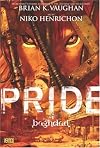
Aww, this book was so close to being utterly amazing! It follows a group of lions who start their story in a zoo in Baghdad. One relishes the safety of the high walls, having lived in the wild and suffered the atrocities that take place there. Another is more radical, who plots and schemes behind the Pride's back with antelopes to break from the tyranny of the Keepers. A crow ominously proclaims the sky is falling and, later, Baghdad is bombed; turning the walls that form their enclosure to show more rubble and freeing them. Without the Keepers to feed them, they realize they have no choice but to venture into the crumbling, war-torn city.
At it's core, it's terrific. It should be obvious even from the above paragraph that this parallels the real world, and it really is done quite well. Also, the art is beautiful! Fully colored, bright and vibrant, the book is very eye-catching. Some pieces fill an entire page, and they are stunning to look at. While I was reading this, I felt like I was reading a book composed of those beautiful Young Adult book covers you see nowadays. Very pretty.
Unfortunately, the dialogue put me off. The writer attempted to inject the book with humor, but it was mostly ill-timed and distracting. You have the tragic novel with such a strong subject matter, and all the writer can do is make a poor attempt to lighten the mood. It really just lessened the impact of the book.
Some of the dialogue is just plain silly. At one point there is a dramatic fight with a black bear, and when the male lion enters the scene all heroically, he makes an idiotic comment that just made me roll my eyes and ruined the whole mood. Reminded me of those cheesy superhero comic books.
Ultimately I do think this is still worth reading. I wouldn't scramble out to the nearest bookstore to buy it (although owning the artwork isn't such a bad idea) but it makes for a solid library loan. It can be read in a day if you can move your eyes past the art, and the ending is still an eye-opener. Not bad. show less
At it's core, it's terrific. It should be obvious even from the above paragraph that this parallels the real world, and it really is done quite well. Also, the art is beautiful! Fully colored, bright and vibrant, the book is very eye-catching. Some pieces fill an entire page, and they are stunning to look at. While I was reading this, I felt like I was reading a book composed of those beautiful Young Adult book covers you see nowadays. Very pretty.
Unfortunately, the dialogue put me off. The writer attempted to inject the book with humor, but it was mostly ill-timed and distracting. You have the tragic novel with such a strong subject matter, and all the writer can do is make a poor attempt to lighten the mood. It really just lessened the impact of the book.
Some of the dialogue is just plain silly. At one point there is a dramatic fight with a black bear, and when the male lion enters the scene all heroically, he makes an idiotic comment that just made me roll my eyes and ruined the whole mood. Reminded me of those cheesy superhero comic books.
Ultimately I do think this is still worth reading. I wouldn't scramble out to the nearest bookstore to buy it (although owning the artwork isn't such a bad idea) but it makes for a solid library loan. It can be read in a day if you can move your eyes past the art, and the ending is still an eye-opener. Not bad. show less
Very rarely a book will take me by surprise like this did. I was angry. I was sad. And I think everyone should read this book.
I think part of the shock from this book is that I didn't know what was coming. I'd heard about Pride of Baghdad but didn't know anything about the story, so had gone into it blind, so if you want to read this and be just as surprised by the ending as I was, just skip the rest of this and go read the book.
In 2003, American soldiers invaded Baghdad and in that show more invasion, the zoo in Baghdad was destroyed. Of the 650-700 animals housed in the zoo, only 35 survived the aftermath of the attack. Some of the animals were looted from the zoo and there was a group of lions that escaped and were roaming the streets of Baghdad. Four of these lions were shot and killed by American soldiers when they wouldn't return to their cages. Pride of Baghdad is Brian Vaughan's fictionalized account of this story through the eyes of these lions.
The story follows Zill, Zafa, Noor and Ali, a pride of lions who escape from the zoo after it is destroyed by American forces and have a brief taste of freedom. They roam the city of Baghdad, encountering several other animals (a sea turtle, horses, another lion kept in private captivity who is close to death, and a blood-thirsty bear) and how they persevere as a small pride to survive their situation. Just as they come to terms with their freedom and come to understand it for what it is, they are all shot dead by American soldiers.
To be honest, I couldn't believe what I read at first. I had to jump back and forth between pages to make sure I was understanding what was happening to the lions. While Vaughan obviously took liberties with the lions by anthropomorphizing them to make us feel more for them, when I discovered that this was based on a true story, I was even more outraged. Who knows exactly what happened to the lions, but the injustice of it seemed to quake through this book by the last page.
Niko Henrichon's artwork is dazzling throughout the book. The emotion that he is able to render in the animals, their terror at the attacks from the American soldiers, their amazement at their freedom, all spills from each page.
Don't let the fact that this is a graphic novel deter you from reading it. An incredibly powerful tale that will shock you by its strength, Pride of Baghdad is one story that will stay with you far after you've read it. show less
I think part of the shock from this book is that I didn't know what was coming. I'd heard about Pride of Baghdad but didn't know anything about the story, so had gone into it blind, so if you want to read this and be just as surprised by the ending as I was, just skip the rest of this and go read the book.
In 2003, American soldiers invaded Baghdad and in that show more invasion, the zoo in Baghdad was destroyed. Of the 650-700 animals housed in the zoo, only 35 survived the aftermath of the attack. Some of the animals were looted from the zoo and there was a group of lions that escaped and were roaming the streets of Baghdad. Four of these lions were shot and killed by American soldiers when they wouldn't return to their cages. Pride of Baghdad is Brian Vaughan's fictionalized account of this story through the eyes of these lions.
The story follows Zill, Zafa, Noor and Ali, a pride of lions who escape from the zoo after it is destroyed by American forces and have a brief taste of freedom. They roam the city of Baghdad, encountering several other animals (a sea turtle, horses, another lion kept in private captivity who is close to death, and a blood-thirsty bear) and how they persevere as a small pride to survive their situation. Just as they come to terms with their freedom and come to understand it for what it is, they are all shot dead by American soldiers.
To be honest, I couldn't believe what I read at first. I had to jump back and forth between pages to make sure I was understanding what was happening to the lions. While Vaughan obviously took liberties with the lions by anthropomorphizing them to make us feel more for them, when I discovered that this was based on a true story, I was even more outraged. Who knows exactly what happened to the lions, but the injustice of it seemed to quake through this book by the last page.
Niko Henrichon's artwork is dazzling throughout the book. The emotion that he is able to render in the animals, their terror at the attacks from the American soldiers, their amazement at their freedom, all spills from each page.
Don't let the fact that this is a graphic novel deter you from reading it. An incredibly powerful tale that will shock you by its strength, Pride of Baghdad is one story that will stay with you far after you've read it. show less
Lists
Awards


You May Also Like
Associated Authors
Statistics
- Works
- 10
- Also by
- 14
- Members
- 3,261
- Popularity
- #7,845
- Rating
- 3.9
- Reviews
- 143
- ISBNs
- 56
- Languages
- 10
- Favorited
- 1