
Theognis
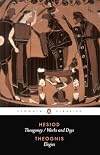
Author of Theogony, Works and Days by Hesiod / Elegies by Theognis
About the Author
Works by Theognis
Theognis: PS.-Pythagoras, PS.-Phocylides, Chares, Anonymi Aulodia, Fragmentum Teliambicum (1998) 6 copies
Elegies 4 copies
Anthologia lyrica vol. I fasc. II: Theognis Megareus. Ps.-Pythagoras. Ps.-Phocylides — Author — 3 copies
Elegie : libri I-II 2 copies
Elegies of Theognis: A Revised Text Based on a New Collation of the Mutininensis MS (Greek Texts and Commentaries) (1979) 1 copy
Luister naar mij 1 copy
Theognis ED. D. Young 1 copy
[Works] 1 copy
Hesiod and Theognis 1 copy
The elegies 1 copy
Associated Works
World Poetry: An Anthology of Verse from Antiquity to Our Time (1998) — Contributor — 497 copies, 2 reviews
Games of Venus: An Anthology of Greek and Roman Erotic Verse from Sappho to Ovid (The New Ancient World) (1991) — Contributor — 55 copies, 1 review
The Delphian Course : Part Three : Greek Drama, Philiosopy and Literature, the Story of Rome (1913) — Contributor — 8 copies
Ode to Boy: An Anthology of Same-Sex Attraction in Literature, Volume One: From Antiquity Through the Eighteenth Century (2014) — Contributor — 3 copies
Tagged
Common Knowledge
- Canonical name
- Theognis
- Legal name
- Θέογνις ὁ Μεγαρεύς
Θέογνις - Birthdate
- 6th c. BCE
- Gender
- male
- Occupations
- poet
- Places of residence
- Megara, Greece
- Associated Place (for map)
- Megara, Greece
Members
Reviews
Hesiod has a reputation: chauvinist, misogynist, and an all-around Mr. Bitter grumpy pants. At least, this is easily what one takes away at face value from 'Works and Days'. The text leaves us, twenty-first century readers, to wonder to what degree the author represents the mainline, prevalent attitudes of his day, or to what extent he himself is an outlier. In many of Hesiod's exposes on the merit of hard work, efficiency, and the value of competition, it is not difficult to find many other show more frequencies of resonance.
In the Introduction to this translation, Dorothea Wender makes the argument that the Hesiod who wrote 'Works and Days' is an altogether different person than the writer of 'Theogony' -- a soaring poem about the creation of the gods and the ascendancy of Zeus. As a recreational reader of the classics, it is easy to accept her arguments given the difference between the texts, although there are many scholars who disagree and propose the same 'Hesiod' wrote both.
Authorship aside, the most compelling aspect of 'Theogony' and 'Works and Days' is, to me, the virtual, mental teleportation to ancient Greece. Thought to be contemporary with the Iliad and the Odyssey, the works of Hesiod (or 'Hesiods', as the case may be) are some of only a few literary threads we have from the 8th-7th century BCE Greek world. show less
In the Introduction to this translation, Dorothea Wender makes the argument that the Hesiod who wrote 'Works and Days' is an altogether different person than the writer of 'Theogony' -- a soaring poem about the creation of the gods and the ascendancy of Zeus. As a recreational reader of the classics, it is easy to accept her arguments given the difference between the texts, although there are many scholars who disagree and propose the same 'Hesiod' wrote both.
Authorship aside, the most compelling aspect of 'Theogony' and 'Works and Days' is, to me, the virtual, mental teleportation to ancient Greece. Thought to be contemporary with the Iliad and the Odyssey, the works of Hesiod (or 'Hesiods', as the case may be) are some of only a few literary threads we have from the 8th-7th century BCE Greek world. show less
Hesiod is the first author I have addressed in my reading program on Ancient Greece. Along with Homer, he stands at the beginning of Greek literature, situated in the period of the 8th-7th centuries BCE, quite shortly after the Greeks had converted the Phoenician alphabet into their own script—remarkable indeed. Also remarkable: these are relatively extensive works, even preceding administrative, commercial, and substantive (political-philosophical, etc.) texts (while in the Near East, show more this was almost everywhere the other way around).
This book includes three works largely attributed to Hesiod. The Theogony is the most complex of the three, outlining the chaotic struggle between gods and demigods at the dawn of time. Works and Days feels more down-to-earth because it focuses on the human community and, among other things, provides guidelines for labor in the field. And only the beginning of the much shorter The Shield of Heracles is attributed to Hesiod. All are "didactic works," in the sense that the author doesn't so much tell a story (like Homer), but rather aims to educate the reader on a specific subject.
Hesiod is sometimes called "the first self-conscious author in Western Literature," because the work "Works and Days" is written in the first person and he also talks about himself in it. But that should be taken with a grain of salt. Just think of the Akkadian priestess Enheduana, almost a millennium and a half (!) earlier (see xxx ), although her authorship is also subject to some criticism.
A word of caution: these texts aren't always easy to read even in translation; some fragments remain obscure, which apparently lends itself to the most diverse interpretations. I read two English, one French, and one Dutch translation side by side, and repeatedly, they sometimes diverged considerably. This immediately indicates that one must be cautious when using these works as historical sources.
Compared to Homer, this seems to be the lesser work. That's deceptive: indeed, the Iliad and the Odyssey are infinitely more appealing for their literary quality. But Hesiod's works contain the beginnings of what would much later be considered classical Greek thought. I discuss this in more detail in my History account on Goodreads: https://www.goodreads.com/review/show/7778645497. show less
This book includes three works largely attributed to Hesiod. The Theogony is the most complex of the three, outlining the chaotic struggle between gods and demigods at the dawn of time. Works and Days feels more down-to-earth because it focuses on the human community and, among other things, provides guidelines for labor in the field. And only the beginning of the much shorter The Shield of Heracles is attributed to Hesiod. All are "didactic works," in the sense that the author doesn't so much tell a story (like Homer), but rather aims to educate the reader on a specific subject.
Hesiod is sometimes called "the first self-conscious author in Western Literature," because the work "Works and Days" is written in the first person and he also talks about himself in it. But that should be taken with a grain of salt. Just think of the Akkadian priestess Enheduana, almost a millennium and a half (!) earlier (see xxx ), although her authorship is also subject to some criticism.
A word of caution: these texts aren't always easy to read even in translation; some fragments remain obscure, which apparently lends itself to the most diverse interpretations. I read two English, one French, and one Dutch translation side by side, and repeatedly, they sometimes diverged considerably. This immediately indicates that one must be cautious when using these works as historical sources.
Compared to Homer, this seems to be the lesser work. That's deceptive: indeed, the Iliad and the Odyssey are infinitely more appealing for their literary quality. But Hesiod's works contain the beginnings of what would much later be considered classical Greek thought. I discuss this in more detail in my History account on Goodreads: https://www.goodreads.com/review/show/7778645497. show less
Poetry, Ancient Greece, Ancient Greece-Poetry, Poetry, Poetry-Ancient Greece
You May Also Like
Associated Authors
Statistics
- Works
- 18
- Also by
- 9
- Members
- 823
- Popularity
- #30,997
- Rating
- 3.9
- Reviews
- 3
- ISBNs
- 8
- Languages
- 4