
About the Author
Series
Works by Johnny Mains
Celtic Weird: Tales of Wicked Folklore and Dark Mythology (British Library Hardback Classics) (2022) — Editor — 83 copies
Bound in Blood: Stories of Cursed Books, Damned Libraries and Unearthly Authors (2024) — Editor — 57 copies, 3 reviews
Scotland the Strange: Weird Tales from Storied Lands (British Library Hardback Classics) (2023) — Editor — 41 copies, 1 review
The Dead of Summer: Strange Tales of May Eve and Midsummer: 19 (British Library Gilded Nightmares) (2025) — Editor — 18 copies, 1 review
A Man at War 3 copies
The Anthologist's Folly 3 copies
An Obscurity of Ghosts: Further Tales of the Supernatural by Women 1876 – 1903 (2019) — Editor — 3 copies
The Burning Circus 1 copy
George V 1 copy
Aldeburgh [short fiction] 1 copy
Associated Works
The Weird Tales of Dorothy K. Haynes: 54 (British Library Tales of the Weird) (2024) — Foreword — 36 copies, 3 reviews
Wild Things: Thirteen Tales of Therianthropy — Contributor — 1 copy
The Age Of Thrills No. 04 — Contributor — 1 copy
Tagged
Common Knowledge
- Birthdate
- 1976-04-15
- Gender
- male
- Nationality
- UK
- Birthplace
- Galashiels, Roxburghshire, Scotland
Members
Reviews
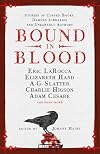
"A chilling anthology of stories of cursed and haunted books that brings together horror’s best and brightest..." There are 19 tales in all and below are some of my favorites:
📙 "The House Witch" by Alison Moore
- Ruth, who is extraordinary in her plainness, has a book. The book serves as a trusted companion rather than a mysterious object. What it's about and who it's by is unknown, but I'm glad she has it.
📗"Whatever Remains After You Leave Me" by Eric LaRocca
- It's amazing how show more quickly LaRocca can pull you in, get you invested, and shock you with a tragic twist. The ending left me unnerved and wondering if something else was invited in.
📕 "Broken Back Man" by Lucie Hardy
- This was an unexpected delight. At first I wasn't crazy about the narrator, but then it spiralled into something akin to Netflix's The Haunting of Hill House! Unlike the others, it's a body altering type of horror and changes up the pace!
📘 "Book Worm" by Isy Suttie
- Like a mix between a Stephen King novel and Twilight Zone's Time Enough at Last. What's unique about this tale is that the man is a willing participant in his own demise. The man's obsession is dangerous but never a burden. You will never love books as much as him and you don't want to.
📙 "Cora Jarrett Gets into Trouble" by Johnny Mains
- I appreciate how Mains wrote Mrs Jarrett's inner monologues as a scattered constant stream of thought, but never impossible to follow. You're not sure if what happens is real until it's all over!
What I loved most about the selection was the broad definition of what a book is. A "book" can be an album of photos, a diary, a scrying book, or serve as a guide or set of instructions, and it's not always found in a store or library. The tales are written in differing perspectives and with a diverse cast. It's perfect for spooky season, book lovers, and you can't beat the variety! show less
📙 "The House Witch" by Alison Moore
- Ruth, who is extraordinary in her plainness, has a book. The book serves as a trusted companion rather than a mysterious object. What it's about and who it's by is unknown, but I'm glad she has it.
📗"Whatever Remains After You Leave Me" by Eric LaRocca
- It's amazing how show more quickly LaRocca can pull you in, get you invested, and shock you with a tragic twist. The ending left me unnerved and wondering if something else was invited in.
📕 "Broken Back Man" by Lucie Hardy
- This was an unexpected delight. At first I wasn't crazy about the narrator, but then it spiralled into something akin to Netflix's The Haunting of Hill House! Unlike the others, it's a body altering type of horror and changes up the pace!
📘 "Book Worm" by Isy Suttie
- Like a mix between a Stephen King novel and Twilight Zone's Time Enough at Last. What's unique about this tale is that the man is a willing participant in his own demise. The man's obsession is dangerous but never a burden. You will never love books as much as him and you don't want to.
📙 "Cora Jarrett Gets into Trouble" by Johnny Mains
- I appreciate how Mains wrote Mrs Jarrett's inner monologues as a scattered constant stream of thought, but never impossible to follow. You're not sure if what happens is real until it's all over!
What I loved most about the selection was the broad definition of what a book is. A "book" can be an album of photos, a diary, a scrying book, or serve as a guide or set of instructions, and it's not always found in a store or library. The tales are written in differing perspectives and with a diverse cast. It's perfect for spooky season, book lovers, and you can't beat the variety! show less
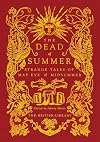
‘’Twilight, meanwhile, gave place to the first gathering night-the glow worms began to twinkle amid the darkness, and over a high cliff covered with fir trees, that rises out of the lake, gleamed the slender solitary crescent of the new moon. The time had passed away unobserved; but now the owls began to shriek, and the night-hawks burst, flapping their wings, from the covert.
Winter’s long darkness may be mystical and imposing, but summer is equally unsettling. Beneath its dazzling show more light lie long shadows and sultry evenings that coax even the cautious to lower their guard. Across Europe and beyond, folk calendars confirm this: on Walpurgisnacht, bonfires flare across Germanic hills to keep witches at bay; on Saint John’s Eve, Spaniards leap flames to ward off evil; Scandinavian Midsummer crowns lovers with flowers yet insists a maiden sleeping with seven wild herbs beneath her pillow will dream of her future husband; British folklore warns that foxgloves ring for fairies and that Stonehenge still hums with old blood-rites; and even Obon in Japan welcomes ancestral ghosts with lanterns floating down summer rivers. Such rituals remind us that the sunlit half of the year is as haunted as the dark.
Nothing underscores this better than actress Dulcie Gray’s tart reply to the notorious occultist Aleister Crowley: when he suggested sacrificing her at dawn in a Midsummer rite at Stonehenge, she dismissed him curtly, “I absolutely cannot—I don’t like getting up early.” In short, beneath the laughter and bright garlands, summer remains rich with unease, superstition, and the persistent whisper of things that stir in the light.
The First of May or Walburga’s Night (Caroline Pichler translated by R.P.Gillies):
An undoubtedly atmospheric tale of love, jealousy, obsession and witchcraft, set in a mystical spot of the Swiss Alps. Unfortunately, the language of the story has not aged well; the occasion of Walpurgisnacht wasn’t utilised, and the antagonist of the tale is much more interesting than the anaemic Alice.
The Suitable Surroundings (Ambrose Bierce): In an extremely cryptic story set in Cincinnati, a boy witnesses a man’s distress in the middle of a midsummer’s night, and we are offered a glimpse into the publishing industry and its hunger for horror stories. The ending is outrageously open for interpretation.
A Midsummer Night’s Marriage (J.Meade Falkner): Rich in Gothic atmosphere, this is a tale of travelling back in time in the haunting night of St. John’s Eve, of a doomed love and a broken man. It reminded me of an adult version of The Corpse Bride, a dance macabre between the land of the living and the realm of the dead and Protestant cruelty.
‘’The Spirit is me; I haunt this place!’’
The Looking Glass (Walter de la Mare): A garden that may be haunted becomes the meeting place of Alice and a strange elderly woman who seems to wait for her every afternoon. A very unsettling truth with a touch of Folk Horror and a moving closure…
Midsummer At Stonehenge (F.Britten Austin):
Arguably, the most common image associated with Midsummer’s Day is Stonehenge, one of the most mysterious and enticing wonders made by humans. This tale takes us back to the times of the Children of the Sun. A husband and a wife stand among the crowd that eagerly awaits the sun, enjoying the pleasures of early married life. A beautiful tale that pays homage to the people of the past who shaped History, some of them lost in the mists of time. A story rich in elegance, sensuality and spiritualism.
‘’For Hell has long claimed their hideous god. Long, long he dwelt among the hills, a brain-shattering vestige of an outworn age, but no longer his obscene talons clutch for the souls of living men, and his kingdom is a dead kingdom, peopled only by the ghosts of those who served him in his lifetimes and theirs.’’
The Black Stone (Robert E.Howard): Set in Hungary, this is the tale of an educated, inquisitive man who wants to verify the legends that surround a monolith taking place in Midsummer Night. Magyar Folklore is rather unique in Europe, and the monoliths are universally considered charged constructions. Here, its shadow speaks of barbarism and cruelty, and pure evil with one of the most hair-rising scenes of pagan orgies I have ever read.
‘’The dead may not - must not return!’’
The Withered Heart (G.G.Pendarves): This story paints not a warm, boisterous May but a May night of rain and cold and dark intentions. It is a dark tale of inherited malice and sin, of fighting against the corruption of your soul, of necromancy and pure evil, of the attraction between a spoiled woman and the intellectual who tries to resist his desire. A story that would give Poe a run for his money.
‘’It was the first day of May and witches were abroad in the night, she said - for it was a night of divination, a night of lovers.’’
May Day Eve (Nick Joaquin): It is May Eve - a seductive, mystic night in which girls perform divinations in front of mirrors to see their future husbands. It is a night of saints and sinners, a night when instead of your husband, you see the Deceiver right behind you…What starts as a sultry Gothic love story acquires a bitter, even tragic aura in the end. Some people are better off away from each other…
The Sale of Midsummer (Joan Aiken): According to a legend, such is the beauty of Midsummer Village that it exists for just three days each year. Two young men set out to find the truth, but each villager provides their own version of the story.
As these tales unfold, each offers a glimpse into the long shadows cast by Midsummer’s light: some rich in folklore and dread, others burdened by dated prose or aimless eclecticism. Taken together, they reveal a landscape of rituals, fears, and desires that stretch across centuries and cultures — proof that under the summer sun, darkness finds countless ways to speak. Yet even as the stories vary in power, one constant remains: the heavy hand of the editor, eager to remind us of his supposed daring and broad-minded curation, while often revealing only his shallow contempt for faith and tradition.
Johnny Mains boasts of being “eclectic to a fault,” but what shines through instead is smugness and the hollow superiority of yet another patronizing atheist who uses his platform to cheapen and sneer at Christianity while hiding behind the guise of inclusive curation. His editorial comments reek of self-congratulation and a fundamental contempt for the intelligence of readers, as if we should applaud every hackneyed line simply because he declares himself a champion of the obscure. Let us be clear: reading thousands of books does not make you a better editor—it makes you an efficient consumer. True discernment comes from respecting your audience and knowing when to shut up about your own tired ideology.
‘’Below him shadows were lengthening second by second, creeping across moor and marsh and up the sides of hills like vast grey ghosts. Standing on the brow overlooking the precipitous south end, he could see vague stone pillars set in a circle immediately beneath. In daylight, no doubt they would look mundane enough, but here in twilight their very vagueness seemed to promise life: at any moment they might begin to shuffle and dance. A half-forgotten tale about madens changed into stones for dancing on the Sabbath came back to him.’’
Night on Roughtor (Donald R. Rawe): A Cornish tale of will o’the wisps, moaning winds in the moors, ghosts, enchanted hills, piskies, spriggans, and three very foolish young men.
‘’He didn’t finish. The words were torn away from him on the rising wind which moaned now with a harsh eerie voice of its own…sighing and creaking through furze, stunted bushes and round the monolith shapes emerging beast -like through the thick air.’’
Where Phantoms Stir (Mary Williams): I won’t forget this story soon. Starting with a haunting encounter of a troubled man and a strange young woman as the wind rises through the mist, it soon becomes a terrifying symphony of unholy contact between this world and the next, the innocent sacrifice and the works of the Evil One and its horrendous crowd. Atmospheric and tragic, and my favourite story in the collection.
Foxgloves (Susan Price): There is nothing more frightening than walking alone at night, especially on certain nights of the year. Even the streetlights seem to hide dark corners in an area steeped in legends told to you by your grandmother. A sinister take on the urban legend of the Vanishing Hitchhiker and the myth of Rusalka. This story is full of haunting nocturnal descriptions of nature and the neighbourhood streets that urge you to both be alert and let yourself become absorbed by the beauty in this darkness.
The Midsummer Emissary (Minagawa Hiroko, translated by Ginny Tapley Takemori): The story starts with a mysterious female voice whispering a message that makes no sense. Our young protagonist has visions of a mysterious dark haired woman and seems to be followed by an elderly lady. Each page gives birth to more and more questions in a very strange tale of omens, male prostitutes, sexuality and past secrets. I still can’t say I have fully grasped the purpose of the story, but it is weird. Essentially Japanese.
Heaven on Earth (Jenn Ashworth): A newly-married couple finds itself trapped in a tropical resort during the first wave of COVID. They are now the only guests, and their efforts to contact the British Embassy are to no avail. Despite the fact that they have one of the earthly paradises at their disposal, they become prey to forced inertia and the strange proximity that comes with quarantine, while the man is a typical example of the entitled British upper class. And when you realise what has actually happened, you stare speechless.
In the end, The Dead of Summer is a varied but often rewarding collection. Some stories shine with genuine atmosphere, strong folkloric roots, and unsettling imagery that lingers long after the last page. Others feel outdated or thin, but even then, they add texture to the broader picture of how humanity has wrestled with the long, haunted light of summer nights. For readers who appreciate folklore, ghost stories, and the lingering echo of the past in the present, this collection offers enough moments of true unease and subtle beauty to make it worth their time.
‘’ Midsummer's Eve too- an unlucky night to be out. It was one of the turning days of the year, according to his granny, like Halloween, Christmas Eve and May Day. They were the days when the year turned from winter to spring, from spring to summer, from summer to autumn and then to winter again. They were different from other days… more open. The nights were even more so. Ghosts walked on those nights that couldn't walk other nights. Things were seen on those nights that couldn't be seen on other nights. On those nights, magic worked. According to Granny.’’
My reviews can also be found on https://theopinionatedreaderblog.wordpress.com/ show less
Winter’s long darkness may be mystical and imposing, but summer is equally unsettling. Beneath its dazzling show more light lie long shadows and sultry evenings that coax even the cautious to lower their guard. Across Europe and beyond, folk calendars confirm this: on Walpurgisnacht, bonfires flare across Germanic hills to keep witches at bay; on Saint John’s Eve, Spaniards leap flames to ward off evil; Scandinavian Midsummer crowns lovers with flowers yet insists a maiden sleeping with seven wild herbs beneath her pillow will dream of her future husband; British folklore warns that foxgloves ring for fairies and that Stonehenge still hums with old blood-rites; and even Obon in Japan welcomes ancestral ghosts with lanterns floating down summer rivers. Such rituals remind us that the sunlit half of the year is as haunted as the dark.
Nothing underscores this better than actress Dulcie Gray’s tart reply to the notorious occultist Aleister Crowley: when he suggested sacrificing her at dawn in a Midsummer rite at Stonehenge, she dismissed him curtly, “I absolutely cannot—I don’t like getting up early.” In short, beneath the laughter and bright garlands, summer remains rich with unease, superstition, and the persistent whisper of things that stir in the light.
The First of May or Walburga’s Night (Caroline Pichler translated by R.P.Gillies):
An undoubtedly atmospheric tale of love, jealousy, obsession and witchcraft, set in a mystical spot of the Swiss Alps. Unfortunately, the language of the story has not aged well; the occasion of Walpurgisnacht wasn’t utilised, and the antagonist of the tale is much more interesting than the anaemic Alice.
The Suitable Surroundings (Ambrose Bierce): In an extremely cryptic story set in Cincinnati, a boy witnesses a man’s distress in the middle of a midsummer’s night, and we are offered a glimpse into the publishing industry and its hunger for horror stories. The ending is outrageously open for interpretation.
A Midsummer Night’s Marriage (J.Meade Falkner): Rich in Gothic atmosphere, this is a tale of travelling back in time in the haunting night of St. John’s Eve, of a doomed love and a broken man. It reminded me of an adult version of The Corpse Bride, a dance macabre between the land of the living and the realm of the dead and Protestant cruelty.
‘’The Spirit is me; I haunt this place!’’
The Looking Glass (Walter de la Mare): A garden that may be haunted becomes the meeting place of Alice and a strange elderly woman who seems to wait for her every afternoon. A very unsettling truth with a touch of Folk Horror and a moving closure…
Midsummer At Stonehenge (F.Britten Austin):
Arguably, the most common image associated with Midsummer’s Day is Stonehenge, one of the most mysterious and enticing wonders made by humans. This tale takes us back to the times of the Children of the Sun. A husband and a wife stand among the crowd that eagerly awaits the sun, enjoying the pleasures of early married life. A beautiful tale that pays homage to the people of the past who shaped History, some of them lost in the mists of time. A story rich in elegance, sensuality and spiritualism.
‘’For Hell has long claimed their hideous god. Long, long he dwelt among the hills, a brain-shattering vestige of an outworn age, but no longer his obscene talons clutch for the souls of living men, and his kingdom is a dead kingdom, peopled only by the ghosts of those who served him in his lifetimes and theirs.’’
The Black Stone (Robert E.Howard): Set in Hungary, this is the tale of an educated, inquisitive man who wants to verify the legends that surround a monolith taking place in Midsummer Night. Magyar Folklore is rather unique in Europe, and the monoliths are universally considered charged constructions. Here, its shadow speaks of barbarism and cruelty, and pure evil with one of the most hair-rising scenes of pagan orgies I have ever read.
‘’The dead may not - must not return!’’
The Withered Heart (G.G.Pendarves): This story paints not a warm, boisterous May but a May night of rain and cold and dark intentions. It is a dark tale of inherited malice and sin, of fighting against the corruption of your soul, of necromancy and pure evil, of the attraction between a spoiled woman and the intellectual who tries to resist his desire. A story that would give Poe a run for his money.
‘’It was the first day of May and witches were abroad in the night, she said - for it was a night of divination, a night of lovers.’’
May Day Eve (Nick Joaquin): It is May Eve - a seductive, mystic night in which girls perform divinations in front of mirrors to see their future husbands. It is a night of saints and sinners, a night when instead of your husband, you see the Deceiver right behind you…What starts as a sultry Gothic love story acquires a bitter, even tragic aura in the end. Some people are better off away from each other…
The Sale of Midsummer (Joan Aiken): According to a legend, such is the beauty of Midsummer Village that it exists for just three days each year. Two young men set out to find the truth, but each villager provides their own version of the story.
As these tales unfold, each offers a glimpse into the long shadows cast by Midsummer’s light: some rich in folklore and dread, others burdened by dated prose or aimless eclecticism. Taken together, they reveal a landscape of rituals, fears, and desires that stretch across centuries and cultures — proof that under the summer sun, darkness finds countless ways to speak. Yet even as the stories vary in power, one constant remains: the heavy hand of the editor, eager to remind us of his supposed daring and broad-minded curation, while often revealing only his shallow contempt for faith and tradition.
Johnny Mains boasts of being “eclectic to a fault,” but what shines through instead is smugness and the hollow superiority of yet another patronizing atheist who uses his platform to cheapen and sneer at Christianity while hiding behind the guise of inclusive curation. His editorial comments reek of self-congratulation and a fundamental contempt for the intelligence of readers, as if we should applaud every hackneyed line simply because he declares himself a champion of the obscure. Let us be clear: reading thousands of books does not make you a better editor—it makes you an efficient consumer. True discernment comes from respecting your audience and knowing when to shut up about your own tired ideology.
‘’Below him shadows were lengthening second by second, creeping across moor and marsh and up the sides of hills like vast grey ghosts. Standing on the brow overlooking the precipitous south end, he could see vague stone pillars set in a circle immediately beneath. In daylight, no doubt they would look mundane enough, but here in twilight their very vagueness seemed to promise life: at any moment they might begin to shuffle and dance. A half-forgotten tale about madens changed into stones for dancing on the Sabbath came back to him.’’
Night on Roughtor (Donald R. Rawe): A Cornish tale of will o’the wisps, moaning winds in the moors, ghosts, enchanted hills, piskies, spriggans, and three very foolish young men.
‘’He didn’t finish. The words were torn away from him on the rising wind which moaned now with a harsh eerie voice of its own…sighing and creaking through furze, stunted bushes and round the monolith shapes emerging beast -like through the thick air.’’
Where Phantoms Stir (Mary Williams): I won’t forget this story soon. Starting with a haunting encounter of a troubled man and a strange young woman as the wind rises through the mist, it soon becomes a terrifying symphony of unholy contact between this world and the next, the innocent sacrifice and the works of the Evil One and its horrendous crowd. Atmospheric and tragic, and my favourite story in the collection.
Foxgloves (Susan Price): There is nothing more frightening than walking alone at night, especially on certain nights of the year. Even the streetlights seem to hide dark corners in an area steeped in legends told to you by your grandmother. A sinister take on the urban legend of the Vanishing Hitchhiker and the myth of Rusalka. This story is full of haunting nocturnal descriptions of nature and the neighbourhood streets that urge you to both be alert and let yourself become absorbed by the beauty in this darkness.
The Midsummer Emissary (Minagawa Hiroko, translated by Ginny Tapley Takemori): The story starts with a mysterious female voice whispering a message that makes no sense. Our young protagonist has visions of a mysterious dark haired woman and seems to be followed by an elderly lady. Each page gives birth to more and more questions in a very strange tale of omens, male prostitutes, sexuality and past secrets. I still can’t say I have fully grasped the purpose of the story, but it is weird. Essentially Japanese.
Heaven on Earth (Jenn Ashworth): A newly-married couple finds itself trapped in a tropical resort during the first wave of COVID. They are now the only guests, and their efforts to contact the British Embassy are to no avail. Despite the fact that they have one of the earthly paradises at their disposal, they become prey to forced inertia and the strange proximity that comes with quarantine, while the man is a typical example of the entitled British upper class. And when you realise what has actually happened, you stare speechless.
In the end, The Dead of Summer is a varied but often rewarding collection. Some stories shine with genuine atmosphere, strong folkloric roots, and unsettling imagery that lingers long after the last page. Others feel outdated or thin, but even then, they add texture to the broader picture of how humanity has wrestled with the long, haunted light of summer nights. For readers who appreciate folklore, ghost stories, and the lingering echo of the past in the present, this collection offers enough moments of true unease and subtle beauty to make it worth their time.
‘’ Midsummer's Eve too- an unlucky night to be out. It was one of the turning days of the year, according to his granny, like Halloween, Christmas Eve and May Day. They were the days when the year turned from winter to spring, from spring to summer, from summer to autumn and then to winter again. They were different from other days… more open. The nights were even more so. Ghosts walked on those nights that couldn't walk other nights. Things were seen on those nights that couldn't be seen on other nights. On those nights, magic worked. According to Granny.’’
My reviews can also be found on https://theopinionatedreaderblog.wordpress.com/ show less
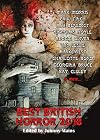
This could have been titled Best British Weird Stories 2018 because the anthology has some of the flavor of those Year’s Best Weird Stories put out by Undertow Publications. Most of the stories are not horror of the visceral, gruesome, and frightening sort. They range from surrealism – mostly pointless – to well-done variations of old horror situations.
The Reggie Oliver stories did not disappoint even if one, “A Day with the Delusionists” is a satire on poets and Oxford show more University, wit and no horror though there is a murder. The Delusionists is an Oxford club of students, and, at one of their costume parties in 1973, an aging poet ends up dead.
The other Oliver story is decidedly something else. First appearing in a theme anthology built around Oscar Wilde’s The Portrait of Dorian Gray, “Love and Death” reverses Wilde’s premise of a portrait that absorbs the moral and physical failings of its subject. Here the circus strongman, who stands as the model for Love in the titular painting, begins to weaken. Too late, the painter realizes that, John Keats to the contrary, beauty and truth are not the same as the figure of Death changes in the painting.
Death and art beautiful and dangerous also show up in David McGachey’s “TING-A-LING-A-LING”. Here, in the middle of World War One, folklorist Dr. Lawrence is told about the Awakening Clock, an elaborate mechanism that is not only a clock – which strikes an added hour – but a clockwork animation of a village. It’s an effective tale that manages to pleasingly weld several horror motifs together. Dr. Lawrence is, evidently, a series character from McGachey, and, even before I read the author’s bio notes, the influence of M. R. James was noticeable.
While McGachey’s tale seems fresh even if it looks back to James’ work, there is a decided antique air about Colette De Curzon’s “Paynom’s Trio”. That’s not surprising. It was first written in 1949 and not published until 2018. It’s a pleasant enough story that goes through its paces to a rather slight ending. It’s yet another tale of a beautiful but dangerous work of art, here a score for piano, cello, and violin that falls out of a book the narrator impulsively buys. Naturally, being a music buff, he gets together with his friends to play it.
Besides menacing art, there’s another theme running through this anthology: alienation and social atomization whether it’s the weakening of family ties, isolation, or perversion and abandonment of the basic human impulse to reproduce. Unfortunately, that theme is not that well developed in most of the stories.
An exception is “The Affair” from James Everington, a fresh tale with unexpected turns, and one of the anthology’s highlights. A study of how our better selves, the ones others love, can erode away with time, it’s the story of Peter and Lynda, a married couple with child. One night, after being stood up by his best friend, Peter finds himself alone in a pub when a woman who looks an awful lot like Lynda, a younger Lynda, propositions him. He accepts. After all, it seems to be Lynda albeit the Lynda he once knew. It’s not really cheating. Perhaps it’s some trick of Lynda’s to rekindle their marriage. But what if it’s not his wife and what if Lynda has her own version of Peter?
There doesn’t seem to have been a lot of love or friendship in the life of Sian, the protagonist in A. K. Benedict’s post-mortem fantasy “Departures”. And now she’s dead and haunting the departures lounge in the Dublin Airport. The story is inventive in its depiction of the living and the dead, ghosts to each other, and what needs to be done to leave the airport purgatory, but the ending is muddled and muted.
The alienation is even stronger with the loner protagonist of Laura Mauro’s “Sun Dogs”. The child of Christian survivalists, Sadie has led a childhood filled with talk of the Rapture and preparing for the End Times. The parents are dead now, but she still lives in the desert and, one night, after almost hitting a man prowling around the highway with a rifle, she picks up June, a woman who might have a connection with some recent killings in the area. I found the ending morally appalling, but I suspect Mauro intended something else.
If “Sun Dogs” represents the dangers of feminine compassion and empathy, two other stories have the maternal instinct suborned or perverted.
“Shell Baby” from V. H. Leslie is another highlight of the book, and I’m not just saying that because it’s set in the Orkneys where I was a few weeks ago. Elspeth, a self-employed florist, feels life and business wearing her down so she gets a house on an isolated island. But one night, under the green glow of the Northern Lights, she impulsively bathes in the sea. The next morning she finds a strange creature on the beach. Leslie consciously reworks the Frankenstein story – after all, Frankenstein built his second monster in the Orkneys – to a horrific end. This is one of the few stories in the book which is genuinely horrifying.
Like Elspeth, the heroine of Mark Morris’ “We Who Sing Beneath the Ground” is also single and childless. This is a well-done story of the old school as teacher Stacy goes out to a Cornwall farm to see why one of her pupils hasn’t shown up for class lately. I don’t know if the bit of Cornish folklore cited is real or not.
Claire Dean’s “The Unwish” is another take on social separation and a subtle one at that. Amy, along with her domineering older sister Sara and her parents, are returning to the old family vacation cabin after 20 years. Amy is eagerly awaiting her new boyfriend showing up. But things take a peculiar turn when Amy begins to think she used to have sisters and not just a sister. And what if Aidan, the new boyfriend, really doesn’t love her. This story rewards a re-reading. Dean may not tie everything up neatly, but the loose strings of the story do not spoil it. It’s a weird story that uses ambiguity well.
I can’t say the same for Nicholas Royle’s “Dispossession” though it’s about the social isolation of a man. Our recently divorced protagonist doesn’t talk to many people apart from estate agents as a he hunts for a new apartment. We hear about his kids and washing their clothes. We never see or hear the kids. The man also spends some time voyeuristically watching the neighboring houses and apartments through binoculars. The abrupt ending is something of a letdown for a story that had promise. I think I know what Royle intended. I just don’t think he explained the why of it well.
Frittering away promise and reading like an unresolved piece of flash fiction that was way too long, Ray Cluley’s “In the Light of St. Ives” starts out well. Emily needs to go to the Welsh seaside resort to find out why her younger sister, Claire, an impulsive and artistic sort, set her rented house on fire. From her bed and under psychiatric observation, Claire tells her sister there’s some problem with the colors in the place. Cluley’s three sentence climax welshes on the promise of revealing not only cause but effect.
Two stories annoyed me with their surrealism and obscurity: Georgina Bruce’s “The Book of Dreems” and Cate Gardner’s “Fragments of a Broken Doll”. I could not be bothered to decipher what they were about assuming there was a coherent intent.
Bruce’s tale centers around a creature who may be a woman locked up in a house or she may be a robot locked up in a house. Her boyfriend appears to be some combination of inventor or service technician/stalker and maybe a would-be killer.
Gardner’s tale is about Trill, who seems to live in a house by a prison with Harry who may be a prison guard or policeman and probably isn’t related to her. An escaped convict shows up.
There’s no problem with ambiguity in two stories that, if not walking new ground, at least deport themselves respectively down old paths.
Charlotte Bond’s “The Lies We Tell” is an old style morality tale. Its thoroughly unlikeable protagonist, Cathy, is a real-estate agent, disloyal to her husband, and a selfish wife and mother. But, above all, she is an habitual liar, so you know, when she starts hearing noises whenever she utters a falsehood, a reckoning is coming.
You could, I suppose, call Mark West’s non-supernatural “The Taste of Her” a biter-bitten story. But its punishment seems way out of proportion to the crime. That crime would be adultery. Ian goes on a flight with his old friend Keith in Keith’s Cessna. And what a ride it is as Keith threatens to crash the plane into the ground if Ian doesn’t confess to sleeping with the former’s wife. And that’s just the beginning of Ian’s problems. This one also justifies inclusion in a horror anthology.
And an old stand-by of British horror shows up, Jack the Ripper, in Paul Finch’s “Tools of the Trade”. A local councilman and amateur ghosthunter approaches a local reporter with a profitable proposition: help him recover Jack the Ripper’s knives from a shut up Great Northern Hotel in a Lancashire town. The night excursion into the hotel features the literary equivalents of jump scares, and Finch drags out some common horror images. But the ending is subtle, a nice rejection of expected plot “surprises”. It was another highlight of the book. show less
The Reggie Oliver stories did not disappoint even if one, “A Day with the Delusionists” is a satire on poets and Oxford show more University, wit and no horror though there is a murder. The Delusionists is an Oxford club of students, and, at one of their costume parties in 1973, an aging poet ends up dead.
The other Oliver story is decidedly something else. First appearing in a theme anthology built around Oscar Wilde’s The Portrait of Dorian Gray, “Love and Death” reverses Wilde’s premise of a portrait that absorbs the moral and physical failings of its subject. Here the circus strongman, who stands as the model for Love in the titular painting, begins to weaken. Too late, the painter realizes that, John Keats to the contrary, beauty and truth are not the same as the figure of Death changes in the painting.
Death and art beautiful and dangerous also show up in David McGachey’s “TING-A-LING-A-LING”. Here, in the middle of World War One, folklorist Dr. Lawrence is told about the Awakening Clock, an elaborate mechanism that is not only a clock – which strikes an added hour – but a clockwork animation of a village. It’s an effective tale that manages to pleasingly weld several horror motifs together. Dr. Lawrence is, evidently, a series character from McGachey, and, even before I read the author’s bio notes, the influence of M. R. James was noticeable.
While McGachey’s tale seems fresh even if it looks back to James’ work, there is a decided antique air about Colette De Curzon’s “Paynom’s Trio”. That’s not surprising. It was first written in 1949 and not published until 2018. It’s a pleasant enough story that goes through its paces to a rather slight ending. It’s yet another tale of a beautiful but dangerous work of art, here a score for piano, cello, and violin that falls out of a book the narrator impulsively buys. Naturally, being a music buff, he gets together with his friends to play it.
Besides menacing art, there’s another theme running through this anthology: alienation and social atomization whether it’s the weakening of family ties, isolation, or perversion and abandonment of the basic human impulse to reproduce. Unfortunately, that theme is not that well developed in most of the stories.
An exception is “The Affair” from James Everington, a fresh tale with unexpected turns, and one of the anthology’s highlights. A study of how our better selves, the ones others love, can erode away with time, it’s the story of Peter and Lynda, a married couple with child. One night, after being stood up by his best friend, Peter finds himself alone in a pub when a woman who looks an awful lot like Lynda, a younger Lynda, propositions him. He accepts. After all, it seems to be Lynda albeit the Lynda he once knew. It’s not really cheating. Perhaps it’s some trick of Lynda’s to rekindle their marriage. But what if it’s not his wife and what if Lynda has her own version of Peter?
There doesn’t seem to have been a lot of love or friendship in the life of Sian, the protagonist in A. K. Benedict’s post-mortem fantasy “Departures”. And now she’s dead and haunting the departures lounge in the Dublin Airport. The story is inventive in its depiction of the living and the dead, ghosts to each other, and what needs to be done to leave the airport purgatory, but the ending is muddled and muted.
The alienation is even stronger with the loner protagonist of Laura Mauro’s “Sun Dogs”. The child of Christian survivalists, Sadie has led a childhood filled with talk of the Rapture and preparing for the End Times. The parents are dead now, but she still lives in the desert and, one night, after almost hitting a man prowling around the highway with a rifle, she picks up June, a woman who might have a connection with some recent killings in the area. I found the ending morally appalling, but I suspect Mauro intended something else.
If “Sun Dogs” represents the dangers of feminine compassion and empathy, two other stories have the maternal instinct suborned or perverted.
“Shell Baby” from V. H. Leslie is another highlight of the book, and I’m not just saying that because it’s set in the Orkneys where I was a few weeks ago. Elspeth, a self-employed florist, feels life and business wearing her down so she gets a house on an isolated island. But one night, under the green glow of the Northern Lights, she impulsively bathes in the sea. The next morning she finds a strange creature on the beach. Leslie consciously reworks the Frankenstein story – after all, Frankenstein built his second monster in the Orkneys – to a horrific end. This is one of the few stories in the book which is genuinely horrifying.
Like Elspeth, the heroine of Mark Morris’ “We Who Sing Beneath the Ground” is also single and childless. This is a well-done story of the old school as teacher Stacy goes out to a Cornwall farm to see why one of her pupils hasn’t shown up for class lately. I don’t know if the bit of Cornish folklore cited is real or not.
Claire Dean’s “The Unwish” is another take on social separation and a subtle one at that. Amy, along with her domineering older sister Sara and her parents, are returning to the old family vacation cabin after 20 years. Amy is eagerly awaiting her new boyfriend showing up. But things take a peculiar turn when Amy begins to think she used to have sisters and not just a sister. And what if Aidan, the new boyfriend, really doesn’t love her. This story rewards a re-reading. Dean may not tie everything up neatly, but the loose strings of the story do not spoil it. It’s a weird story that uses ambiguity well.
I can’t say the same for Nicholas Royle’s “Dispossession” though it’s about the social isolation of a man. Our recently divorced protagonist doesn’t talk to many people apart from estate agents as a he hunts for a new apartment. We hear about his kids and washing their clothes. We never see or hear the kids. The man also spends some time voyeuristically watching the neighboring houses and apartments through binoculars. The abrupt ending is something of a letdown for a story that had promise. I think I know what Royle intended. I just don’t think he explained the why of it well.
Frittering away promise and reading like an unresolved piece of flash fiction that was way too long, Ray Cluley’s “In the Light of St. Ives” starts out well. Emily needs to go to the Welsh seaside resort to find out why her younger sister, Claire, an impulsive and artistic sort, set her rented house on fire. From her bed and under psychiatric observation, Claire tells her sister there’s some problem with the colors in the place. Cluley’s three sentence climax welshes on the promise of revealing not only cause but effect.
Two stories annoyed me with their surrealism and obscurity: Georgina Bruce’s “The Book of Dreems” and Cate Gardner’s “Fragments of a Broken Doll”. I could not be bothered to decipher what they were about assuming there was a coherent intent.
Bruce’s tale centers around a creature who may be a woman locked up in a house or she may be a robot locked up in a house. Her boyfriend appears to be some combination of inventor or service technician/stalker and maybe a would-be killer.
Gardner’s tale is about Trill, who seems to live in a house by a prison with Harry who may be a prison guard or policeman and probably isn’t related to her. An escaped convict shows up.
There’s no problem with ambiguity in two stories that, if not walking new ground, at least deport themselves respectively down old paths.
Charlotte Bond’s “The Lies We Tell” is an old style morality tale. Its thoroughly unlikeable protagonist, Cathy, is a real-estate agent, disloyal to her husband, and a selfish wife and mother. But, above all, she is an habitual liar, so you know, when she starts hearing noises whenever she utters a falsehood, a reckoning is coming.
You could, I suppose, call Mark West’s non-supernatural “The Taste of Her” a biter-bitten story. But its punishment seems way out of proportion to the crime. That crime would be adultery. Ian goes on a flight with his old friend Keith in Keith’s Cessna. And what a ride it is as Keith threatens to crash the plane into the ground if Ian doesn’t confess to sleeping with the former’s wife. And that’s just the beginning of Ian’s problems. This one also justifies inclusion in a horror anthology.
And an old stand-by of British horror shows up, Jack the Ripper, in Paul Finch’s “Tools of the Trade”. A local councilman and amateur ghosthunter approaches a local reporter with a profitable proposition: help him recover Jack the Ripper’s knives from a shut up Great Northern Hotel in a Lancashire town. The night excursion into the hotel features the literary equivalents of jump scares, and Finch drags out some common horror images. But the ending is subtle, a nice rejection of expected plot “surprises”. It was another highlight of the book. show less
 This review was written for LibraryThing Early Reviewers.
Took me a while to get through this anthology of horror stories. Found a lot of the tales rather pedestrian e.g. Paymon’s Trio by Collette de Curzon covers similar ground to Lovecraft’s The Music of Erich Zann but fizzles out in an anti-climactic damp squib of ending. Others come across as ill advised stylistic experiments: Fragments of a Broken Doll by Cate Gardner and The Book of Dreems (sic) seem to be trying for some kind of dreamlike atmospheric, hallucinatory atmosphere but come show more across as pretentious and largely incomprehensible.
Things do pick up in the latter half of the book: Paul Finch’s Tools of the Trade could be yet another hackneyed Jack the Ripper Tale but impresses with its realistically wrought post-industrial north of England setting. Laura Mauro offers an intriguingly different spin on the werewolf myth in Sun Dogs whose survivalist sub-text perhaps has additional resonance during the current Covi19 crisis. Mark Morris, whose novels I have to admit I’ve never much liked, provides an effective tale of rustic cosmic horror in We Sing Beneath the Ground, possibly inspired by the old monster movie classic “Gorgo”. Best story of the bunch is Shell Baby by HV Leslie – a disturbing account of unconventional motherhood in which the protagonist doesn’t so much give birth to a monster as adopt it, with dire consequences. All in all a mixed bag, but worth a look for the stronger stories on offer. show less
Things do pick up in the latter half of the book: Paul Finch’s Tools of the Trade could be yet another hackneyed Jack the Ripper Tale but impresses with its realistically wrought post-industrial north of England setting. Laura Mauro offers an intriguingly different spin on the werewolf myth in Sun Dogs whose survivalist sub-text perhaps has additional resonance during the current Covi19 crisis. Mark Morris, whose novels I have to admit I’ve never much liked, provides an effective tale of rustic cosmic horror in We Sing Beneath the Ground, possibly inspired by the old monster movie classic “Gorgo”. Best story of the bunch is Shell Baby by HV Leslie – a disturbing account of unconventional motherhood in which the protagonist doesn’t so much give birth to a monster as adopt it, with dire consequences. All in all a mixed bag, but worth a look for the stronger stories on offer. show less
This review was written for LibraryThing Early Reviewers.Awards

You May Also Like
Associated Authors
Statistics
- Works
- 32
- Also by
- 16
- Members
- 375
- Popularity
- #64,332
- Rating
- 3.6
- Reviews
- 17
- ISBNs
- 31
