
Jon Macy
Author of Teleny and Camille
About the Author
Image credit: By Sinasham - Own work, CC BY-SA 3.0, https://commons.wikimedia.org/w/index.php?curid=16201241
Works by Jon Macy
Fearful Hunter #2 1 copy
Associated Works
Tagged
Common Knowledge
- Birthdate
- 1964-09-11
- Gender
- male
- Nationality
- USA
- Associated Place (for map)
- USA
Members
Reviews
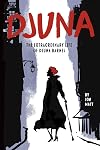
Lovingly drawn, in a broad style reminiscent of Persepolis and other self-serious histories, with only splashes of maroon across Djuna's hair to break up the grayscale. The landscapes and backgrounds are meticulously drawn, while the people are often splashes of white and black suggesting their profile and emotion more than their features.
Macy's biography is too relentlessly chronological for its own good. And while he throws around the word genius, he never offers an explanation. A show more biography of Joyce would dwell on his human and humorous characters, the astounding command he demonstrated of the Western canon. Hemingway's biography would dwell on terse prose and doomed, fighting men. What exactly did Djuna Barnes offer the world that no one else could?
I've spent days laboring through 310 pages, and I still don't know. show less
Macy's biography is too relentlessly chronological for its own good. And while he throws around the word genius, he never offers an explanation. A show more biography of Joyce would dwell on his human and humorous characters, the astounding command he demonstrated of the Western canon. Hemingway's biography would dwell on terse prose and doomed, fighting men. What exactly did Djuna Barnes offer the world that no one else could?
I've spent days laboring through 310 pages, and I still don't know. show less
I'm a little torn by my rating because I do feel that Djuna Barnes is someone worth learning about, but the execution of the book just had a few too many stumbles for her charisma to overcome.
Barnes is an LGBTQIA+ icon who knew most everyone in the Modernist movement and the "Lost Generation" social scene of the 1920s and 1930s. She broke into writing as a journalist, became known for her illustrations, short stories, and novels, but ultimately evolved into a prickly and reclusive cult show more celebrity.
The first third of the book has some energy as Barnes uses her talents to climb out of anonymity and a messed up family situation, but the parade of celebrity cameos, the sidelining of her career by a toxic relationship, her growing bitterness and some mental health issues, make the back end of the book -- and her very long life -- a bit of a trudge.
Unfortunately, the chronology of the book gets a little squishy at times with flashbacks and the vague passage of decades, and this dramatization is a little careless with historical figures and facts.
The narration gives the impression of a nonfiction work, but the author breaks out of the objective tone a few times to interject some personal asides, including the fact that he is completely making up one celebrity encounter just because he wanted it to happen. In another scene, John Steinbeck shows up in Paris in the 1920s yelling how he is the author of The Grapes of Wrath -- which wasn't published until 1939 -- even though my brief research indicates he was attending Stanford and living in either California or New York at the time, not going to Paris until the 1940s.
Creator Jon Macy is a bit too obsessed with all of Barnes' famous acquaintances, shoehorning in around fifty of them. Usually, they are fully named, but a few are left to be worked out by only their first name or nickname, including Rudolph "Silas" Glossop, Ernst "Putzi" Hanfstaengl, Isadora Duncan, Harry Macelhone, and Dan Mahoney (inspiration for Dr. Matthew O'Connor in Barnes' Nightwood). And for some reason John Ferrar Holms is called John Holmes.
Macy seems like a genuine fan of Barnes, and his enthusiasm is almost contagious, but the book is just a bit too long and too willing to "print the legend." show less
Barnes is an LGBTQIA+ icon who knew most everyone in the Modernist movement and the "Lost Generation" social scene of the 1920s and 1930s. She broke into writing as a journalist, became known for her illustrations, short stories, and novels, but ultimately evolved into a prickly and reclusive cult show more celebrity.
The first third of the book has some energy as Barnes uses her talents to climb out of anonymity and a messed up family situation, but the parade of celebrity cameos, the sidelining of her career by a toxic relationship, her growing bitterness and some mental health issues, make the back end of the book -- and her very long life -- a bit of a trudge.
Unfortunately, the chronology of the book gets a little squishy at times with flashbacks and the vague passage of decades, and this dramatization is a little careless with historical figures and facts.
The narration gives the impression of a nonfiction work, but the author breaks out of the objective tone a few times to interject some personal asides, including the fact that he is completely making up one celebrity encounter just because he wanted it to happen. In another scene, John Steinbeck shows up in Paris in the 1920s yelling how he is the author of The Grapes of Wrath -- which wasn't published until 1939 -- even though my brief research indicates he was attending Stanford and living in either California or New York at the time, not going to Paris until the 1940s.
Creator Jon Macy is a bit too obsessed with all of Barnes' famous acquaintances, shoehorning in around fifty of them. Usually, they are fully named, but a few are left to be worked out by only their first name or nickname, including Rudolph "Silas" Glossop, Ernst "Putzi" Hanfstaengl, Isadora Duncan, Harry Macelhone, and Dan Mahoney (inspiration for Dr. Matthew O'Connor in Barnes' Nightwood). And for some reason John Ferrar Holms is called John Holmes.
Macy seems like a genuine fan of Barnes, and his enthusiasm is almost contagious, but the book is just a bit too long and too willing to "print the legend." show less

Excellent adaptation of a book to a graphic novel. I appreciated that Jon Macy retained the language of the Victorian era. Coupled with his drawings, the story takes on a modern feel while retaining the historical setting. The reader remains aware of the times in which this daring story of homosexual love was written. I can only imagine the illicit thrill of penning Teleny in the 1890s; the tale edges beyond the erotic to pornographic even by today's standards.
I was amused to find that two show more books I recently read unexpectedly added context to the story line. The circle of writers was, I am sure, aware of the Victorian practice of using flowers to convey a sentiment (lavender for mistrust and heliotrope for devoted affection, sunflowers for false riches). I only became aware of this from reading The Language of Flowers. There were references throughout of Hadrian's relationship with Antinous and I read Memoirs of Hadrian just this summer.
Not recommended for any members of my family, who would probably prefer to think I have never besmirched my eyes with something so lascivious, but anyone looking for a finely drawn, modern interpretation of a tragic love story will enjoy Teleny and Camille. show less
I was amused to find that two show more books I recently read unexpectedly added context to the story line. The circle of writers was, I am sure, aware of the Victorian practice of using flowers to convey a sentiment (lavender for mistrust and heliotrope for devoted affection, sunflowers for false riches). I only became aware of this from reading The Language of Flowers. There were references throughout of Hadrian's relationship with Antinous and I read Memoirs of Hadrian just this summer.
Not recommended for any members of my family, who would probably prefer to think I have never besmirched my eyes with something so lascivious, but anyone looking for a finely drawn, modern interpretation of a tragic love story will enjoy Teleny and Camille. show less

Sometimes, you back a project on Kickstarter, because it's pointed out to you by someone you respect, and you support that kind of thing overall. I like gay-centered comics, I heard about this from Alex Woolfson, it looked interesting, and so I went for it. And... well, it's not like it's bad exactly, but... yeah.
So this is a contemporary story, set near a small town, where our first main character, Oisin, is apprenticed to a local druid, and nearing the completion of his training. That'll show more involve binding himself to a god of nature, and yet he finds his attention drawn at a party to a werewolf, Byron. And that's dangerous, because werewolves, once they bond, mate for life.
So the story proceeds as you might expect - Oisin is encouraged to complete his training and fulfill the goals of the druids, but Byron seems like a good partner for him. There are some twists in the story, but the overall strokes of it aren't surprising. You know what you're going to get.
The art is often really good, but variable - the more complex, druidic vision stuff is often really interesting, and creepy, and the nature scenes are also well executed. But the character work is spottier, and it wasn't always easy to tell what character it was I was looking at.
The bigger thing is all the sexual content. There's a lot of sex in this - between men, and between men and gods, which can get very overwrought. But the scenes are for the most part not relevant to the plot or to the furthering of the characters, and that doesn't really make me that happy. There's also a decent amount of half-naked guys and such in unrealistic ways, which adds to this air. Nothing wrong with drawing guys in different states of undress, but if it's as part of a story, I want it to connect up better.
So... there are some things to commend the book - the art really can be beautiful and imaginative. But the story is average, and there are enough issues that I'd more recommend this just if you really want a new gay comic to read, and you ran across this one. No need to hunt this down too hard. show less
So this is a contemporary story, set near a small town, where our first main character, Oisin, is apprenticed to a local druid, and nearing the completion of his training. That'll show more involve binding himself to a god of nature, and yet he finds his attention drawn at a party to a werewolf, Byron. And that's dangerous, because werewolves, once they bond, mate for life.
So the story proceeds as you might expect - Oisin is encouraged to complete his training and fulfill the goals of the druids, but Byron seems like a good partner for him. There are some twists in the story, but the overall strokes of it aren't surprising. You know what you're going to get.
The art is often really good, but variable - the more complex, druidic vision stuff is often really interesting, and creepy, and the nature scenes are also well executed. But the character work is spottier, and it wasn't always easy to tell what character it was I was looking at.
The bigger thing is all the sexual content. There's a lot of sex in this - between men, and between men and gods, which can get very overwrought. But the scenes are for the most part not relevant to the plot or to the furthering of the characters, and that doesn't really make me that happy. There's also a decent amount of half-naked guys and such in unrealistic ways, which adds to this air. Nothing wrong with drawing guys in different states of undress, but if it's as part of a story, I want it to connect up better.
So... there are some things to commend the book - the art really can be beautiful and imaginative. But the story is average, and there are enough issues that I'd more recommend this just if you really want a new gay comic to read, and you ran across this one. No need to hunt this down too hard. show less
Lists
Awards


You May Also Like
Associated Authors
Statistics
- Works
- 8
- Also by
- 7
- Members
- 92
- Popularity
- #202,475
- Rating
- 3.7
- Reviews
- 7
- ISBNs
- 7