
Livia Blackburne
Author of Midnight Thief
About the Author
Image credit: A neuroscience graduate student at MIT, conducting research on the neural correlates of reading.
Series
Works by Livia Blackburne
Associated Works
Tagged
Common Knowledge
Members
Reviews

It is a dangerous moment in American history, once again, for minority groups. Among other discouraging developments, immigrants are being dehumanized, this time by no less than the President of the United States. How do we ensure that impressionable children won’t absorb the hatred, cruelty, and dearth of compassion spewed forth daily from the White House?
The author and illustrator put together a cautionary tale in this picture book for ages 7 and over about how racist rhetoric can lead show more to violence, with a focus on the Chinese Massacre of 1871, part of what the Los Angeles Public Library calls “Forgotten Los Angeles History.” (Indeed, on the publisher’s blog, the author, self-described as “a Chinese person living in Los Angeles,” said she had been unaware of it. Illustrator Nicole Xu added, “I read extensively about the LA Massacre while working on the project, and was perturbed that I, as a Chinese-Canadian now living in America, was not educated about the event sooner.”)
According to the U.S. Census, in 1870 the Chinese population in Los Angeles numbered 172. The author recounts how whites resented the presence of the Chinese, passing laws restricting their freedoms and accusing them of taking jobs from [more deserving, they thought] white citizens. Newspaper articles called the Chinese “inferior and immoral. Degraded and disgusting. Aliens. Rats. Barbarians.” (Analogously, in the present moment, just this past December 2, 2025, President Trump called Somali immigrants “garbage. He said Somalia “stinks and we don’t want them in our country.”)
The campaign against the Chinese in the 1870s had predictable effect.
In the book, the author related: “Hateful words built up like dry kindling on a hot day. The Chinese immigrants became less than human in the eyes of their neighbors.”
In 1871, a gunfight broke out between members of two different Chinese clans. A (white) police officer trying to intervene was shot. White people in the city called for revenge and formed mobs.
The mob grew to 500 people, 10% of the entire city population. At the end of the violence on that night in Los Angeles, 18 Chinese men were dead, and many homes and stores were destroyed.
Per the Zinn Education Project, “It was one of the largest mass lynchings in U.S. history. The rioters also plundered and destroyed property in the Chinese community.”
The author poses the question: “What kind of people bring about humanity’s greatest horrors? Criminals and drifters? Or upstanding citizens?”
Her answer is striking:
“On the night of October 24, 1871, councilmen and farmers, store owners and silkgrowers, dogcatchers and tax collectors, landladies and young boys . . . became looters and murderers.”
This is such an important point. It is a phenomenon studied extensively, especially by Holocaust scholars. How do ordinary people turn into killers, or even into people who don’t kill but look the other way? Propaganda plays a large role. It exacerbates fear, jealousy and resentment, and greed, and offers the appeal of providing a scapegoat for one’s own lack of achievement. There is also an added lift from being part of social movement. Some are even drawn to the thrill of committing legally sanctioned violence.
World-renowned Holocaust historian and author Christopher Browning wrote:
Twenty-five men were eventually charged in the attack, and eight men were convicted. (Chinese witnesses were not allowed to testify.) A year later, the California Supreme Court overturned all of the sentences on a technicality.
The author notes that over time, the massacre faded from memory, but hatred toward Chinese immigrants continued [as well as toward immigrants of other nationalities], with more violence around the country, and more legislation restricting them.
Nevertheless, she wrote, “Chinese Americans kept living their lives. . . . They continued to strive for their dreams.”
She concludes by asking:
“How does a country learn from the past? By remembering. By writing the dark stories back into history books. By shining a light on the consequences of hate and working to keep those fires from sparking again. By embracing change. By loving those who dream of a better life and affirming the humanity of all. By stepping forward. Into hope.”
Back matter includes a historical note and select bibliography.
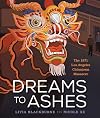
Dramatic illustrations by Nicole Xu contrast the grim realities of life in 1871 Los Angeles with the colorful dragons of cultural celebrations and the bright orange of flames against night skies. Newspapers that printed the scurrilous accusations about the Chinese are shown as kindling for the fire of savagery that erupted. And the suggestive tendrils of smoke on the end papers are a brilliant way to add commentary and symbolism without saying a word.
Evaluation: Can compassion be taught, or absorbed by the subconscious? Is it enough, as the author posits, to shine a light on the consequences of hate?
As Qasim Rashid pointed out:
“When dehumanizing language enters the conversation, we all suffer. Marginalized communities suffer because the focus shifts away from their dire needs, and into justifications to further harm them. And the rest of us suffer because debate is stifled or denied, and ignorance fills the gap in the public discourse. That vicious cycle continues and degrades our entire societal discourse.”
Can we guide children to understand that all people are human beings, equal underneath their outer features? It is so much easier to hate; it takes a lot more work to learn how to love.
This striking book should inspire readers to think more critically about the effects of propaganda and the dangers of mob thinking. Discussions can focus on the importance of empathy and the value of recognizing nuance, versus the temptation of the easy explanations offered by conspiracy theories and scapegoating. show less
The author and illustrator put together a cautionary tale in this picture book for ages 7 and over about how racist rhetoric can lead show more to violence, with a focus on the Chinese Massacre of 1871, part of what the Los Angeles Public Library calls “Forgotten Los Angeles History.” (Indeed, on the publisher’s blog, the author, self-described as “a Chinese person living in Los Angeles,” said she had been unaware of it. Illustrator Nicole Xu added, “I read extensively about the LA Massacre while working on the project, and was perturbed that I, as a Chinese-Canadian now living in America, was not educated about the event sooner.”)
According to the U.S. Census, in 1870 the Chinese population in Los Angeles numbered 172. The author recounts how whites resented the presence of the Chinese, passing laws restricting their freedoms and accusing them of taking jobs from [more deserving, they thought] white citizens. Newspaper articles called the Chinese “inferior and immoral. Degraded and disgusting. Aliens. Rats. Barbarians.” (Analogously, in the present moment, just this past December 2, 2025, President Trump called Somali immigrants “garbage. He said Somalia “stinks and we don’t want them in our country.”)
The campaign against the Chinese in the 1870s had predictable effect.
In the book, the author related: “Hateful words built up like dry kindling on a hot day. The Chinese immigrants became less than human in the eyes of their neighbors.”
In 1871, a gunfight broke out between members of two different Chinese clans. A (white) police officer trying to intervene was shot. White people in the city called for revenge and formed mobs.
The mob grew to 500 people, 10% of the entire city population. At the end of the violence on that night in Los Angeles, 18 Chinese men were dead, and many homes and stores were destroyed.
Per the Zinn Education Project, “It was one of the largest mass lynchings in U.S. history. The rioters also plundered and destroyed property in the Chinese community.”
The author poses the question: “What kind of people bring about humanity’s greatest horrors? Criminals and drifters? Or upstanding citizens?”
Her answer is striking:
“On the night of October 24, 1871, councilmen and farmers, store owners and silkgrowers, dogcatchers and tax collectors, landladies and young boys . . . became looters and murderers.”
This is such an important point. It is a phenomenon studied extensively, especially by Holocaust scholars. How do ordinary people turn into killers, or even into people who don’t kill but look the other way? Propaganda plays a large role. It exacerbates fear, jealousy and resentment, and greed, and offers the appeal of providing a scapegoat for one’s own lack of achievement. There is also an added lift from being part of social movement. Some are even drawn to the thrill of committing legally sanctioned violence.
World-renowned Holocaust historian and author Christopher Browning wrote:
“For citizens more generally, one lesson we learn that governments that want to commit genocide don’t fail because of a shortage of executioners.”
Twenty-five men were eventually charged in the attack, and eight men were convicted. (Chinese witnesses were not allowed to testify.) A year later, the California Supreme Court overturned all of the sentences on a technicality.
The author notes that over time, the massacre faded from memory, but hatred toward Chinese immigrants continued [as well as toward immigrants of other nationalities], with more violence around the country, and more legislation restricting them.
Nevertheless, she wrote, “Chinese Americans kept living their lives. . . . They continued to strive for their dreams.”
She concludes by asking:
“How does a country learn from the past? By remembering. By writing the dark stories back into history books. By shining a light on the consequences of hate and working to keep those fires from sparking again. By embracing change. By loving those who dream of a better life and affirming the humanity of all. By stepping forward. Into hope.”
Back matter includes a historical note and select bibliography.
Dramatic illustrations by Nicole Xu contrast the grim realities of life in 1871 Los Angeles with the colorful dragons of cultural celebrations and the bright orange of flames against night skies. Newspapers that printed the scurrilous accusations about the Chinese are shown as kindling for the fire of savagery that erupted. And the suggestive tendrils of smoke on the end papers are a brilliant way to add commentary and symbolism without saying a word.
Evaluation: Can compassion be taught, or absorbed by the subconscious? Is it enough, as the author posits, to shine a light on the consequences of hate?
As Qasim Rashid pointed out:
“When dehumanizing language enters the conversation, we all suffer. Marginalized communities suffer because the focus shifts away from their dire needs, and into justifications to further harm them. And the rest of us suffer because debate is stifled or denied, and ignorance fills the gap in the public discourse. That vicious cycle continues and degrades our entire societal discourse.”
Can we guide children to understand that all people are human beings, equal underneath their outer features? It is so much easier to hate; it takes a lot more work to learn how to love.
This striking book should inspire readers to think more critically about the effects of propaganda and the dangers of mob thinking. Discussions can focus on the importance of empathy and the value of recognizing nuance, versus the temptation of the easy explanations offered by conspiracy theories and scapegoating. show less
Disney and Magic Yes Please!
Can I just say that this was pure joy to read. This year has been a rough year for me and books. I have had so much fun reading this that it made me feel like a kid again. Firstly, when I requested this book I had no idea that it was part of a Duo. That being said you can read this as a stand alone and be perfectly fine I was.
As a longtime fan of mythology, history, and Disney, I was absolutely thrilled to have the opportunity to review a great book from Disney show more Hyperion. The author did such a beautiful job of bringing ancient China to life in such a vivid and magical way. The balance the author struck between the Disney story we know and the historical accuracy. The setting of the narrative felt so alive and the author’s style of writing took on a very cinematic tone, allowing readers to read and bring to life this adventure in their mind’s eye. I can see this as a continued screen play with lots more action to boot.
The character development was outstanding in this novel. The way the author delved into Mulan as a person when confronted with her new reality was amazing, as was her relationship with Shang. Not only did the narrative do a great job of tackling the issues of equality amongst the women warriors and showing the balance one must find between showing strength and courage in the face of adversity without losing who they are inside. This book does such a beautiful job showing me and young readers that there is absolutely nothing wrong with being feminine and strong in equal measure. I will be buying my niece a copy of both books when she is a bit older. All young people should read the strength and beauty within these pages. A 5 Star Read all the way! # I Am Totally Obsessed! show less
Can I just say that this was pure joy to read. This year has been a rough year for me and books. I have had so much fun reading this that it made me feel like a kid again. Firstly, when I requested this book I had no idea that it was part of a Duo. That being said you can read this as a stand alone and be perfectly fine I was.
As a longtime fan of mythology, history, and Disney, I was absolutely thrilled to have the opportunity to review a great book from Disney show more Hyperion. The author did such a beautiful job of bringing ancient China to life in such a vivid and magical way. The balance the author struck between the Disney story we know and the historical accuracy. The setting of the narrative felt so alive and the author’s style of writing took on a very cinematic tone, allowing readers to read and bring to life this adventure in their mind’s eye. I can see this as a continued screen play with lots more action to boot.
The character development was outstanding in this novel. The way the author delved into Mulan as a person when confronted with her new reality was amazing, as was her relationship with Shang. Not only did the narrative do a great job of tackling the issues of equality amongst the women warriors and showing the balance one must find between showing strength and courage in the face of adversity without losing who they are inside. This book does such a beautiful job showing me and young readers that there is absolutely nothing wrong with being feminine and strong in equal measure. I will be buying my niece a copy of both books when she is a bit older. All young people should read the strength and beauty within these pages. A 5 Star Read all the way! # I Am Totally Obsessed! show less

A world chock full of moral ambiguity - I like this. The three main parties vying for Kyra's loyalties are believably compelling (I'm still not sure if James' "We act as a…balancing force" was a deliberate reference to the "We provide... Leverage" of the eponymous TV series), and equally flawed. The werecats are also very cool. Very readable in a single gulp. It has a sequel but its own ending, Kyra having found a place of temporary safety where she can take stock and figure out what she show more really thinks of what's going on around her, is also a very satisfying stopping point in itself. show less
Chinese people moved to California in hopes of sending wealth home to their families and eventually returning to China; instead, finding that rumors of the country's richness were not quite accurate, they stayed and built communities. Yet like Indigenous and Black communities, they faced prejudice, racism, and violence from the government and their own neighbors.
Back matter includes a historical note, photographs, and a selected bibliography.
Powerful. Best suited to mid- to upper show more elementary, and would be good for middle and high school as well.
See also: Unspeakable: The Tulsa Race Massacre by Carole Boston Weatherford and Floyd Cooper
Quotes
The Chinese immigrants became less than human in the eyes of their neighbors.
In California, papers that had attacked and dehumanized the Chinese for years mourned the massacre with no mention of the role they might have played.
How does a country learn from the past?
By remembering. By writing the dark stories back into history books. By shining a light on the consequences of hate... show less
Back matter includes a historical note, photographs, and a selected bibliography.
Powerful. Best suited to mid- to upper show more elementary, and would be good for middle and high school as well.
See also: Unspeakable: The Tulsa Race Massacre by Carole Boston Weatherford and Floyd Cooper
Quotes
The Chinese immigrants became less than human in the eyes of their neighbors.
In California, papers that had attacked and dehumanized the Chinese for years mourned the massacre with no mention of the role they might have played.
How does a country learn from the past?
By remembering. By writing the dark stories back into history books. By shining a light on the consequences of hate... show less
Lists
Awards


You May Also Like


Associated Authors
Statistics
- Works
- 15
- Also by
- 2
- Members
- 1,485
- Popularity
- #17,290
- Rating
- 3.8
- Reviews
- 67
- ISBNs
- 73
- Languages
- 4
- Favorited
- 1